Let me save you the scroll: there is no single “best” vegetable for every dog. But if you forced me to keep only three in my fridge, it’d be pumpkin, carrots, and green beans. I’ve fed seniors, a puppy, and one notoriously fussy beagle for years, and those three have never let me down.
So when someone types best vegetables for dogs into Google, what they really want is a straight ranking—what’s safe, what’s actually worth it, and what should never touch the bowl. Here’s my honest, lived-in version, including the mistakes I’d rather you didn’t repeat.
What actually makes a vegetable “good” for dogs?
I don’t pick by taste—I pick by four things: nutrient density, calories, how easy it is to digest, and whether it’s safe served plain. No salt, no oil, no garlic, no onion, no sauce. I lightly steam most things; it breaks down tough fiber and saves my dogs a gassy evening. And I always cut small. Choking is the boring way a good intention goes wrong.
My four-point checklist
- Nutrition per calorie: vitamins A, C, and K, plus minerals, antioxidants, and fiber. Low-calorie picks pull real weight for overweight dogs without adding inches to the waistline.
- Digestibility: most vegetables are safer and more useful lightly cooked than raw. Cooking softens fiber and spares the stomach. Cut small to avoid choking.
- Safety first: the allium family—onion, garlic, chives, leeks—is out completely. They’re toxic in every form. Plain is the only rule that never bites me.
- Prep discipline: wash thoroughly, cook or serve raw by the chart below, and introduce one at a time so you can blame the right culprit if something upsets the gut.
Best vegetables for dogs: my top picks
This is the list I keep coming back to. Pumpkin tops it for tummies, carrots for the everyday crunch, green beans for waistlines—but the rest earn their spot too.
| Vegetable | Main benefit | Best served | Calories / 100g | Notes |
|---|---|---|---|---|
| Pumpkin | High fiber, aids both diarrhea & constipation | Cooked, plain | 26 | Gentle natural prebiotic for gut health |
| Carrots | Beta-carotene, dental health | Raw or cooked | 41 | Natural low-calorie chew |
| Green beans | Low calorie, high fiber | Raw or steamed | 31 | Great for weight management |
| Sweet potato | Vitamins A & C, steady energy | Cooked only | 86 | Nutrient-dense; skip skins if diabetic |
| Broccoli | Antioxidants, vitamin C | Small amounts, cooked | 34 | Limit—can cause gas |
| Cucumber | Hydration, very low calorie | Raw | 16 | Refreshing summer treat |
| Zucchini | Low calorie, hydrating | Raw or cooked | 17 | Easy to digest |
| Spinach | Iron, folate | Small, cooked | 23 | Limit if kidney/bladder issues (oxalates) |
Are carrots really the best vegetable for dogs?
Carrots are my default everyday pick, not because they’re “the best” but because they’re the easiest win: a cold carrot keeps a dog busy, scrubs a little plaque, and delivers beta-carotene for eyes and immunity. But I’d never tell you carrots beat everything.
For a sensitive stomach, plain pumpkin is the safer call. For a dog who needs to drop weight, green beans usually win on calories. The honest answer is that “best” depends on your dog’s age, gut, and goal—so I rotate instead of betting on one. A fridge with pumpkin, carrots, and green beans covers most of my bases.
Is pumpkin worth the hype?
Yes, and it’s the one I’d fight for. Plain pumpkin is the closest thing to a reset button for dog digestion. Its soluble fiber works as a natural prebiotic and steadies bowels in both directions—loose stools and the other extreme—without irritating the gut. I keep a can of plain pumpkin permanent on the shelf.
Two rules: only plain canned pumpkin or freshly cooked, never pie filling (sugar and spice are the trap). Start with 1–2 teaspoons for small dogs, up to 1–2 tablespoons for large, mixed into meals or as a topper. It’s also my go-to for hiding a pill on medication days.
The ones I keep far away from my dogs
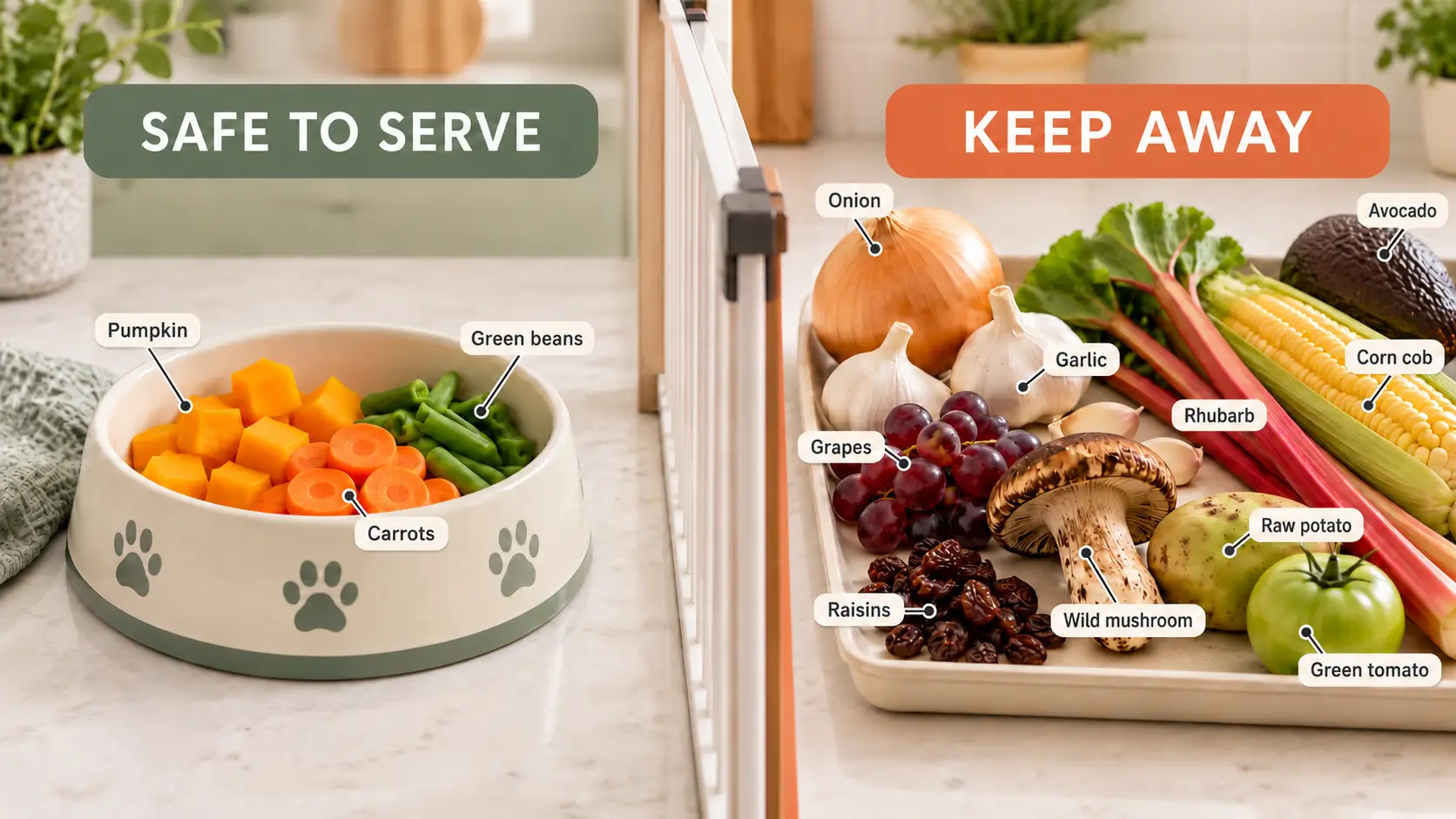
This list is non-negotiable. I’ve known too many close calls to treat it casually, and the pattern is always the same: a well-meaning bite that turned into a vet visit. Keep these completely off the menu.
- Onion, garlic, chives, leeks (allium): damage red blood cells and can cause anemia. Toxic raw, cooked, powdered, or in broth—no exceptions.
- Grapes and raisins: linked to acute kidney failure. Even a small amount is a risk I won’t take.
- Mushrooms: wild types can be severely toxic. I skip them unless my vet names a specific safe store-bought variety.
- Raw potato and green (unripe) tomatoes: solanine. Cook potatoes fully; keep green tomatoes away.
- Rhubarb: oxalates that irritate the mouth, throat, and kidneys.
- Corn on the cob: the cob is a choking and blockage hazard. Plain kernels in small amounts are fine; the cob is not.
- Avocado: persin plus high fat—risky for pancreatitis-prone dogs, so I pass.
When in doubt, I check before sharing anything new, and I call the vet if a dog gets into something on this list. No heroics.
Why this matters even more as your dog gets older
The older my dogs get, the more vegetables do the quiet work. Metabolism slows, weight creeps up, and seniors often drink less and digest less easily—so the right veg earns its place three times over:
- Weight management: green beans and cucumber are low-calorie “fillers” that keep a senior full without extra calories.
- Digestion: plain pumpkin keeps bowels regular, which is a common senior complaint I’d rather prevent than treat.
- Hydration: cucumber and zucchini help dogs who just don’t drink like they used to.
- Easier medication time: a spoon of plain pumpkin hides a pill without a wrestling match.
Diet is one part of senior care. Changes in appetite, weight, or daily activity are often the first signal something’s shifting—and pairing a good diet with simple monitoring is how I and my vet catch it early. (I lean on our guides to what to watch for as dogs age and how monitoring supports aging pets when I need the fuller picture.)

How much is too much?
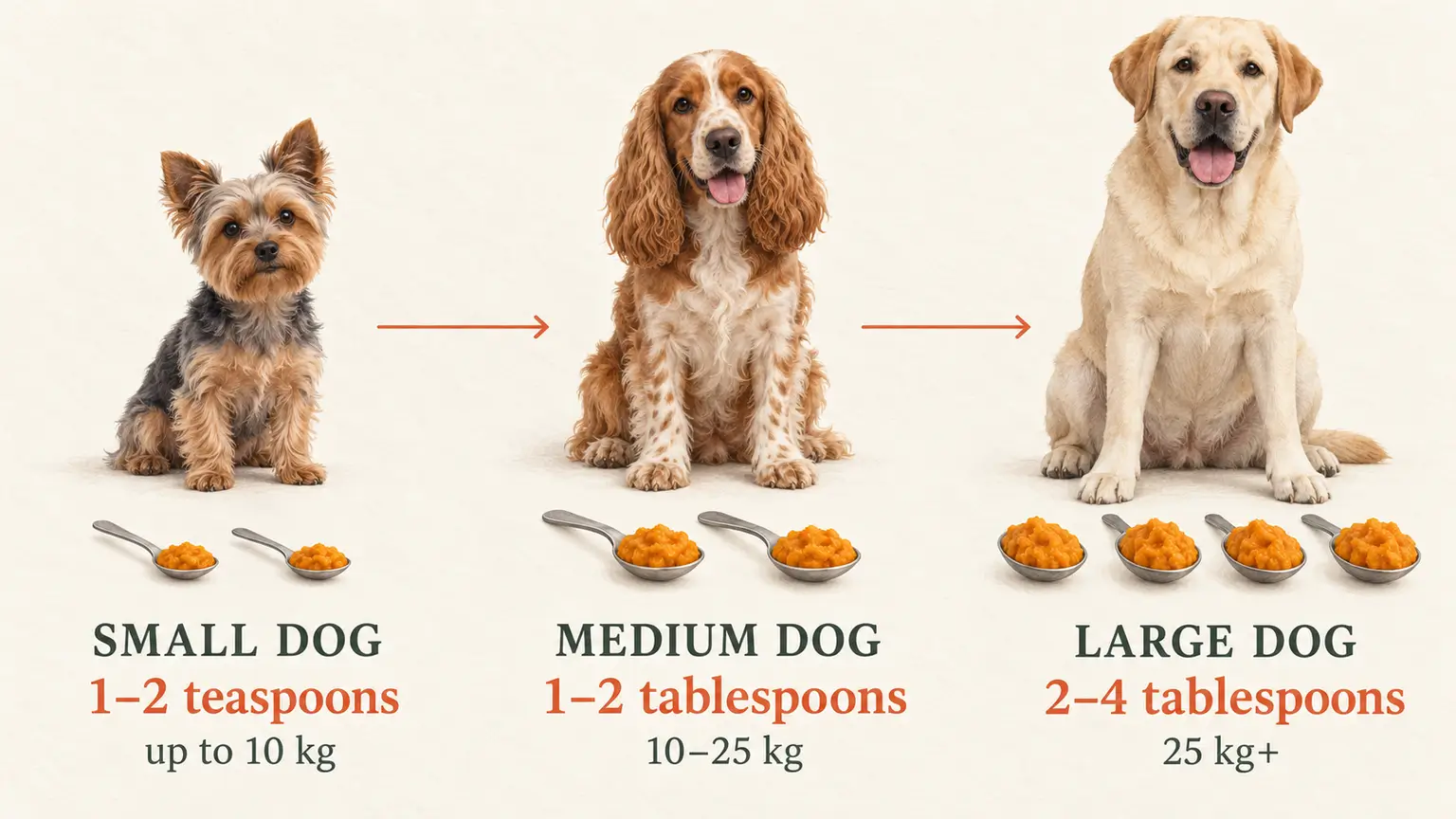
My rule: vegetables stay under about 10% of daily calories, and I add one new thing at a time to learn tolerance. Rough portions by size:
- Toy / small dogs (up to 10 kg): 1–2 teaspoons per serving
- Medium dogs (10–25 kg): 1–2 tablespoons per serving
- Large dogs (25 kg+): 2–4 tablespoons per serving
I watch stool and energy for about 48 hours after anything new. Vomiting, diarrhea, or a dropped appetite means pause and check with the vet—especially for dogs with diabetes or kidney disease, where the margin is thinner.
FAQ
Can dogs eat raw vegetables?
Some, yes—carrots, cucumber, and green beans are usually fine raw. For broccoli or sweet potato, light cooking helps digestion. When unsure, I steam.
Which vegetable is best for dog diarrhea?
Plain pumpkin is my first move because of its soluble fiber. But if diarrhea lasts beyond a day or comes with other symptoms, the vet’s call, not mine.
Are vegetables enough on their own?
No. They’re healthy toppers and treats, not a complete diet. They do the most good on top of a balanced main food matched to your dog’s life stage.
Conclusion
If you came here asking for the best vegetables for dogs, my straight answer is this: pumpkin, carrots, and green beans lead the pack—fiber, vitamins, and hydration when served plain and in moderation. Match the choice to your dog’s needs and age, keep the toxic list off the menu, and keep portions small. For senior dogs in particular, a bowl of the right vegetables is one of the easiest, lowest-risk wins you can hand them.