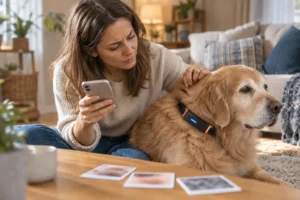
When Kevin was younger, I worried about him running off during hikes or slipping through an open gate. Like many dog owners, I thought GPS tracking was one of the best ways to keep him safe.
Today, Kevin is 15 years old. He spends most of his day sleeping, takes shorter walks, and rarely leaves my side. The truth is that I no longer worry about him getting lost. What worries me now is something GPS cannot tell me.
As dogs enter their senior years, the biggest risks often shift from location-related problems to health-related problems. Arthritis, heart disease, cognitive decline, and respiratory issues do not happen overnight. They usually start with small changes that are easy to miss.
That realization completely changed how I think about protecting an aging dog.

GPS Can Tell You Where Your Dog Is, But Not How They’re Doing
GPS collars solved an important problem. They made it easier to find dogs that wander away from home.
For young and active dogs, that feature still has tremendous value. A dog that regularly hikes, explores off-leash areas, or escapes from the backyard can benefit greatly from location tracking.
Senior dogs are different.
Most older dogs live predictable lives. They sleep more, move less, and spend most of their time close to home. Kevin rarely travels farther than our usual walking route. If I only looked at GPS data, I would assume everything is fine.
The problem is that location data tells me almost nothing about his health.
A GPS collar cannot tell me if Kevin slept poorly last night. It cannot tell me if his breathing has become faster over the past week. It cannot tell me whether he is recovering more slowly after a walk or becoming less active because of joint pain.
These are often the first signs that something is changing.
Many age-related conditions begin quietly. A dog with arthritis may simply stop asking for longer walks. A dog developing heart disease may sleep more than usual. A dog experiencing cognitive decline may start waking up during the night.
None of those changes trigger a GPS alert.
| GPS Shows | GPS Cannot Show |
|---|---|
| Current location | Sleep quality |
| Walking route | Breathing changes |
| Distance traveled | Joint discomfort |
| Safe zone alerts | Recovery after activity |
| Movement history | Long-term health trends |
This is why I believe many owners focus on the wrong problem.
The average senior dog is far more likely to experience a health decline than to suddenly disappear.
Knowing where your dog is can be helpful. Understanding how your dog is doing is often much more important.
The Most Dangerous Health Changes Happen While Your Dog Looks Normal
One of the biggest mistakes I made as Kevin got older was assuming that serious health problems would be obvious.
I expected symptoms to appear dramatically. I thought I would immediately notice if something was wrong.
That is not how aging works.
Most health issues begin with small changes that look completely harmless.
A dog may sleep an extra hour each day.
They may hesitate before climbing stairs.
They may breathe a little faster while resting.
They may lose interest in activities they once enjoyed.
Each change seems insignificant on its own. The problem is that owners see their dogs every day. When changes happen gradually, they become part of the normal routine.
Looking back, I can clearly see how Kevin changed over the years. At the time, however, most of those changes felt so gradual that I barely noticed them.
That experience taught me an important lesson: trends matter more than single events.
One lazy afternoon means nothing.
A steady decline in activity over several months means something.
One restless night means nothing.
A pattern of poor sleep over several weeks may be worth investigating.
| Change | What It May Mean |
| Sleeping more than usual | Pain, illness, or aging changes |
| Reduced activity | Arthritis or mobility issues |
| Faster resting breathing | Heart or lung problems |
| Frequent nighttime waking | Cognitive decline or discomfort |
| Slower recovery after walks | Reduced physical resilience |
This is one reason I started paying more attention to long-term health data.
I wanted to understand what was normal for Kevin. I wanted to notice changes before they became serious problems.
That eventually led me to health-monitoring technology like the KIYE Smart Collar.
What interested me was not the location tracking. It was the ability to monitor trends in sleep, activity, and behavior over time.
The goal is not to replace a veterinarian.
The goal is to reduce the chances of missing an important change.
For senior dog owners, that extra awareness can be valuable because aging rarely announces itself. It usually arrives quietly, one small change at a time.
Conclusion
When Kevin was young, GPS tracking helped me protect him from getting lost. As he entered his senior years, I realized that location was no longer my biggest concern. The greatest threats to senior dogs are often the health changes that happen slowly and silently. Knowing where your dog is matters, but understanding how your dog is aging may matter even more.