
Most distributors judge a senior dog supplement by what is inside the formula. The number that actually decides whether the SKU comes back for a second order is simpler: did the dog finish the dose. Compliance, not the ingredient list, is the variable that turns a one-time purchase into a standing line on the reorder sheet.
Why the Reorder Starts at the Bowl
A supplement only does its job if the animal takes the full course. That sounds obvious, but it is the step most category reviews skip. Buyers compare active ingredients, dosing claims, and price per unit. They rarely ask the question that protects margin: will the owner actually get the whole dose into the dog every day for eight weeks.
For senior dogs this gap is wider. Older animals are often on multiple products, have weaker appetites, and resist new textures. A formula that looks strong on the spec sheet can stall at the very last step — the mouth. When doses get skipped, the owner sees no change, loses confidence, and the SKU drops off the next order. The category is large enough that these small gaps scale into real lost revenue: US pet spending reached $158 billion in 2024, and senior animals are a growing share of that base (APPA State of the Industry Report, 2025).
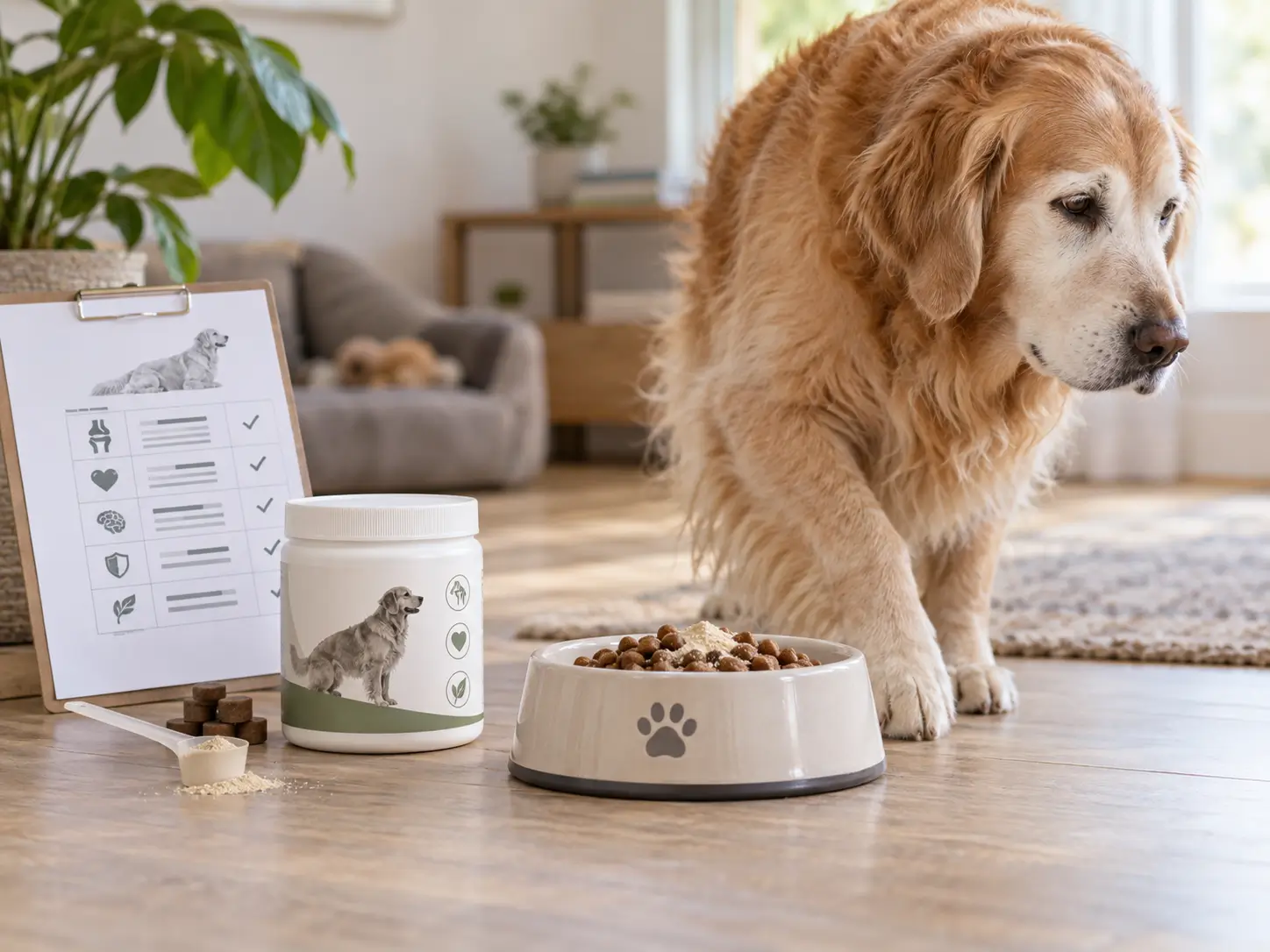
Format Share Is Already Answering the Question
The market has voted with shelf space. Soft chews have become the default because dogs accept them as a treat, which removes the daily fight. Powder formats are growing fastest in percentage terms, climbing at a 7.1–11.2% compound rate, because they fold into food without a separate step (Petfood Industry, September 11, 2026).
Tablets and capsules still appear in the range, but they carry the highest friction: hiding them, breaking them, or forcing them. For a distributor building a senior dog assortment, the format mix is not a cosmetic choice. It is the difference between a product that sells once and one that sells twice.
| Format | Daily friction | Best fit | Reorder risk |
|---|---|---|---|
| Soft chew | Low — taken as treat | Long daily courses | Low |
| Powder | Low — mixed into food | Appetite-sensitive seniors | Low–medium |
| Tablet / capsule | High — must be hidden or forced | Single short courses | High |
| Liquid | Medium — measured dosing | Precise small doses | Medium |
The pattern is consistent across the senior dog nutrition range: the formats owners can sustain daily are the ones that survive the second order senior pet nutrition buyers keep coming back for.
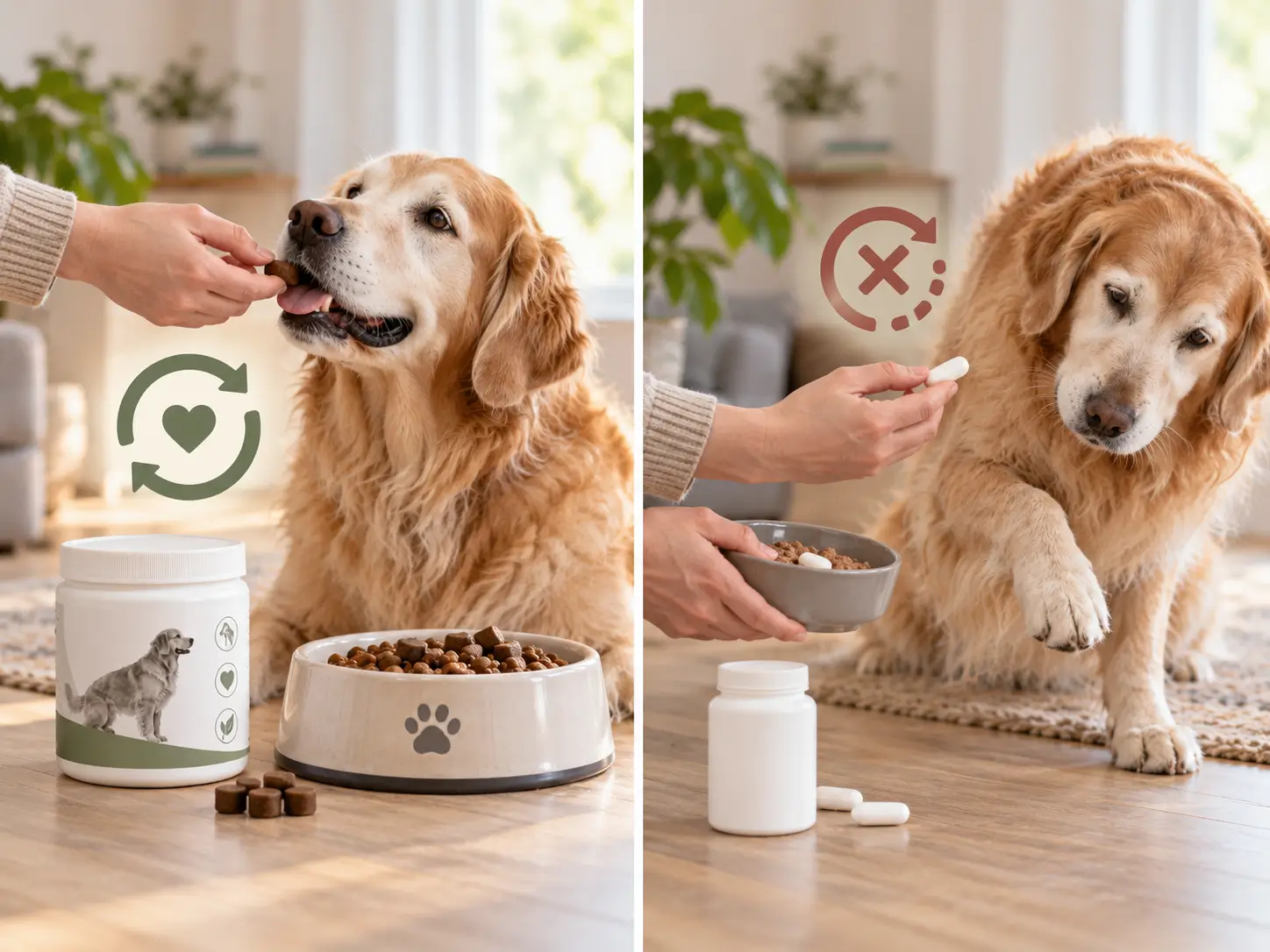
The formula is necessary, not sufficient
A strong ingredient panel loses its value the moment a dose is skipped. Distribution margin on senior dog products is earned at compliance, not at formulation. The SKU that gets finished is the SKU that gets reordered — and finishing is a format problem before it is a formula problem.
The Cost of a Skipped Dose
Skipped doses do not show up as a return. They show up as silence. The owner who stops seeing a difference stops buying, and the distributor is left holding a line that looked safe on paper. One NASC board member put the point plainly: the best ingredients do not help if the animal will not consistently take them (Petfood Industry, September 11, 2026).
This is why format belongs in the buyer conversation alongside price and margin. A cheaper tablet that gets abandoned costs more than a soft chew that gets finished, once you account for the lost reorder. Nearly half of owners are willing to start a supplement, but that willingness is fragile — it is the daily routine, not the first purchase, that decides whether the line stays open.
The Margin Math a Buyer Can Defend
Single purchases pay for shelf space. Repeat purchases pay for the business. When a distributor weighs two SKUs with similar margins, the one with lower daily friction wins on lifetime value, because it keeps the owner in the habit past the first jar. The 49% of owners open to a supplement purchase are not a fixed pool — they move toward the brands that are easy to keep giving (Petfood Industry, Nextin Research, 2026).
For senior dog products specifically, this math favors formats built for eight-week and longer courses. A tablet priced lower per unit can still underperform a soft chew on total category margin, because the soft chew is the one that reaches the reorder. Senior pet care distribution rewards the SKU that survives contact with the dog, not the one that wins the spec comparison. Distributors who track sell-through by format rather than by brand usually see the same pattern within two months of listing: the easy daily formats quietly outsell the stronger-looking formulas.
Monitoring Closes the Loop Buyers Cannot See
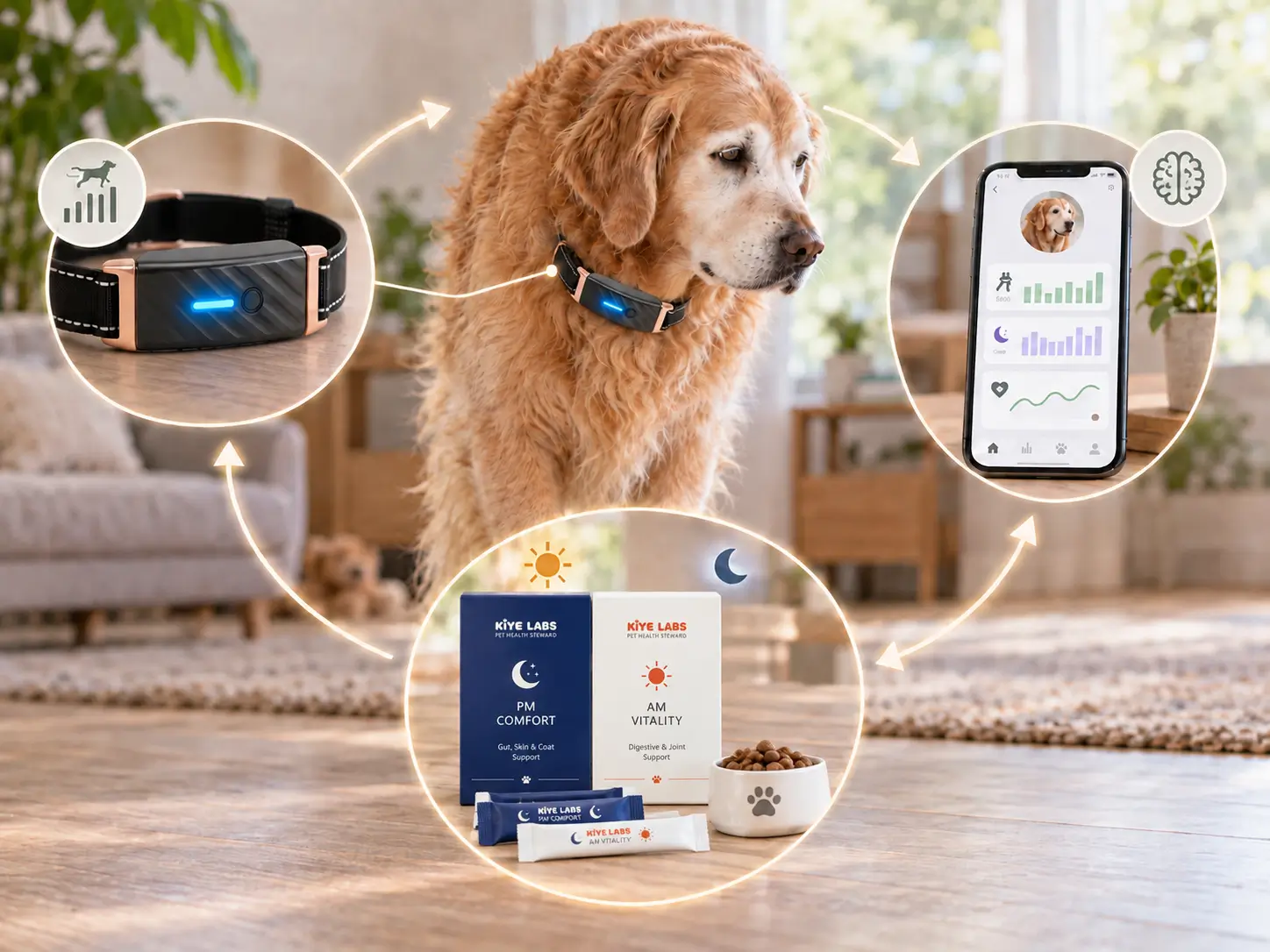
Compliance is hard to prove after the sale. That is where a connected system changes the math. A pet health collar supplier perspective matters here: when daily wellness data is captured continuously, the owner can see trends that justify the routine, and the distributor gets a SKU that stays relevant past the first jar.
KIYE builds the senior dog range as part of a closed loop — the Smart Health Collar surfaces daily activity and rest patterns, the platform turns that into readable trends, and the senior pet nutrition range is timed to the dog’s day. The point for a buyer is not the gadget. It is that the combination keeps the dog on the product long enough for the owner to notice a difference.
For distributors weighing why us against another single SKU, the argument is concrete: a system that sustains compliance protects the reorder better than a formula alone ever could.
What to Put on the Order Sheet
If the goal is repeat purchase rather than a one-time shelf fill, weight the senior dog assortment toward formats owners can give daily without a fight. Lead with soft chews, keep powder as the appetite-sensitive option, and treat tablets as a narrow line for short courses only. Then pair the range with the data layer that makes compliance visible.
Senior pet care distribution is shifting from selling ingredients to selling a routine the owner can actually keep. The SKU that gets finished is the SKU that gets reordered — and that decision is made at the bowl, not on the spec sheet.
Sources
- Petfood Industry, “New formats push pet supplement innovation,” September 11, 2026 — soft chew share, powder CAGR, NASC board quote on compliance.
- Petfood Industry, Nextin Research (NASC 2026), 2026 — 49% of owners open to a supplement purchase.
- APPA State of the Industry Report, 2025 — US pet spending reached $158 billion in 2024.
Build a senior dog range that reorders
KIYE supplies the collar, the platform, and the timed nutrition as one closed loop built for compliance. Review the specs, request samples, or discuss channel fit with our team at info@kiyepet.com.