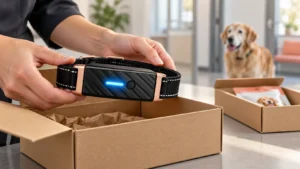
Most distributors default to pushing a smart collar through retail shelves or a marketplace listing. For senior-pet monitoring, that is usually the slower, lower-conversion path. The channel that already owns the owner’s trust — and the recurring revenue that comes with it — is sitting one conversation away: the veterinary clinic network.
Because the veterinarian already holds the owner’s trust at the exact moment a chronic condition is diagnosed. A collar that feeds continuous wellness trends into that relationship turns a one-time device sale into a clinic-recommended, recurring program — the channel distributors should prioritize first.
The trust gap retail shelves cannot close
A pet owner browsing a retail shelf has no prior relationship with the product and no one to interpret what the data means. A senior dog that starts drinking more water, resting oddly, or slowing on walks is a real signal — but on a shelf, that signal is just a spec sheet.
In a clinic, the same owner has already said "something is off," and a professional has already framed it. The collar does not have to win trust from zero; it arrives as the tool the veterinarian recommends to watch the trend at home. That is why monitoring devices convert better through clinics than through general retail — the trust transfer is already done.
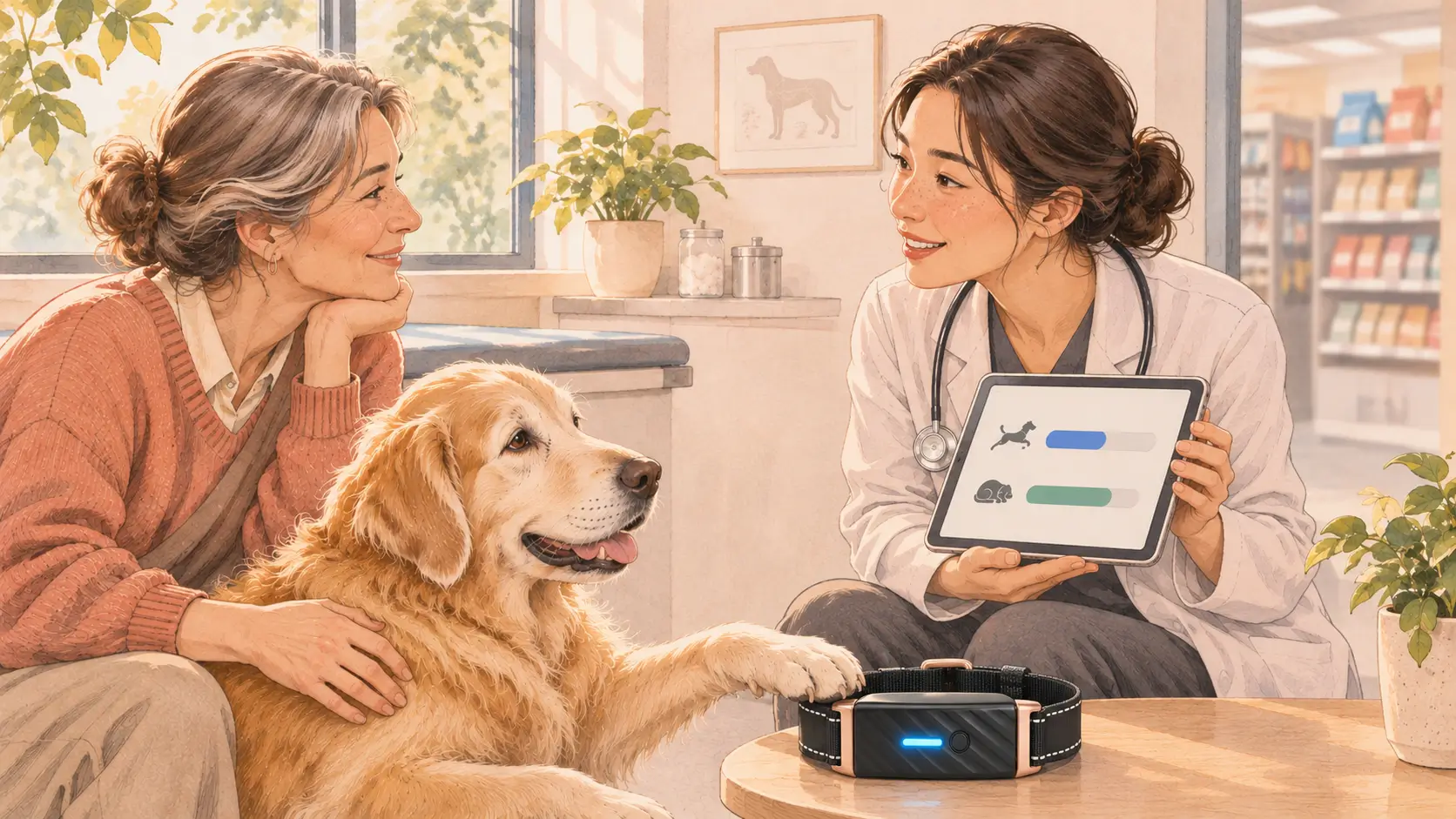
Retail ends in a one-time sale; the clinic turns a collar into a recurring loop.
Why clinics turn monitoring into recurring revenue
A collar sold in retail is a transaction. A collar recommended by a clinic is the start of a loop:
- The veterinarian identifies a senior pet at risk and recommends continuous monitoring at home.
- The owner uses the device daily and brings the trend back to the next visit.
- The clinic becomes the interpreter of the data, which keeps the owner returning on a schedule.
- Wellness support — nutrition, follow-up checks, plan adjustments — attaches to the same relationship.
For a distributor, that loop is the difference between a single unit sale and a stocking relationship with a clinic that reorders and refers. Veterinary networks are also concentrated buyers: one sales conversation can place a brand across every branch in the group.
What makes a wearable brand "clinic-ready"
Not every smart-collar brand is easy to take into a vet network. Before a distributor commits shelf space or a sales pitch, the brand should clear a short bar:
| Clinic-ready attribute | Why it matters to the vet channel |
|---|---|
| Wellness framing, not diagnosis | Clinics stay compliant when a device supports observation rather than claiming to diagnose. "Wellness trends, not a medical device" keeps the veterinarian in the driver’s seat. |
| Trends a clinic can read | Daily activity and rest patterns, behavior recognition, and location are far more useful to a vet than a raw sensor dump. The signal has to be interpretable in a short visit. |
| Data the clinic can receive | A platform that lets wellness trends be shared with the clinic (per the partner’s plan) turns the device into a continuing conversation, not a closed app. |
| Senior-pet relevance | Aging dogs are where monitoring pays off — mobility, rest, and routine changes are the early signals clinics most want to catch. |
| Optional, non-bundled support | Nutrition or other wellness add-ons should deepen the program without forcing a bundle the clinic does not want to explain. |
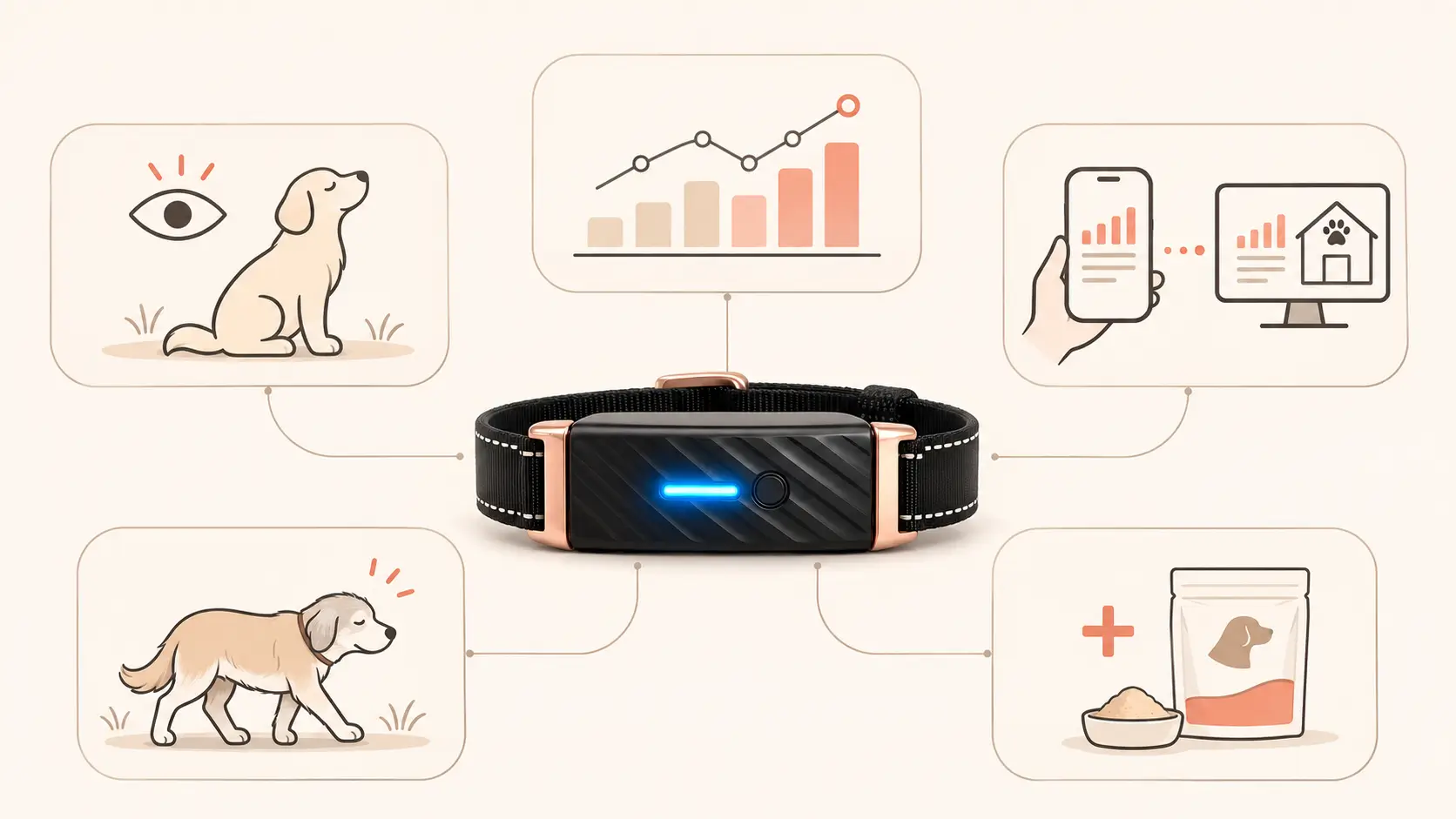
Five checks before a wearable brand walks into a vet network.
How distributors should approach the vet channel
The pitch is not "buy this gadget." It is "help your clinic catch senior-pet decline earlier, and give owners a reason to come back." Frame the collar as an extension of the clinic’s own follow-up, not a replacement for it.
For groups with multiple branches, lead with the centralized buying logic: one agreement, consistent device across sites, and a shared story for owners. That is where distribution volume actually compounds.
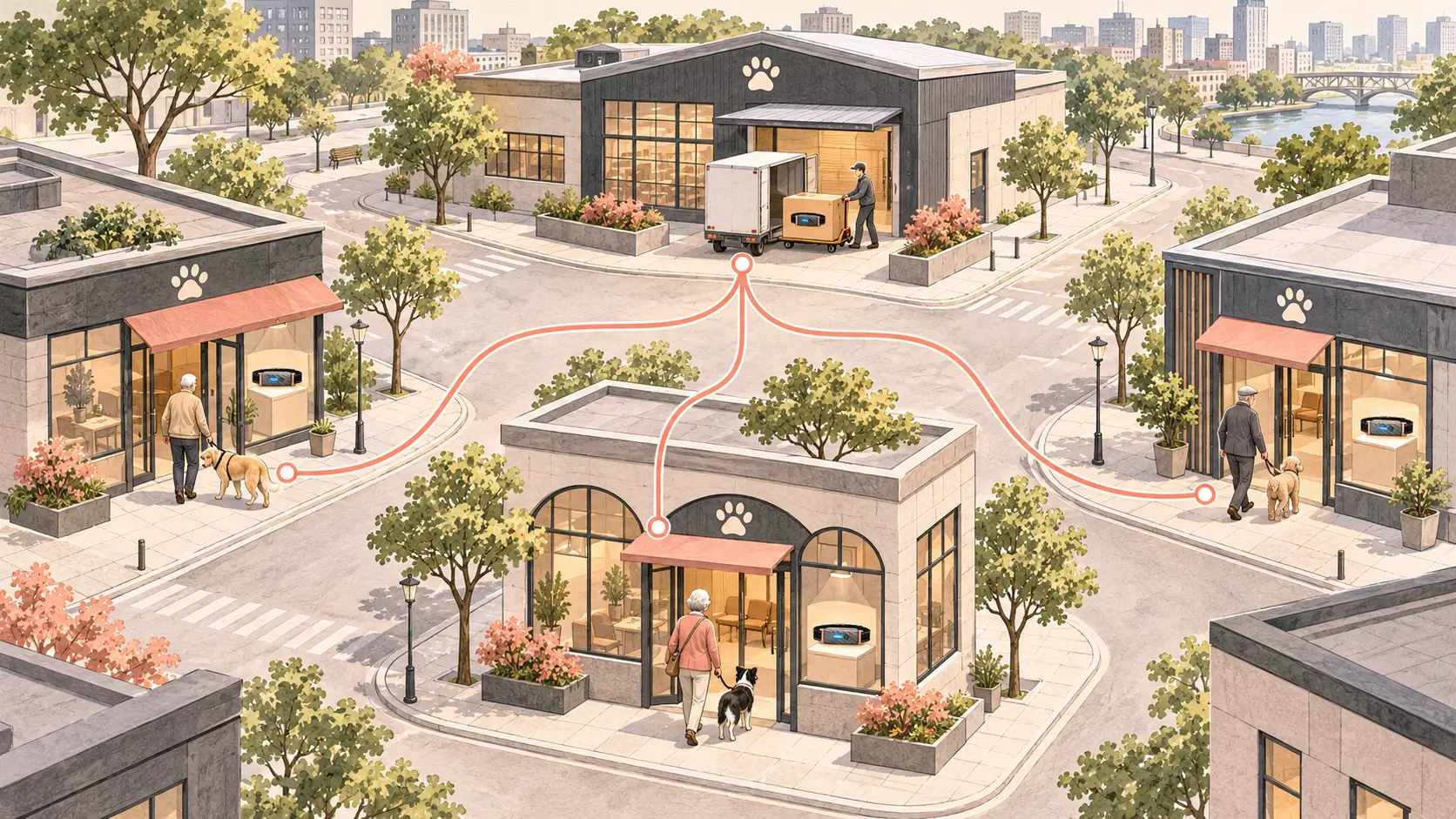
One agreement can bring a consistent monitoring offer to every clinic in the network.
Five questions to ask a wearable brand before pitching it to clinics
- Is the device positioned as wellness or diagnosis? Clinics need the former. A brand that drifts into diagnostic claims creates liability the distributor does not want.
- Can the clinic actually see the data? Ask how trends are shared — export, portal, or integration — and whether it is included per the partner plan.
- What does the daily signal look like? Behavior recognition, activity, and rest trends are clinic-readable; a raw accelerometer feed is not.
- Is the senior-pet story credible? Aging dogs are the use case that justifies monitoring; the brand should speak to it directly.
- Are add-ons optional? Nutrition or follow-up programs should attach without forcing a bundle the clinic must defend.
Why this matters for the KIYE line
The KIYE smart-collar line is built around exactly the attributes clinics respond to: a wellness-first positioning ("wellness trends, not a medical device"), daily activity and rest trends with behavior recognition, and a platform that can share wellness data with a clinic per the partner’s plan. The senior-dog nutrition range (day-and-night sachets, dog-only) is a separate, optional layer — it can deepen the program without being bundled into the collar conversation.
That combination is what makes the line distributable into veterinary networks rather than only onto a retail shelf. The collar and the nutrition line are independent products; a distributor can carry one without the other.
Frequently asked questions
Why not just sell smart collars through retail?
Retail works for impulse and gift purchases, but senior-pet monitoring is a need the owner usually discovers at the clinic. The vet channel reaches that owner at the right moment, with trust already established, which lifts both conversion and repeat engagement.
Do veterinary clinics actually recommend wearables?
Increasingly, yes — especially for senior pets and chronic-condition follow-up. Clinics recommend devices that support observation and fit a short visit, which is why clinic-readable trends matter more than raw sensor data.
Is a smart collar a medical device?
KIYE positions its collar as wellness support, not a medical device. It is designed to surface trends for owner and clinic awareness, not to diagnose or treat. That framing is deliberate and keeps the vet channel compliant.
Can the clinic see the pet’s data?
The KIYE platform supports sharing wellness trends with a clinic according to the partner’s plan. Distributors should confirm the exact sharing model during onboarding so the clinic story is accurate.
Do I have to bundle nutrition to sell the collar into clinics?
No. The collar and the senior-dog nutrition line are separate products. A distributor can lead with the collar alone and add nutrition later as an optional program.
Planning to take a smart-collar line into veterinary networks? Talk to us about the clinic-ready positioning, the wellness-data sharing model, and how the collar and senior-dog nutrition lines map to your channel — without bundling either one.