Walk any senior-dog aisle and the shelf tells a clear story: joint chews, gut powders, coat oils. Every product answers a physical need. Now ask the owner what keeps them up at night — and the answer is usually quieter. "Is he anxious? Is she stressed? Why won’t he settle?" That worry has no SKU, no tool, no place on the shelf. For a distributor, that gap is not a miss. It is the most re-sellable category you are not carrying yet.
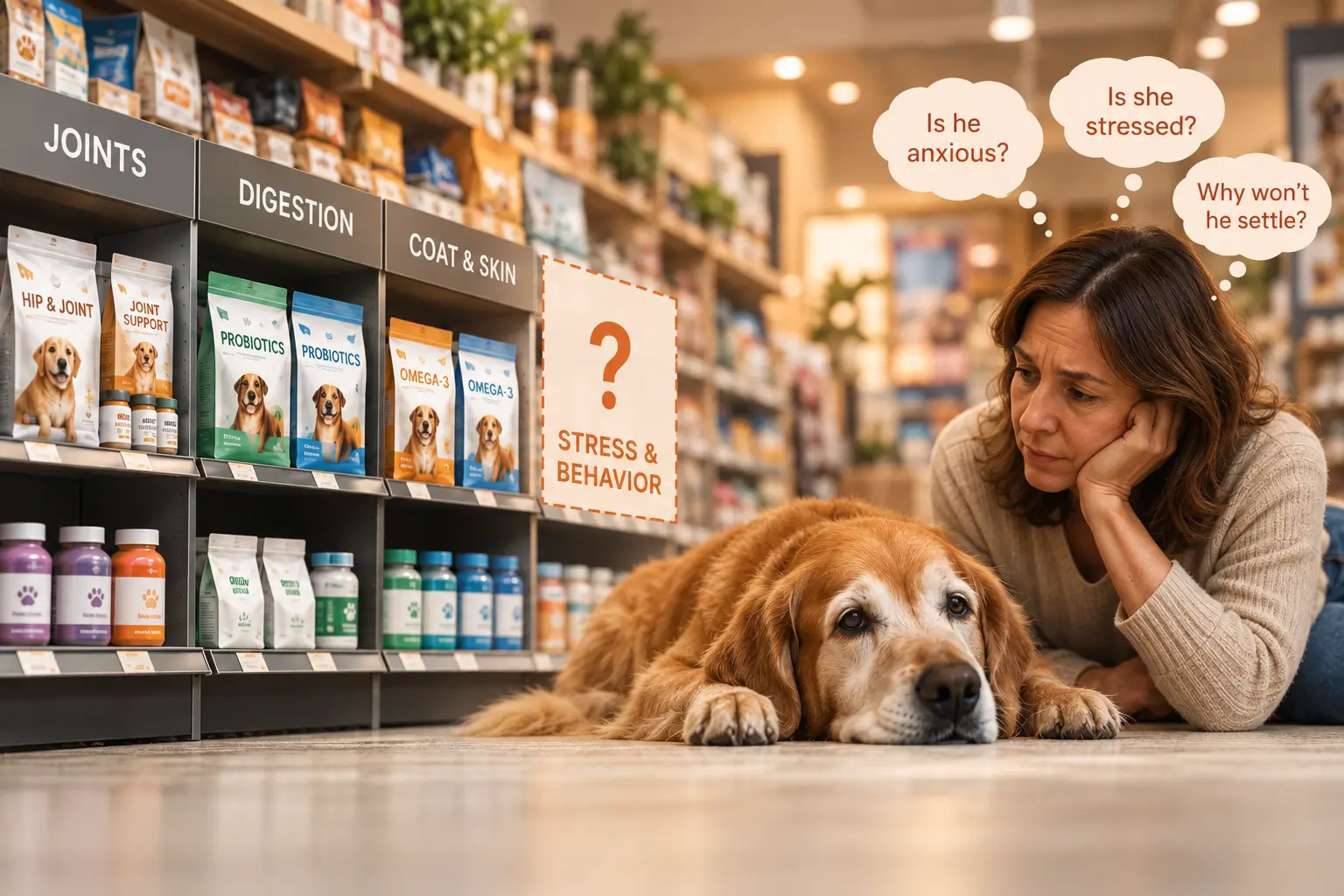
The Shelf Solves Joints and Skin. It Can’t See Stress.
The senior-pet range was built around dimensions we can see and measure — mobility, digestion, coat. Emotional and behavioral health never earned a shelf because, until recently, there was no way to put a number on it. That changed as owners started naming stress as a primary concern. In one industry read of the US pet market, anxiety ranked as the top concern at 19.6% of owner mentions — ahead of the physical issues the aisle is built around. Read that as a directional signal, not a revenue figure: it is a share of concern mentions in a sentiment study, and the absolute base is the surveyed owner pool.
19.6% — anxiety as the top US pet owner concern. Sentiment read, not sales.
Here is why the gap matters more than a missing SKU: a joint problem flares and gets treated; a stress worry is daily and recurring. An owner who cannot see whether their old dog is restless tonight will be worrying again tomorrow, and the week after. That cadence is exactly what drives repeat visits and subscription — far better than a one-off chew. The channel shift backs it up: US pet spending ran around $95.1B, with online up 14.1% year over year against physical retail down 1.4%, digital now close to half of sales. Recurring monitoring sells where the growth is — online and by subscription. (Third-party market data; not KIYE figures.)
+14.1% online vs −1.4% physical; digital ≈ 48% of US pet sales — recurring categories win here.
What a Collar Can Show Without a Single Diagnosis
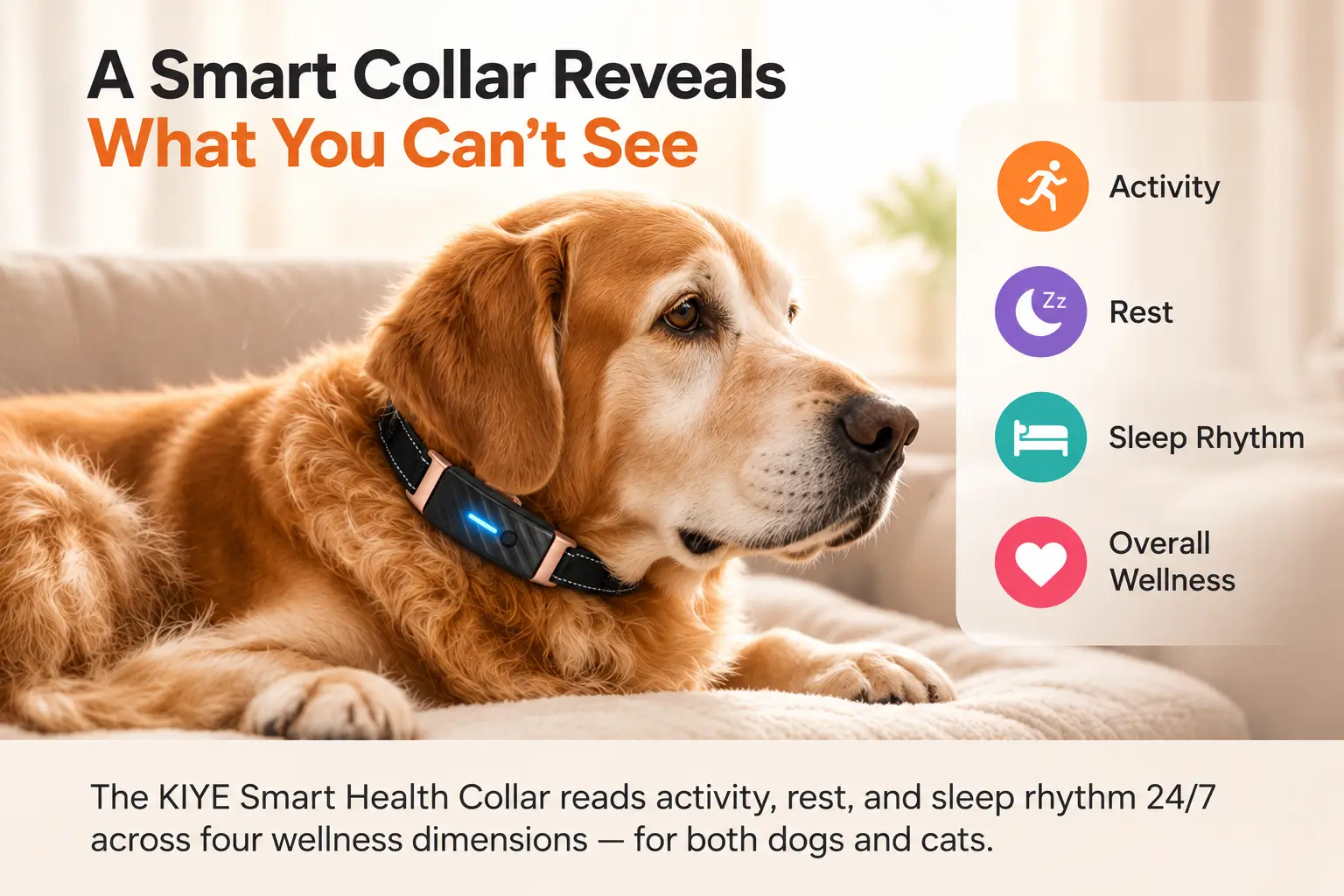
A smart collar changes the math. The KIYE Smart Health Collar reads activity, rest, and sleep rhythm 24/7 across four wellness dimensions, for both dogs and cats. When a dog’s restlessness pattern drifts from its own baseline, the owner — and the buyer stocking the category — gets an early trend-shift signal. Not a verdict. A signal that something in the daily pattern has moved.
One line has to stay clear: the collar does not diagnose anxiety or any disease, and we do not disclose how the signal is detected. It tells you when to book the vet. That is the entire claim — and it is the reason the story is defensible on a shelf.
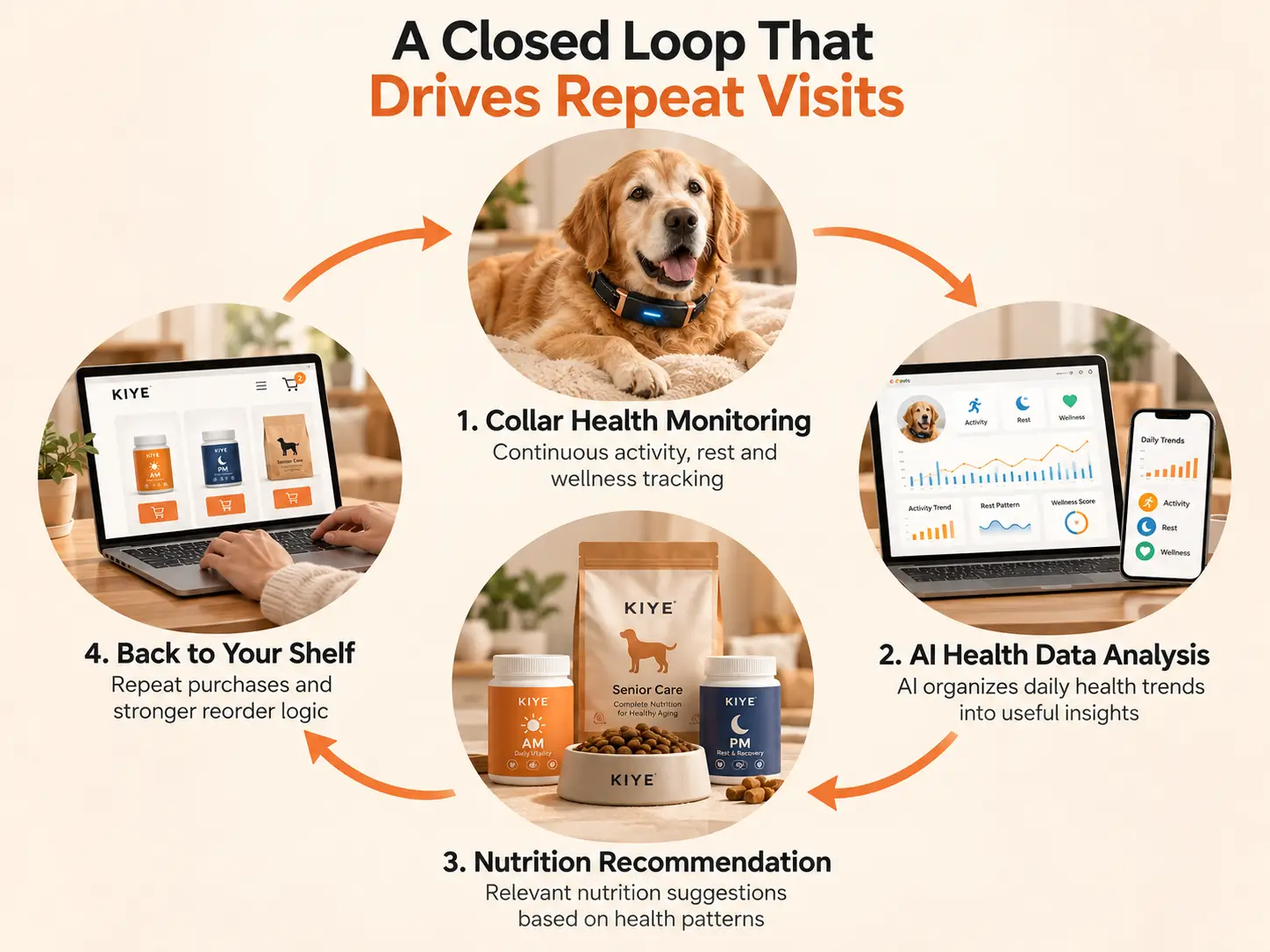
That constraint is also the opportunity. By turning "is he okay?" into visible, comparable, story-ready data, the collar closes a loop the rest of your assortment can use: a trend shift prompts a vet check, the vet check prompts a nutrition or care decision, and the decision sends the owner back to your shelf. A closed-loop system is not a slogan here — it is the shelf logic that makes the category re-sell.
Three Ways to Put Stress Monitoring on the Shelf
Shelf it under "senior pet monitoring," not "training" or "anti-loss." The aisle context decides whether the product reorders. A tracker filed next to leashes is a one-time purchase; filed next to senior care, it is a continuing relationship.
Sell the early signal, never the treatment. "See the trend before the vet visit" is compliant and more credible than any calm-related claim — and it keeps the line clear of sedative-product red tape the brand does not touch.
Bundle the closed-loop story so the collar becomes the entry SKU. A distributor who leads with the collar can make the rest of the senior-dog range sell twice: the collar surfaces the need, the supplement or care product answers it.
Why This Category Is Opening Now
Pet seniorization is not a trend, it is the baseline. More old dogs means more behavior change to read, and a larger base of owners asking the same quiet question. The addressable shelf is growing on its own.
The buyer has changed too. The "science-based, precise-care" owner wants data, not reassurance. A product that shows a pattern beats a product that promises a feeling — and that owner is the one building the subscription relationship.
Outside the home, the signal is gaining value. Tele-vet and pet insurance programs increasingly want wearable data to triage and underwrite. A monitoring category on your shelf is not just a pet product; it is a data feed those services will pay to plug into. Distributors who frame the collar as infrastructure, not a gadget, sit closest to that shift.
Stress and behavioral monitoring is the one shelf dimension that is both blank and high-reorder. The collar enters through trend signals — no diagnosis, no sedative SKU — which keeps it compliant and different from everything else in the aisle. For a distributor, that is the rare category that sells care with data and reorders with care.
See it at the show: KIYE Smart Health Collar, harness, and senior-dog AM/PM nutrition at Global Sources Lifestyle 2026 — Booth 9F16, AsiaWorld-Expo, Hong Kong, October 18–21. Or contact KIYE for the distributor kit and a closed-loop shelf plan.
Sources
- Bloomberg industry research, US Pet 2026 — anxiety as top owner concern (19.6%); sentiment read, not sales.
- US pet market sizing and channel shift (~$95.1B; online +14.1% vs physical −1.4%; digital ≈48%) — third-party market data, not KIYE figures.
- KIYE Smart Health Collar product facts: 24/7, four wellness dimensions, dogs + cats.
- Internal: #24 Closed-loop senior pet health system · #25 Smart collars & aging pets · #27 IFA 2026 distributor depth