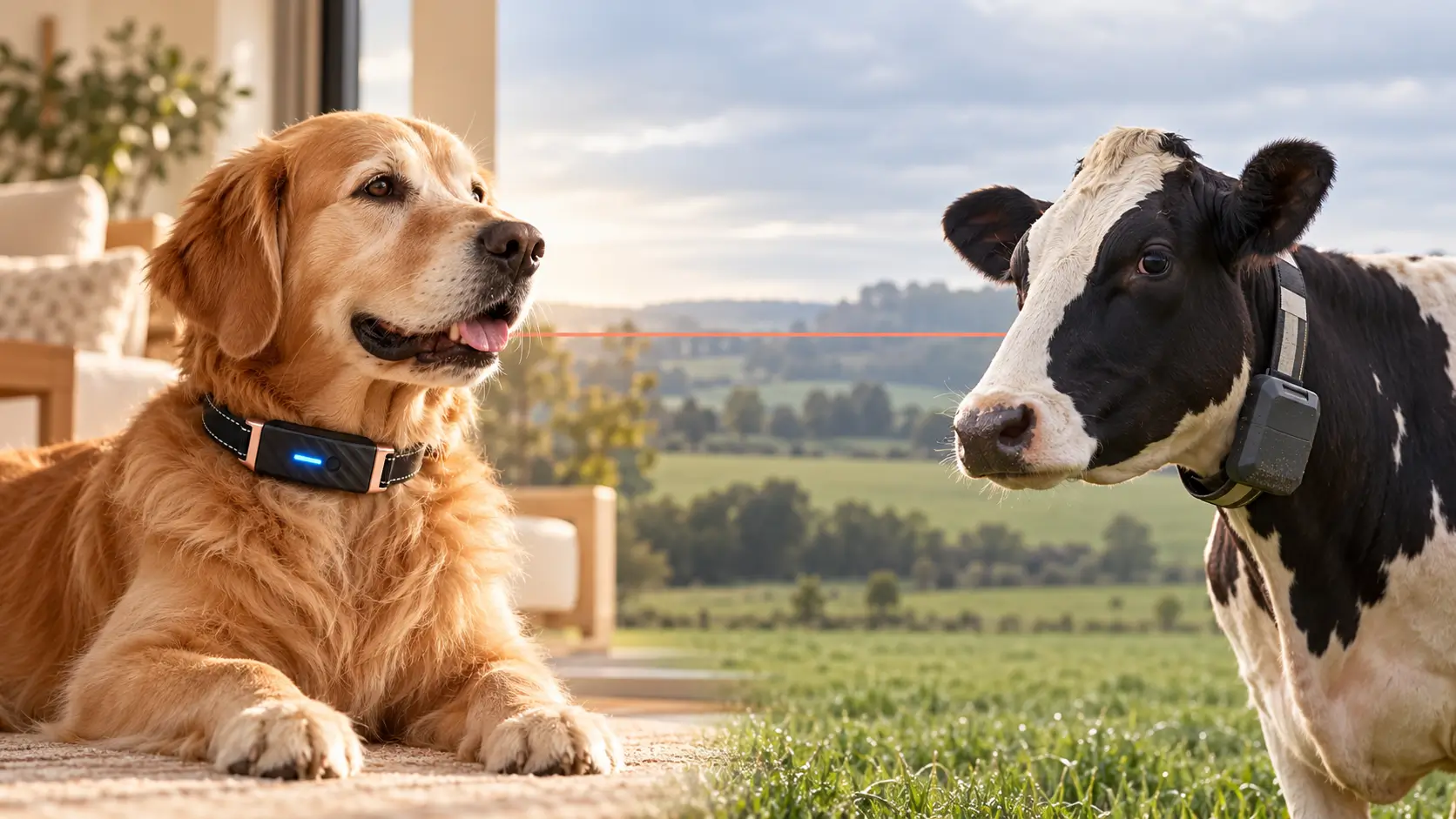
The same sensor stack sitting inside a senior dog’s health collar is now bolted onto dairy cows, beef herds, sheep, and even camels grazing across remote pastures. For a distributor deciding what to stock next, that crossover is not a curiosity. It is one of the clearest maturity signals the wearable category has sent this year.
For a B2B buyer, the useful question is no longer "are wearables real" — the 2026 data answers that — but "which wearable brands are building for the next three years, and which are still shipping the last three?" The livestock crossover is the fastest way to tell them apart.
The wearable market just got bigger than the living room
Companion-pet and production-animal wearables have quietly started sharing the same bill of materials. The numbers show two categories converging, not competing:
| Metric | What it shows |
|---|---|
| $2.09B → $2.33B | Global livestock wearables, 2025→2026 (≈15.8% CAGR) |
| $785M → $1.68B | Smart cow-collar tags, 2025→2032 (11.45% CAGR) |
| $11.4B by 2033 | Pet wearable market, 16.8% CAGR (Grand View Research) |
Livestock wearables reached roughly $2.09 billion in 2025 and are forecast near $2.33 billion in 2026 (QY Research). Smart collar tags built for cattle alone moved from $785 million in 2025 to a projected $1.68 billion by 2032 (PW Consulting). Meanwhile the pet wearable market is on track for $11.4 billion by 2033 at a 16.8% annual clip. Same components — GPS, accelerometers, temperature and heart-rate sensors, low-power radios — now serve two very different buyers.
What livestock proved about the hardware
A farm is a tougher environment than a living room. Mud, manure, washdown hoses, sub-zero grazing, and animals that will never plug anything in have pushed the technology in directions pet buyers now benefit from:
- Multi-year, field-serviceable power. Livestock collars run on sealed, often solar-assisted batteries rated for years without owner charging. One India-built cattle unit is serviced by swapping the battery every three years — farmers never charge it.
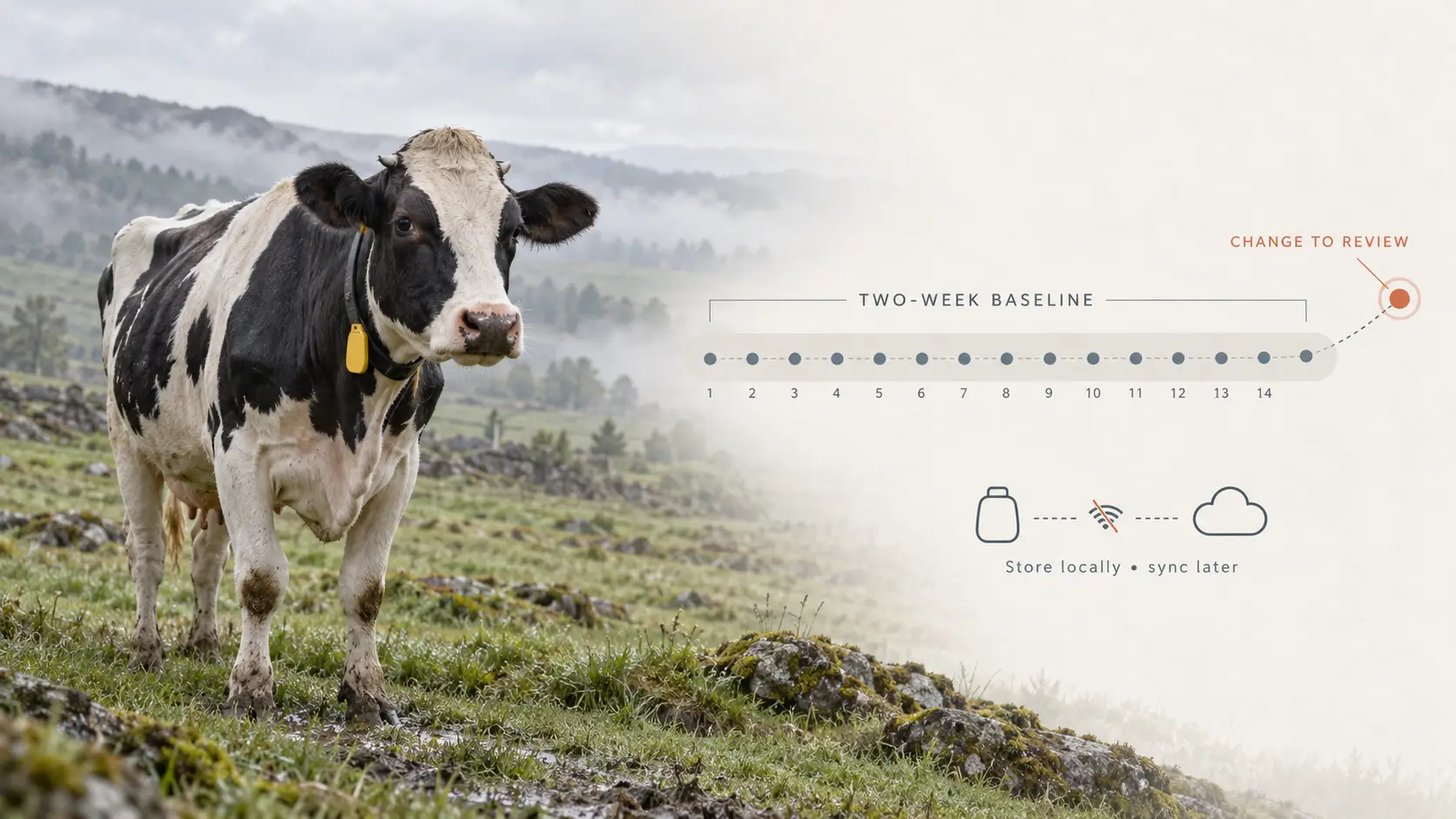
- Offline anomaly detection. Edge compute lets a device flag a sick animal with no network at all, then sync later. That same logic keeps a pet collar useful outside cellular range.
- LPWAN over Wi-Fi. LoRaWAN and NB-IoT replaced short-range links, which is why modern pet collars can hold a signal across a property, not just beside a router.
- Individual baseline learning. The best livestock systems spend two weeks learning one animal’s normal, then alert on deviation — not a herd average. Field reports cite catching illness about two days before visible symptoms and an 80% daily app-usage rate among farmers.
If a sensor survives a dairy herd, it survives a sofa. Distributors should treat these as the new baseline, not the premium tier.
The takeaway for buyers: when a pet-collar brand still leads with "steps counted" and a monthly subscription as its whole story, it is selling 2021 hardware in a 2026 market. Ask what the device does when there is no Wi-Fi, and what happens after the alert.
The differentiator was never the sensor — it is the loop
This is where the livestock story maps directly onto the pet opportunity. A collar that only logs activity is a step counter. A collar that learns the individual animal and closes the loop with nutrition, vet context, and follow-up is a health system. KIYE’s position is built on exactly that path: Monitor → Analyze → Support → Track.
KIYE’s three pillars — the Smart Health Collar for dogs and cats, the AI Health Platform, and senior-dog nutrition — are designed so the collar’s signal reaches the bowl. The collar is not the product; the loop is. For senior dogs, the gap distributors hear about most is "I bought the supplements, but how do I know they are working?" Continuous collar data — rest, activity, temperature trends — is the only honest way to show change over weeks, not guess. That is the same logic a dairy farmer uses when rumination data prompts a feed change and lifts daily output by a measurable margin. The wearable earns the reorder because it proves the rest of the shelf is doing its job.
A collar that only counts steps is a step counter. A collar that learns the dog and feeds the next decision is infrastructure. Distributors should stock the second one.
A stock-check list for the pet channel
As production-animal wearables normalize, consumer expectations rise — buyers have seen the same tech work on farms. Before the next buying cycle, check every brand against:
| Check | What to verify |
|---|---|
| Power & durability | Multi-year sealed battery or solar assist; IP-rated against water and dust; validated in temperature extremes, not just a lab. |
| Data ownership | Who owns the follow-up when a collar alerts? Exportable, owner-held data beats a closed app. (See our take on health-data ownership.) |
| Closed-loop readiness | Does the brand connect monitor → nutrition → vet, or stop at the chart? Closed loop is what earns the reorder. |
| Subscription model | No-subscription hardware with optional services beats locking the pet into a contract the owner resists. |
The camel in the room
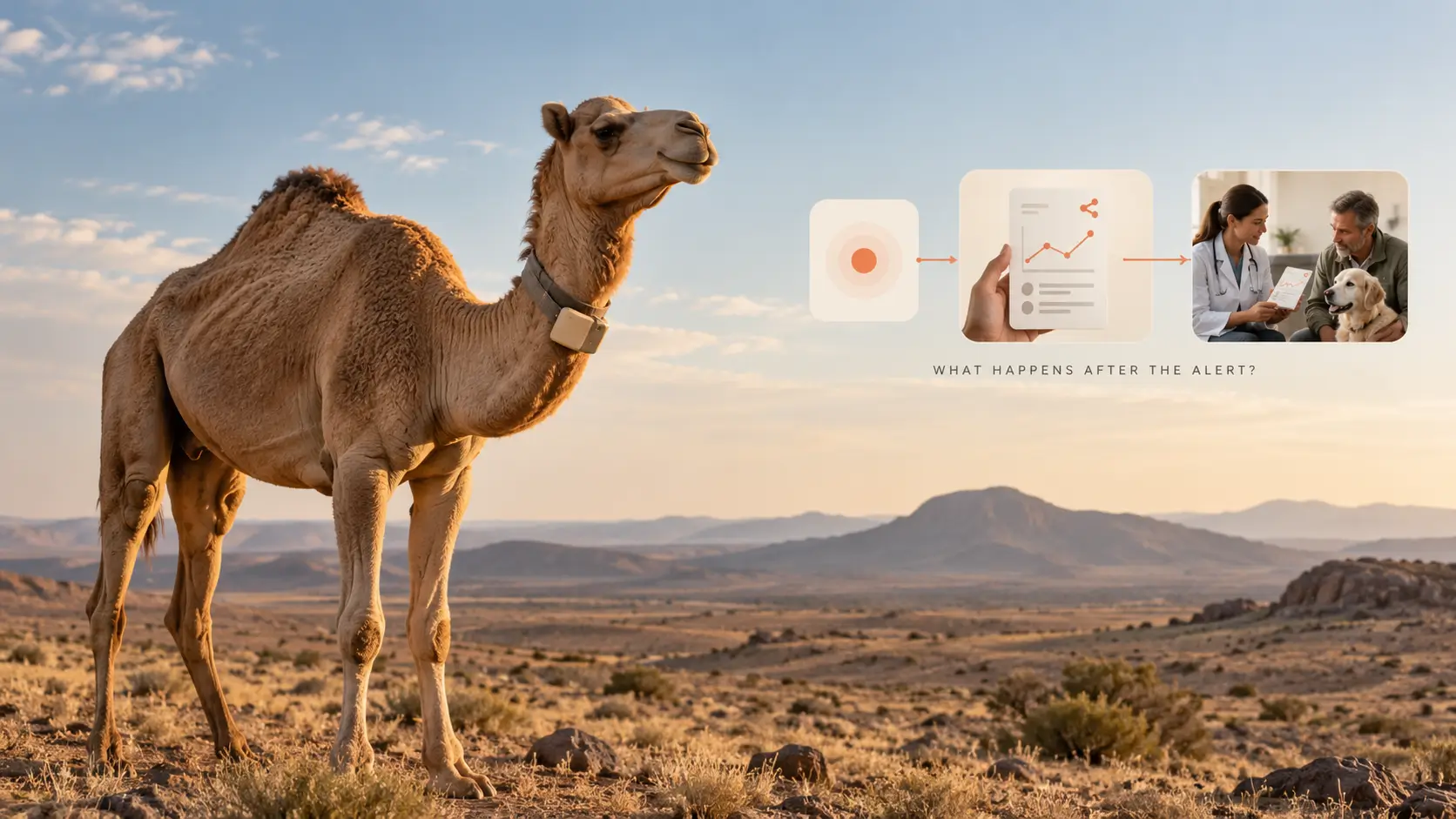
Production-animal wearables now span cattle, sheep, goats, deer, and extensive-grazing species managed across vast, satellite-connected ranges. That breadth is the signal: the category is moving from "gadget" to "infrastructure." For the pet channel, the practical read is simple — the buyer’s bar just went up, and the brands that win will be the ones that show what the data does next, not the ones with the longest sensor list.
KIYE’s stance has not changed: we do not compete on sensor count. We compete on what the data does after it lands — feeding senior-dog nutrition, surfacing vet-ready trends, and staying in the owner’s hands. Distributors evaluating the category should ask every brand the same question we ask ourselves: what happens after the alert?