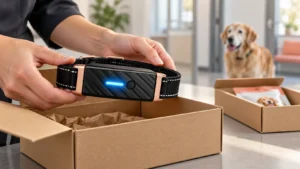
“Longevity” has become the most repeated word in senior dog nutrition. But a longevity claim on a label and a longer, healthier life for the dog are not the same thing. For distributors and retailers, the real question is not whether the category is growing — it is how to tell products built on evidence apart from products built on narrative.
What “longevity” actually means for senior dogs
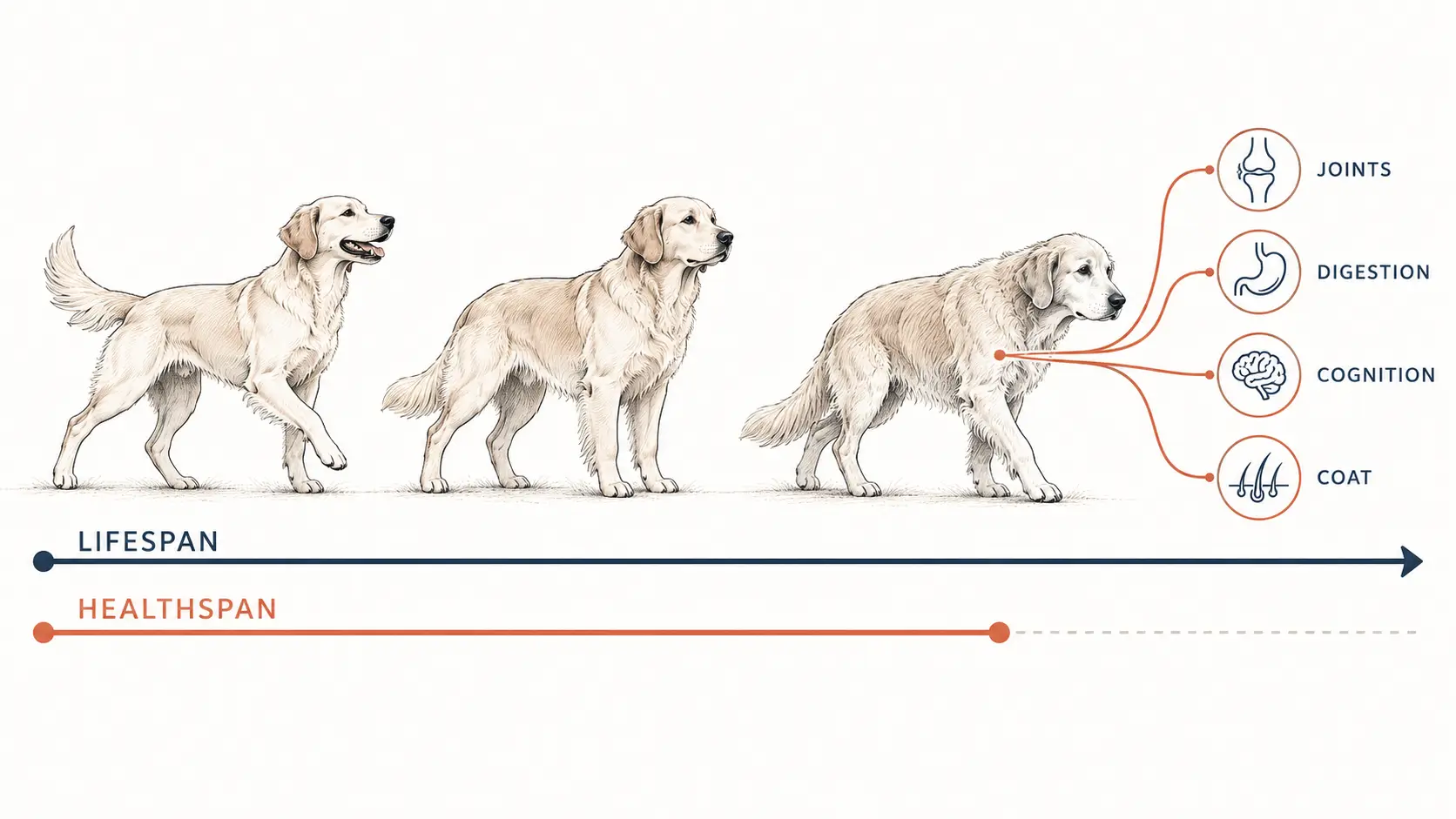
In veterinary and nutrition contexts, longevity splits into two ideas. Lifespan is how long a dog lives. Healthspan is how many of those years are spent mobile, comfortable, and mentally present. Most senior dog products are really selling healthspan — fewer stiff mornings, steadier digestion, calmer nights — even when the packaging says “longevity.”
A dog is generally considered senior around age seven, and earlier for large breeds. From that point, several systems age at once: joints, digestion, cognition, skin and coat, and metabolic regulation. “Longevity” is less a single product category than an umbrella that sits over all of them. That matters for buyers because it changes how you stock the shelf: you are not choosing one longevity SKU, you are assembling a small range that answers specific aging signals your customers can name.
The category behind this language is real and large. In the U.S., more than half of dog-owning households now give their pets a supplement, up sharply over six years, and the supplement segment keeps outpacing the broader pet market. (APPA; U.S. pet supplement market data) The growth is the reason the word is everywhere — and the reason a buyer needs a filter.
The buyer takeaway
Longevity is a story customers arrive with, not a product they ask for by name. Stock the signals — joint, gut, coat, calm — and let the range tell the longevity story.
The ingredient tiers: evidence, promise, and narrative
Not every “longevity” ingredient carries the same weight of proof. Sorting them into tiers helps a buyer judge a claim against the evidence behind it.
| Ingredient type | Evidence tier | What a distributor should ask |
|---|---|---|
| Omega-3 (EPA/DHA) fish oil | Strongest, for joint, skin, and cognition support | Is the EPA/DHA amount stated, not just “fish oil”? |
| Collagen / joint actives | Moderate, well studied for mobility management | Is it paired with a dosing rule, or a vague “daily”? |
| Probiotics / postbiotics | Moderate, but the category is crowded and inconsistent | Which strains, and are they live at expiry? |
| “Cellular / NAD+ / NMN” actives | Emerging; canine data is limited, largely extrapolated | What canine study backs this, not human research? |
| Antioxidant blends | Often narrative-led; broad claims, thin specifics | What exactly does it claim to do, and for which sign? |

A lower evidence tier is not automatically a bad product. The issue is claim matching: a strong claim attached to a thin evidence base is the red flag, not the ingredient itself. A distributor’s job is to make sure the label’s ambition matches its proof.
of supplements do not disclose the active-ingredient amount on the label — one of three gaps an independent audit flagged across the category. (La Petite Labs category audit)
Why distributors should read labels, not slogans
When a category runs on aspiration, the safest buying decision is a short, repeatable checklist applied to every senior dog SKU. Five questions filter most of the noise:
- Is the active amount published? If a brand will not state how much of the active is in the dose, that is a flag, not a secret formula.
- Is there third-party batch testing? Per-batch testing turns a promise into something verifiable on arrival.
- Is dosing weight-banded? Senior dogs range from toy breeds to large breeds; a single “one scoop” rule ignores that spread and hurts compliance.
- Is there a comparable effect signal? “My dog seems happier” is not a signal. Look for products that can be measured against a baseline.
- Is the format senior-friendly? Easy to administer, easy to digest, and stable on the shelf beats a clever format that owners abandon after a week.
An independent category audit found that a large share of supplements ship without finished-product clinical testing, without published testing, and without disclosed active amounts. (La Petite Labs) For a distributor, those three gaps are the screening test before a SKU ever reaches the shelf.
Where continuous monitoring changes the equation
The hardest objection to any senior dog supplement is quiet: “how do I know it’s working?” Owners start a product, the dog looks about the same, and the reorder never happens. This is where a health collar changes the conversation.
A smart collar provides a continuous baseline — rest patterns, activity, heart-rate trends, and weight direction — that exists before and after a nutrition change. When a distributor can show a customer a before-and-after of the dog’s own data, “it might be helping” becomes “here is what changed.” It is the same logic behind a closed-loop health system: monitor, analyze, support, track. Nutrition is the support step; the collar is what makes the support visible.
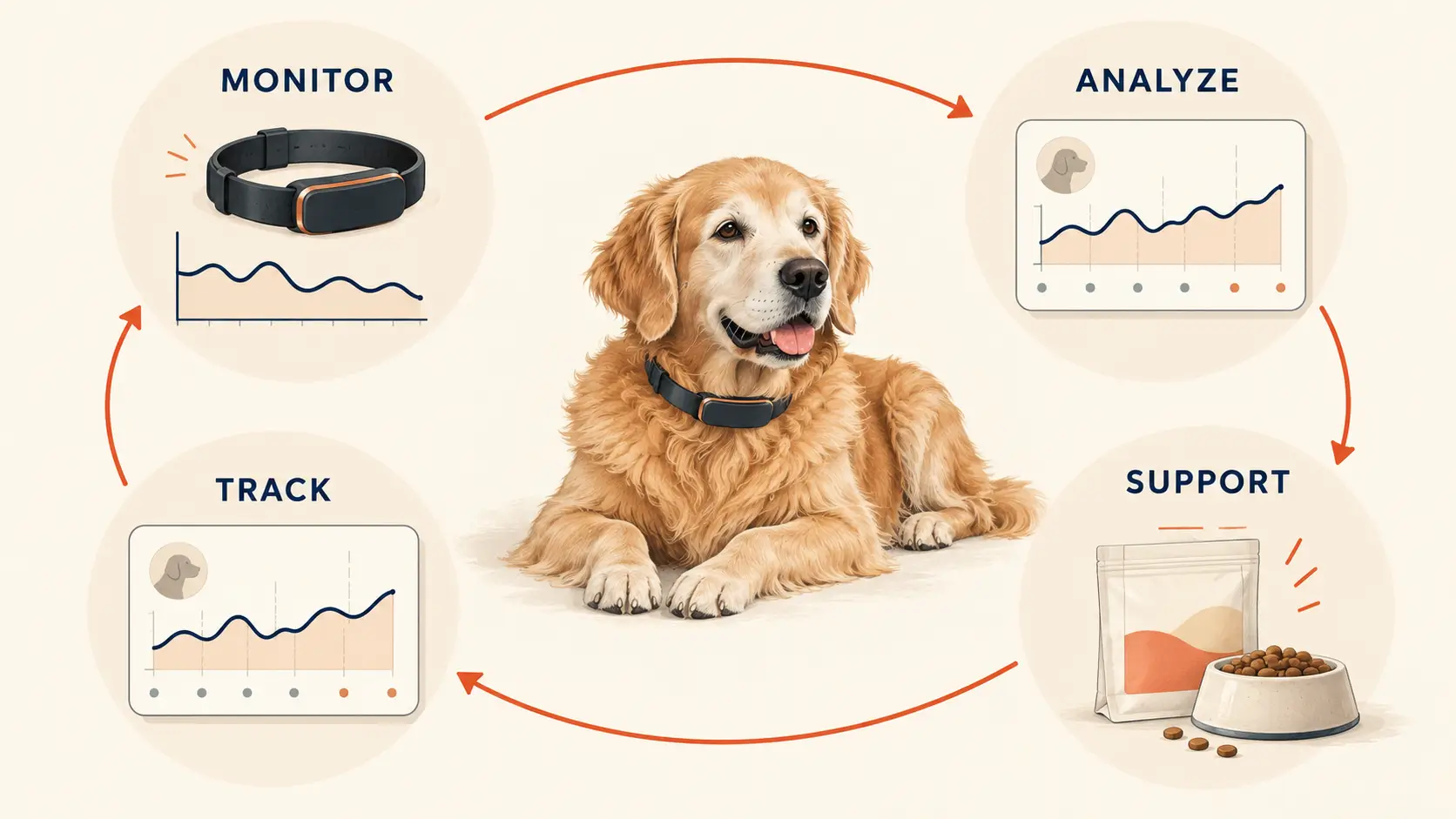
Most brands sell the supplement or the sensor. Holding both — the daily input and the continuous readout — is what lets a distributor answer the reorder question with data instead of hope.
The KIYE position: measurable, not magical
KIYE builds for the senior dog from both sides of that loop. On the nutrition side, the Senior Pet Nutrition line uses a day-and-night sachet format — a morning sachet oriented to digestion and joints, an evening sachet oriented to gut comfort and skin and coat — dosed by body weight so the amount fits the dog, not the average.
On the evidence side, the line is built around openness: published active amounts, batch-level traceability, and third-party testing, the three things the audit above shows most of the category lacks. Paired with the KIYE Smart Health Collar, the same dog generates the continuous readout that makes the nutrition measurable. Two daily touchpoints, one dog, one story a distributor can actually defend in front of a skeptical owner.
This is not a claim that KIYE reverses aging. It is a position that senior dog care should be measurable, not magical — and that a distributor’s margin is safer when the products on the shelf can show their work.
What this means for your range
The longevity category is not slowing down, but it is splitting into two lanes: products that can show evidence, and products that mostly show adjectives. Stocking the first lane protects a distributor in two ways — lower return rates when owners see results, and higher reorder rates when the results are legible. In a category this aspirational, proof is the differentiator that compounds.
Build a defensible senior dog range
See the KIYE distributor pack: weight-banded nutrition, batch-tested transparency, and the collar that makes the results visible. Request wholesale pricing and sample SKUs.