
Many cat owners assume their senior cat is simply slowing down with age. The problem is that arthritis often develops gradually, and cats are experts at hiding pain. Small changes in movement, grooming, and daily habits can be easy to miss until the condition becomes more serious.
The most common signs of arthritis in senior cats include reduced jumping, stiffness, sleeping more than usual, grooming less often, litter box problems, and decreased activity. Recognizing these changes early can help improve your cat’s comfort and quality of life.
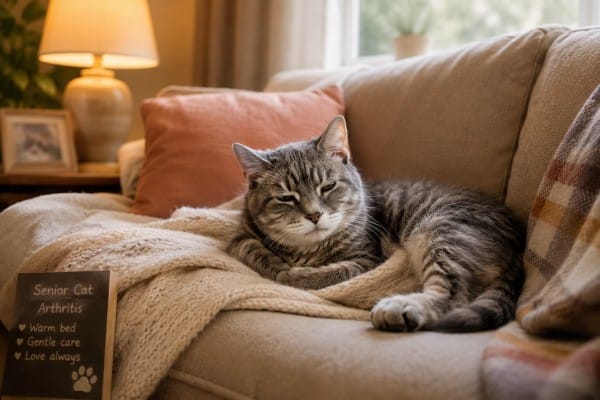
Many cats begin showing signs of joint pain long before owners realize something is wrong. Understanding what to watch for can help you identify problems sooner and take steps to support your cat’s mobility and well-being.
How Can You Tell If Your Senior Cat Has Arthritis?
Cats rarely limp or cry out when they are in pain. This makes arthritis much harder to recognize than it is in dogs. Many owners mistake the early signs for normal aging.
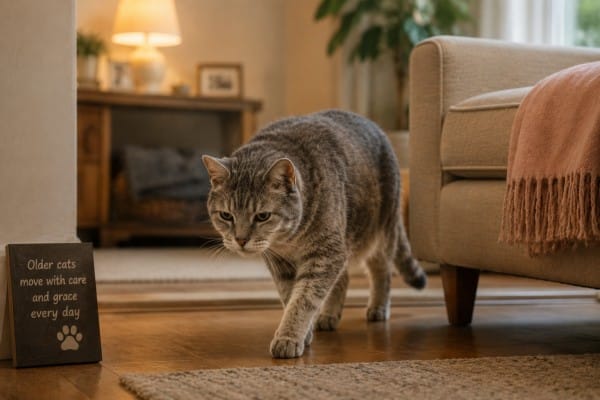
A senior cat with arthritis often shows subtle behavior changes such as avoiding jumps, moving more slowly, sleeping longer, and showing less interest in play or exploration.
Early Signs Many Owners Miss
One of the first signs I often hear cat owners mention is that their cat no longer jumps onto favorite furniture. A cat that once leaped onto countertops may start using lower surfaces or avoid jumping altogether. This is not always laziness. It can be a sign that jumping has become uncomfortable.
Another common change is sleeping more than usual. Senior cats naturally rest more, but arthritis can increase inactivity because movement causes discomfort. Some cats spend most of the day in one location and seem less interested in exploring the house.
Grooming habits can also change. Cats with painful joints may struggle to reach certain areas of their body. As a result, their coat may become greasy, matted, or unkempt, especially around the lower back and hips.
Many owners also notice personality changes. A cat that previously enjoyed being picked up may suddenly resist handling. Some become irritable when touched around painful joints.
Why Cats Hide Pain Better Than Dogs
Cats evolved as both predators and prey. In the wild, showing weakness could make survival more difficult. Because of this instinct, many cats continue normal activities even when they are uncomfortable.
Instead of obvious signs, cats often compensate by changing their routines. They may take longer routes to reach favorite spots, hesitate before jumping, or avoid stairs whenever possible.
| Sign | What It May Mean |
|---|---|
| Jumping less often | Hip, knee, or spine discomfort |
| Sleeping more | Reduced activity due to pain |
| Moving slowly | Joint stiffness |
| Less grooming | Difficulty reaching certain areas |
| Avoiding stairs | Arthritis-related discomfort |
| Irritability when touched | Painful joints |
The challenge is that these changes usually happen slowly. Owners who see their cat every day may not notice the gradual decline. This is why paying attention to small behavioral shifts is often the best way to identify arthritis early.
What Can You Do To Help A Cat With Arthritis?
Many people think there is nothing they can do once a cat develops arthritis. That is not true. While arthritis cannot be completely reversed, several simple changes can make daily life much easier for a senior cat.
Supporting a cat with arthritis involves reducing physical strain, maintaining a healthy weight, providing joint support, and monitoring changes in activity and mobility over time.
Make Daily Life Easier
Small adjustments around the home can have a big impact.
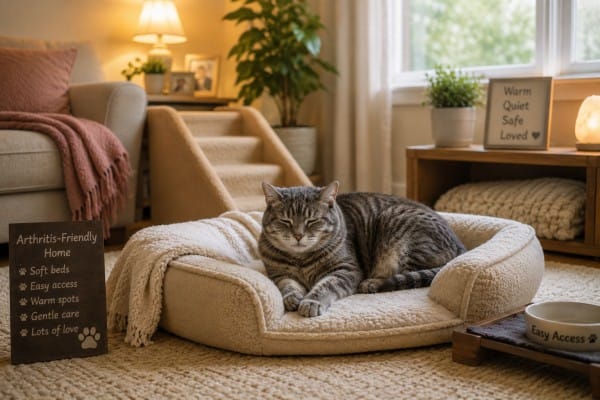
If your cat struggles to reach favorite sleeping spots, consider adding pet steps or ramps. Low-entry litter boxes can also help cats that find climbing difficult. Soft bedding provides additional comfort for aging joints.
Flooring matters as well. Slippery surfaces can increase stress on painful joints. Rugs and non-slip mats often make walking easier and safer.
Support Joint Health
Weight management is one of the most important factors in arthritis care. Excess body weight places additional pressure on already stressed joints.
Many veterinarians also recommend joint-support supplements containing ingredients such as glucosamine, chondroitin, and omega-3 fatty acids. These supplements may help support mobility and reduce inflammation in some cats.
Regular veterinary checkups are also important. Arthritis symptoms can overlap with other age-related conditions, and a veterinarian can help determine the best treatment plan.
Monitor Changes Before They Become Serious
One of the biggest challenges with arthritis is that symptoms usually progress slowly. A cat may become slightly less active each month, making the decline difficult to notice.
Tracking changes in activity, movement, sleep, and daily behavior can help owners recognize trends earlier. This allows conversations with a veterinarian before mobility problems become severe.
If you are looking for products designed to support feline health and daily monitoring, you can explore our collection of cat health and wellness products.
| Support Method | Benefit |
|---|---|
| Healthy weight management | Reduces pressure on joints |
| Pet ramps and stairs | Makes movement easier |
| Soft bedding | Improves comfort |
| Joint supplements | Supports mobility |
| Regular veterinary visits | Helps detect progression |
| Activity monitoring | Identifies changes earlier |
Arthritis is one of the most common health conditions affecting senior cats. The good news is that many cats continue living comfortable and happy lives when their symptoms are recognized early and managed appropriately.
Conclusion
Arthritis often develops slowly in senior cats, which makes it easy to mistake the condition for normal aging. Reduced jumping, increased sleeping, grooming changes, and decreased activity are some of the most common warning signs. By recognizing these symptoms early and making simple adjustments at home, you can help your cat stay comfortable, mobile, and enjoy a better quality of life throughout their senior years.