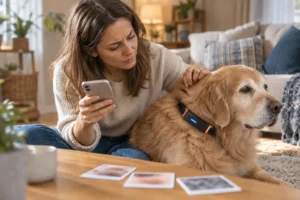
I know the fear of a dog slipping out of sight. An AirTag may feel like an easy answer, but it can create gaps in safety and peace of mind.
I do not think an AirTag should be the only tracking tool on a dog. It may help me find a lost collar in some situations, but it was made for items, not pets. I need a dog-specific tracker if I want more reliable location and daily wellness information.
I understand why many dog owners choose an AirTag. It is small, familiar, and easy to attach to a collar. Still, I need to look beyond the low price and simple setup. I need to know what it can do, what it cannot do, and what kind of information matters most for my dog.
Can I Put an AirTag on My Dog’s Collar?
I can attach an AirTag to my dog’s collar, but I should not assume it works like a real-time pet GPS tracker.
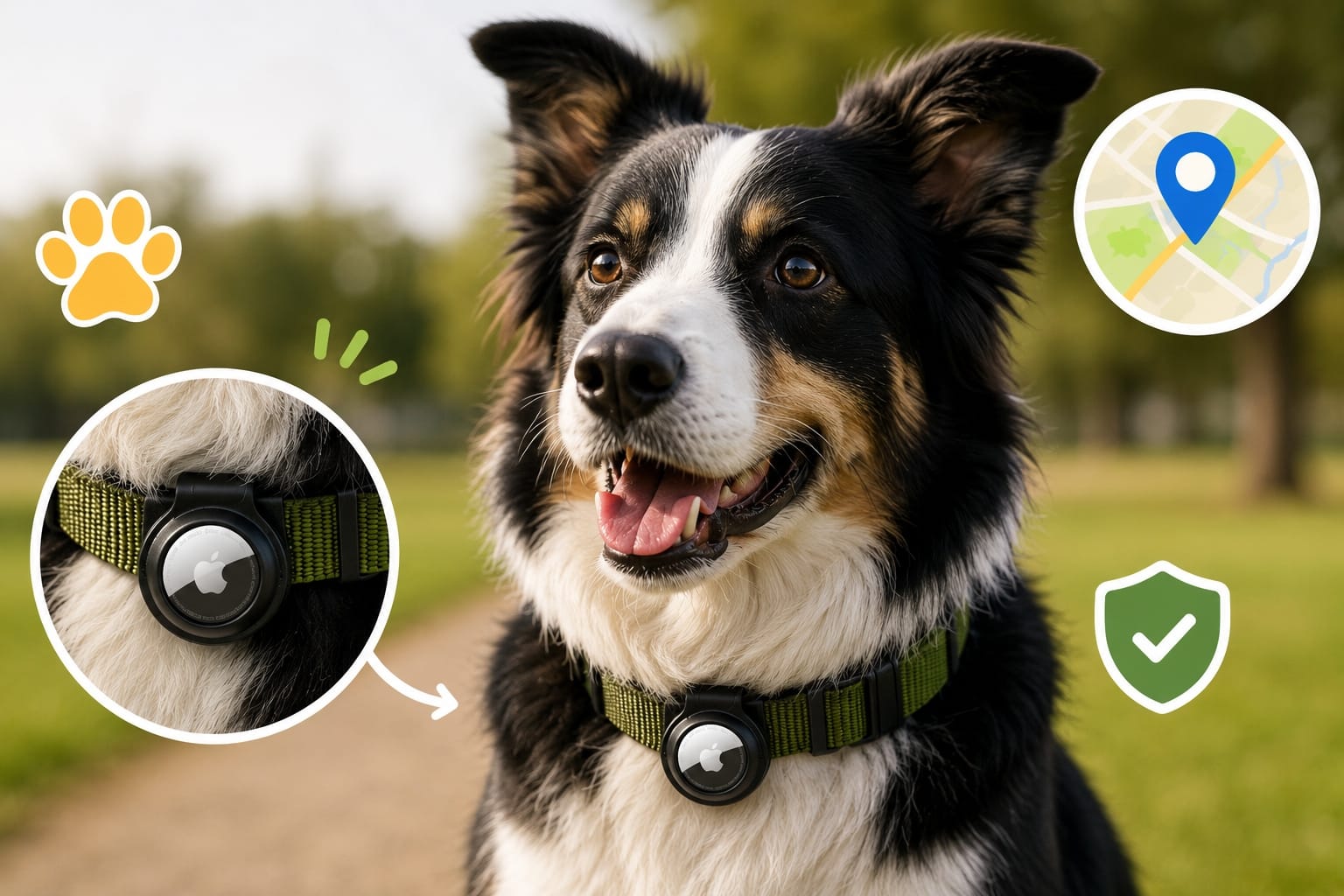
I can put an AirTag on a dog collar if the holder is secure and lightweight. Still, I should use it only as an extra backup. An AirTag does not give me the same live location updates, safety features, or pet-focused data as a dog GPS collar.
I Need to Check the Collar Fit First
I always need to check whether the AirTag holder makes my dog’s collar too heavy or too loose. A small dog may feel the added weight more than a large dog. A loose holder can also swing, catch on objects, or fall off during play.
I should also check the collar every day. My dog may scratch at the holder. My dog may chew it if the tag hangs too low. I should keep the AirTag out of my dog’s reach because small devices can become a swallowing risk.
I Need to Understand What AirTag Tracking Means
An AirTag does not use a built-in GPS system. It uses nearby Apple devices in the Find My network to update its location. This means I may see a location update when another Apple device passes near my dog’s AirTag.
This system may work better in busy areas. It may work less well in quiet parks, rural places, trails, or areas with few Apple users. I cannot expect constant updates when my dog is far from other devices.
| Question I Ask | What an AirTag Can Do | What an AirTag Cannot Do |
|---|---|---|
| Can I attach it to a collar? | I can use a secure AirTag holder. | I cannot assume every holder is safe for every dog. |
| Can it show a location? | I may see a location when nearby Apple devices detect it. | I may not get a live location in remote areas. |
| Can it replace a GPS collar? | It can act as a backup locator. | It cannot offer full pet GPS tracking. |
| Can it monitor my dog’s health? | It can help me find the attached item. | It cannot track activity, rest, or wellness patterns. |
I Need to Think About My Dog’s Daily Life
I may feel comfortable using an AirTag if my dog stays close to home and wears a collar during short walks. I may also use it as a backup on a travel crate, leash bag, or spare collar.
Still, I should not depend on it when my dog has a history of escaping. I should not depend on it when my dog walks off leash in large open spaces. I should not depend on it when I need quick location updates during an emergency.
My dog’s safety plan should include a proper ID tag, an updated microchip, a secure collar or harness, and safe walking habits. An AirTag can be one small part of that plan. It should not be the whole plan.
Does an AirTag Track a Dog in Real Time?
I may see my dog’s last known location through an AirTag, but I should not expect real-time tracking.
An AirTag does not track a dog in real time like a GPS dog collar. It updates location only when it connects with nearby Apple devices. I may receive delayed updates, especially when my dog is in a quiet area without many Apple devices nearby.
I Need to Know the Difference Between GPS and Bluetooth Tracking
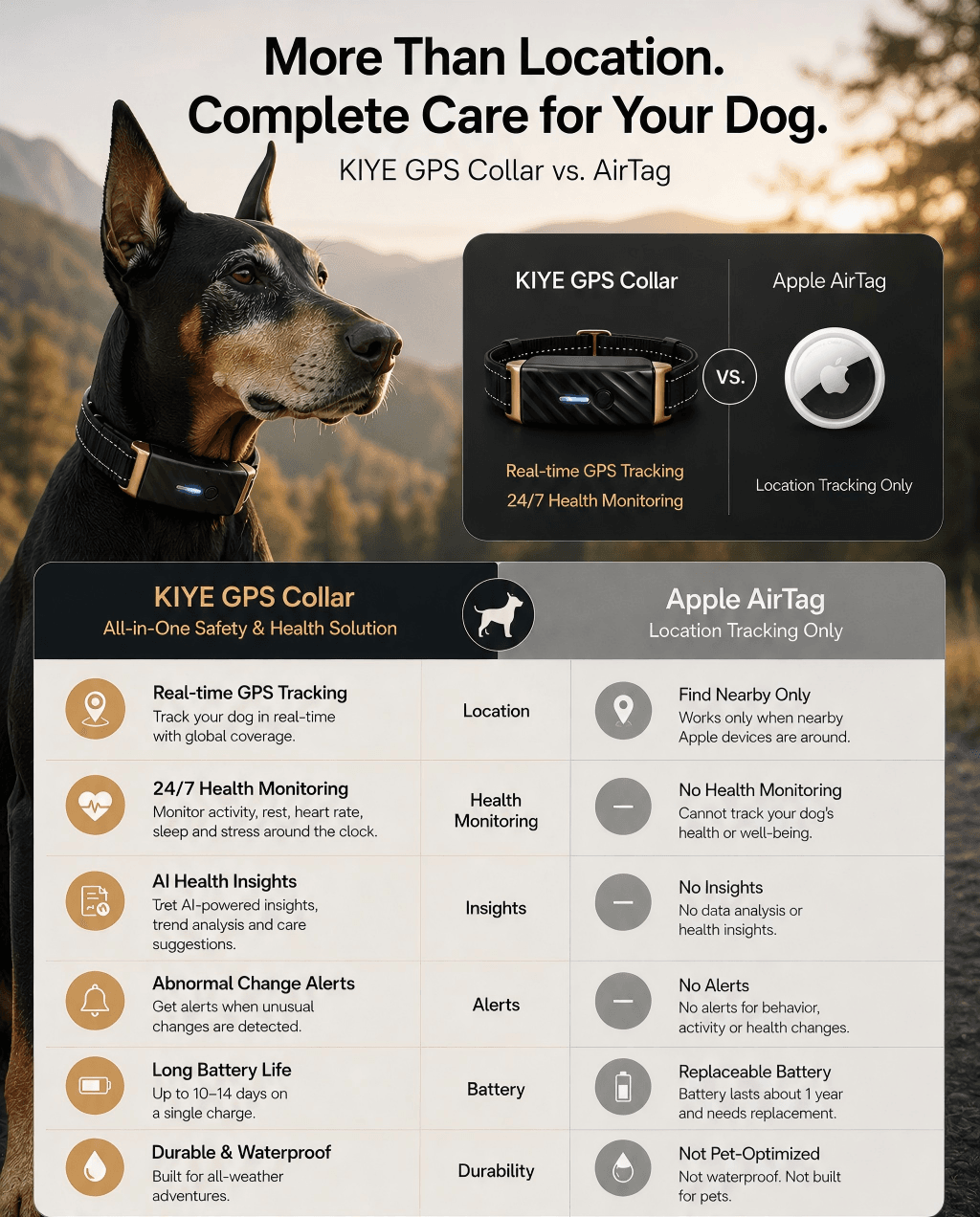
A dog GPS collar uses satellite signals and mobile networks to send location data to an app. This system can show me where my dog is more often, depending on signal coverage and the product plan.
An AirTag uses Bluetooth signals. It does not send its own location through a mobile network. It waits for nearby Apple devices to detect it. Then those devices can help update the tag’s location in the Find My app.
This difference matters when my dog is lost. I may need to know where my dog is now, not where the collar was detected several minutes or hours ago.
| Tracking Feature | AirTag | Dog GPS Collar |
|---|---|---|
| Main technology | Bluetooth and Find My network | GPS and mobile network |
| Live location updates | Usually no | Often yes |
| Works best in | Busy places with Apple devices | Places with GPS and mobile signal |
| Location update speed | Can be delayed | Usually faster |
| Made for pets | No | Yes |
| Escape alerts | No | Often available |
I Need to Consider the Search Area
If my dog runs into a neighborhood with many people using Apple devices, an AirTag may give me useful clues. I may see a recent location and search nearby.
If my dog runs into woods, farmland, empty roads, or a large open field, the AirTag may not update for a long time. I may not know if my dog is still moving. I may not know which direction my dog traveled.
I should also remember that the AirTag location may show where the collar is, not where my dog is. A collar can come off. A tag holder can break. A dog can get separated from the item I am tracking.
I Need a Tool That Matches My Risk Level
I do not need the same tracking setup for every dog. A calm indoor dog has different needs from a fast runner, a hunting dog, or a dog that has escaped before.
If I only want a backup locator for my dog’s belongings, an AirTag may be enough. If I need to locate my dog quickly during walks, travel, or outdoor activity, I should consider a dog GPS collar.
I should choose based on my dog’s behavior and environment. I should not choose only because a device is cheap or popular.
Is an AirTag Safe for Dogs?
I can use an AirTag safely in some cases, but I need to prevent chewing, swallowing, and collar problems.
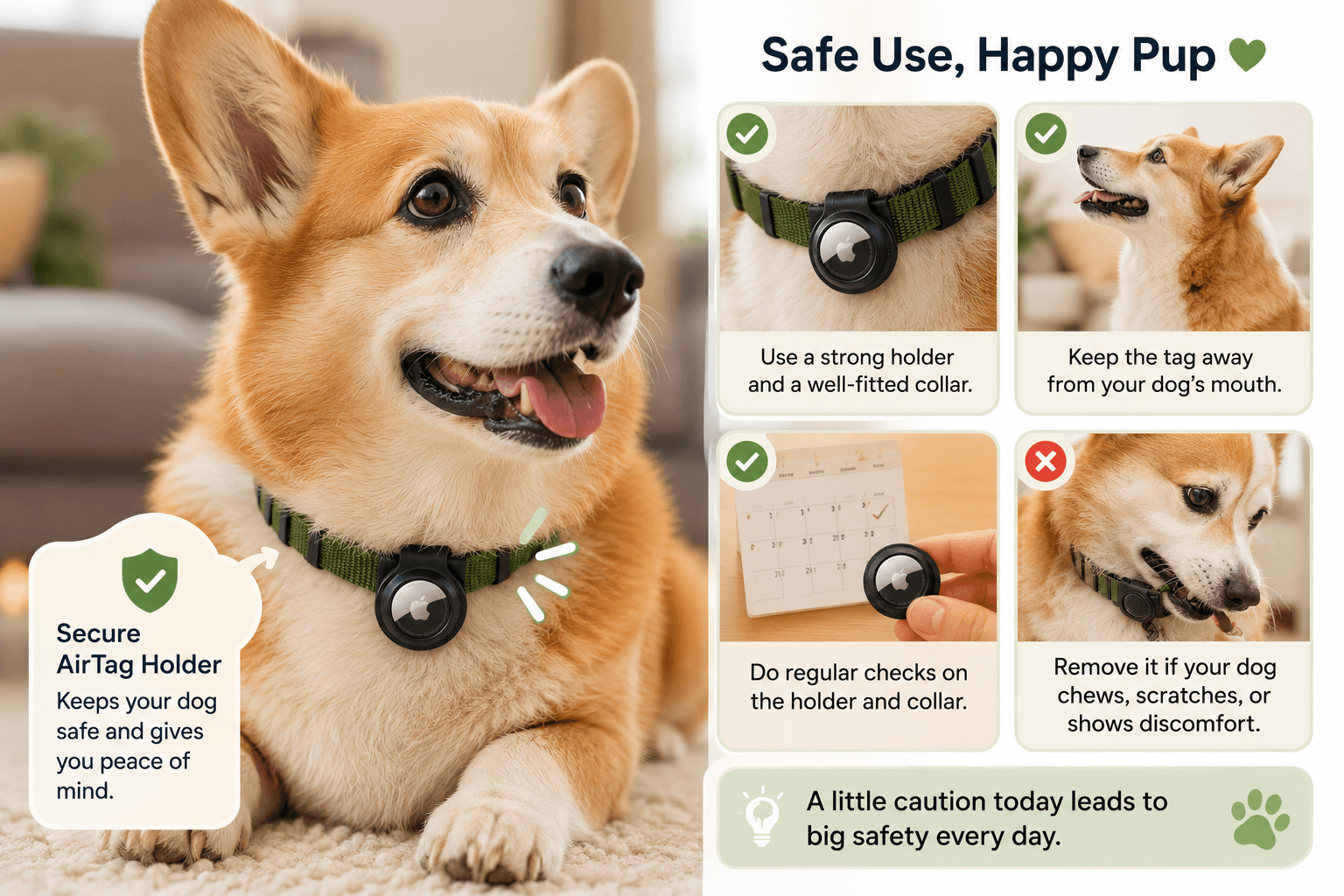
An AirTag can be safe for a dog when I use a strong holder, a well-fitted collar, and regular checks. I should keep the tag away from my dog’s mouth. I should also remove it if my dog chews the holder, scratches constantly, or shows signs of discomfort.
I Need to Watch for Chewing and Swallowing Risks
An AirTag is small enough to become dangerous if my dog chews or swallows it. The device also contains a button battery. Button batteries can be harmful if swallowed.
I should never leave a loose AirTag where my dog can reach it. I should use a holder that closes fully and stays attached to the collar. I should inspect the holder after walks, playtime, and rough activity.
If I think my dog swallowed an AirTag or battery, I should contact a veterinarian or emergency animal clinic right away. I should not wait for symptoms. I should not try to make my dog vomit unless a veterinarian tells me to do so.
I Need to Avoid Heavy or Poorly Fitted Accessories
A heavy collar can bother a small dog. A loose collar can snag on furniture, fences, or branches. A tight collar can rub the skin and make my dog uncomfortable.
I should choose a holder that sits close to the collar. I should avoid holders that dangle below the neck. I should check that I can place two fingers between the collar and my dog’s neck.
| Safety Check | What I Look For | What I Do if I See a Problem |
|---|---|---|
| Holder condition | Cracks, loose parts, broken clips | I replace the holder. |
| Collar fit | Too tight, too loose, or rubbing | I adjust or change the collar. |
| Chewing behavior | My dog bites or pulls at the tag | I remove the AirTag. |
| Skin condition | Redness, hair loss, or irritation | I stop using the collar accessory and ask a veterinarian for advice. |
| Tag position | The tag hangs low or swings | I choose a flatter holder. |
I Need to Think About Comfort, Not Only Tracking
I want my dog to feel comfortable every day. I should not add several heavy devices to one collar. My dog may already wear an ID tag, rabies tag, and leash attachment.
I can spread accessories across a collar and harness if needed. I can also choose a pet tracker that has a built-in design instead of adding more loose items.
My dog cannot tell me that a collar feels annoying in words. I need to watch for scratching, head shaking, rubbing against furniture, or refusing to wear the collar. These signs can help me decide if the setup works.
Can an AirTag Help Me Monitor My Senior Dog?
I can use an AirTag to help locate a collar, but I cannot use it to understand my senior dog’s daily wellness routine.
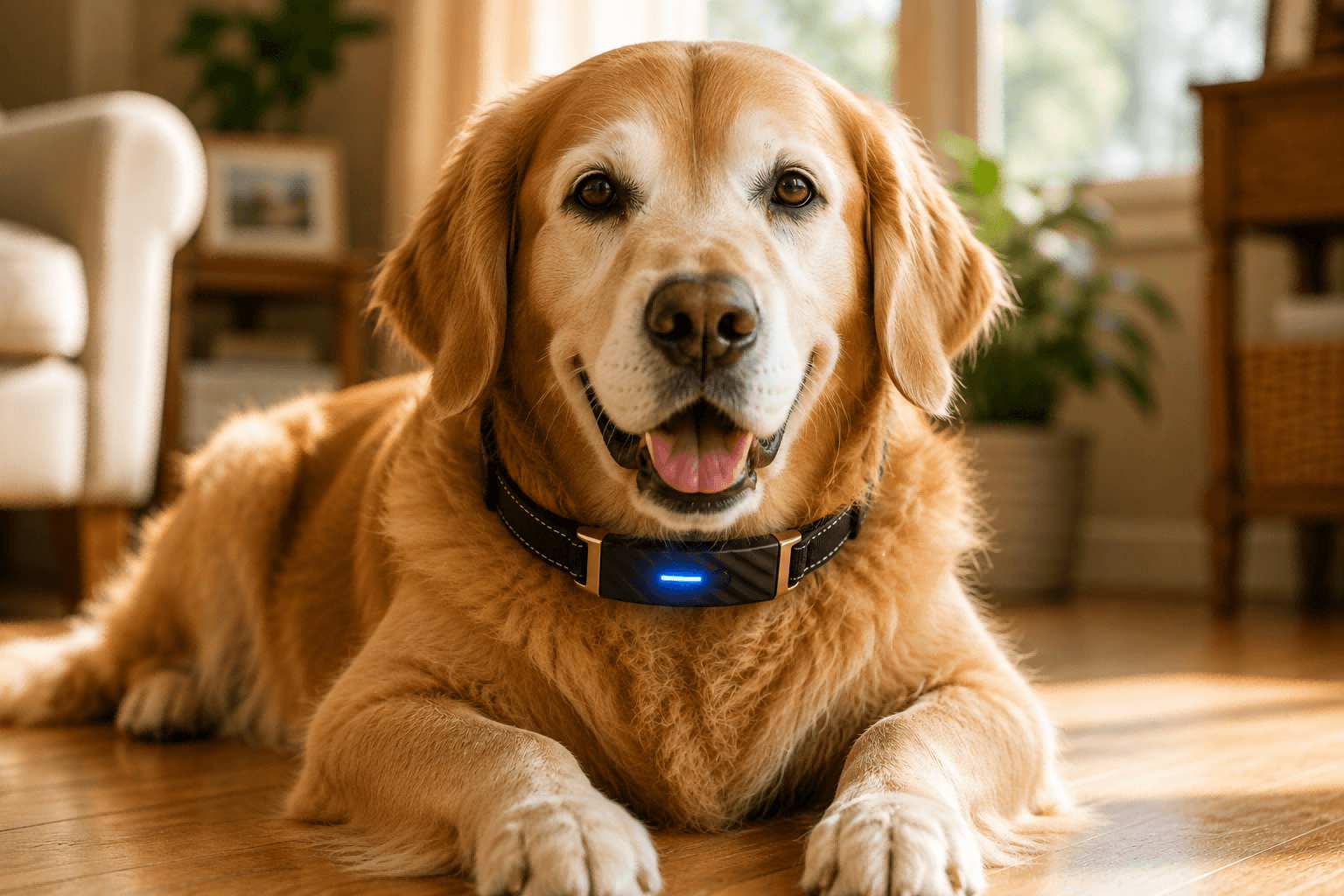
An AirTag cannot monitor a senior dog’s activity, rest, movement changes, or daily patterns. I need a pet-focused smart collar if I want data that helps me notice changes over time and prepare better questions for my veterinarian.
I Need More Than a Location Pin
My senior dog may not show obvious changes overnight. Small changes may appear slowly. I may notice a slower morning. I may notice more resting during a familiar activity. I may notice less interest in a usual walk.
An AirTag cannot record these patterns. It cannot tell me how my dog’s daily routine compares with last week or last month. It cannot help me see whether my dog’s activity and rest balance is changing.
I do not need to panic over one quiet day. I need to look for repeated patterns. This is where daily data can reduce some of my uncertainty.
| Everyday Change I May Notice | Why I May Want to Track It Over Time |
|---|---|
| A slower start in the morning | I can see if it becomes part of my dog’s normal routine. |
| More frequent resting | I can compare rest and activity patterns over several days. |
| Less interest in a usual walk | I can see if the change repeats in similar conditions. |
| Different sleeping patterns | I can notice changes that are hard to remember day by day. |
| Less consistent movement | I can compare the pattern with my dog’s own baseline. |
I Need Data That Gives Me Context
A traditional dog pedometer may count steps. A step count can be useful, but it does not explain the full story. My dog may take more steps because of pacing. My dog may take fewer steps because of a calm rest day.
I need context. I need to understand how activity, rest, and routine work together. I also need to compare my dog with their own usual pattern, not with a generic step goal.
KIYE uses 9-D Biometric Data to help pet parents see a broader picture of daily patterns. This approach supports proactive senior pet health management. It helps me notice routine changes earlier and make more informed choices about daily care and nutrition support.
I Need to Know When to Speak With a Veterinarian
A smart collar does not diagnose a condition. It does not replace a veterinarian. I should contact a veterinarian if my dog shows sudden or serious changes in appetite, breathing, movement, comfort, behavior, or daily function.
Still, daily pattern data can help me explain what I see. I can share a clearer record instead of relying only on memory. I can say that my dog’s activity and rest pattern changed over two weeks. This may help my veterinarian understand my concerns.
I can also use this information when I review my dog’s daily nutrition routine. I may want to ask about senior dog nutrition or joint-support supplements. I should choose nutrition products with care and ask for professional advice when I need it.
What Is Better Than an AirTag for a Dog?
I think the best AirTag alternative depends on what I want to protect: my dog’s location, daily routine, or both.
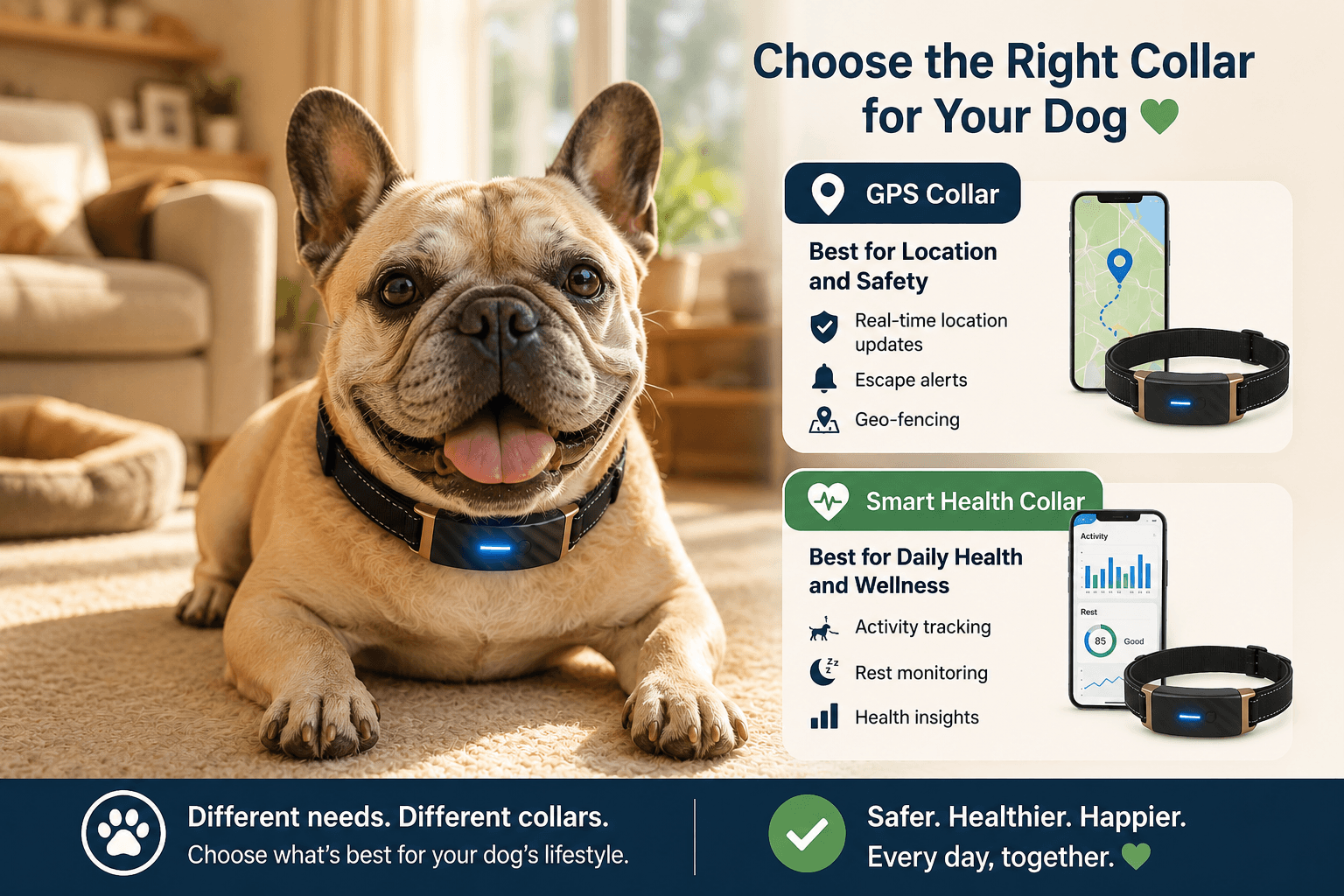
A dog GPS collar is better than an AirTag when I need faster location updates and escape alerts. A smart health collar is better when I want to track daily activity and rest patterns. I can choose a device based on my dog’s lifestyle and my main concern.
I Need to Choose the Main Purpose First
I should start with one simple question: What do I need this device to do?
If I worry about my dog getting lost, I need location tracking. If I worry about changes in my senior dog’s daily routine, I need wellness data. If I worry about both, I need a device that supports both needs.
An AirTag may be useful as a low-cost backup. Still, it should not be my main tool if my dog often travels, escapes, or spends time outdoors.
| My Main Need | Tool That May Fit Better | Why It May Help Me |
|---|---|---|
| I want a backup for a collar or bag | AirTag | I can locate the item when nearby Apple devices detect it. |
| I want to find a lost dog quickly | GPS dog collar | I can receive more frequent location updates. |
| I want escape alerts | GPS dog collar | I can set safe zones in some apps. |
| I want to track senior dog routines | Smart health collar | I can review activity and rest trends. |
| I want better wellness context | Smart health collar with biometric data | I can compare daily patterns with my dog’s baseline. |
I Need to Avoid One-Device Thinking
I do not need to expect one device to solve every problem. I can build a simple safety system around my dog.
I can use an ID tag for fast contact. I can keep my dog’s microchip details updated. I can use a secure harness for walks. I can choose a GPS collar for location needs. I can use a smart collar for daily pattern tracking.
Each tool has a different job. I feel more prepared when I understand those jobs.
I Want Less Guesswork in Senior Dog Care
As my dog gets older, I want to notice changes without checking every small behavior with fear. I want useful information, not more confusing numbers.
A pet-focused smart collar can help me track routine changes over time. It can help me see if my dog is moving, resting, or settling differently from their normal pattern. It can also help me prepare for conversations about daily care and nutrition support.
I do not need an AirTag to do something it was never designed to do. I need to choose the right tool for my dog and use it in a safe, realistic way.
Conclusion
I can use an AirTag as a backup, but I need a pet-focused GPS or smart collar for reliable tracking and better senior dog wellness support.