For years, your Lab has been the definition of pure joy. They are the first to greet you at the door with a wagging tail, the most enthusiastic partner for outdoor adventures, and a loyal shadow following you from room to room. These dogs give us their absolute everything. However, because of their incredibly resilient, people-pleasing nature, they also tend to hide their vulnerability.
If you own a Chocolate Lab, you might also be carrying a silent, heavy anxiety. Veterinary data has revealed a startling biological reality: Chocolate Labradors have a significantly shorter average lifespan compared to Black and Yellow Labs.
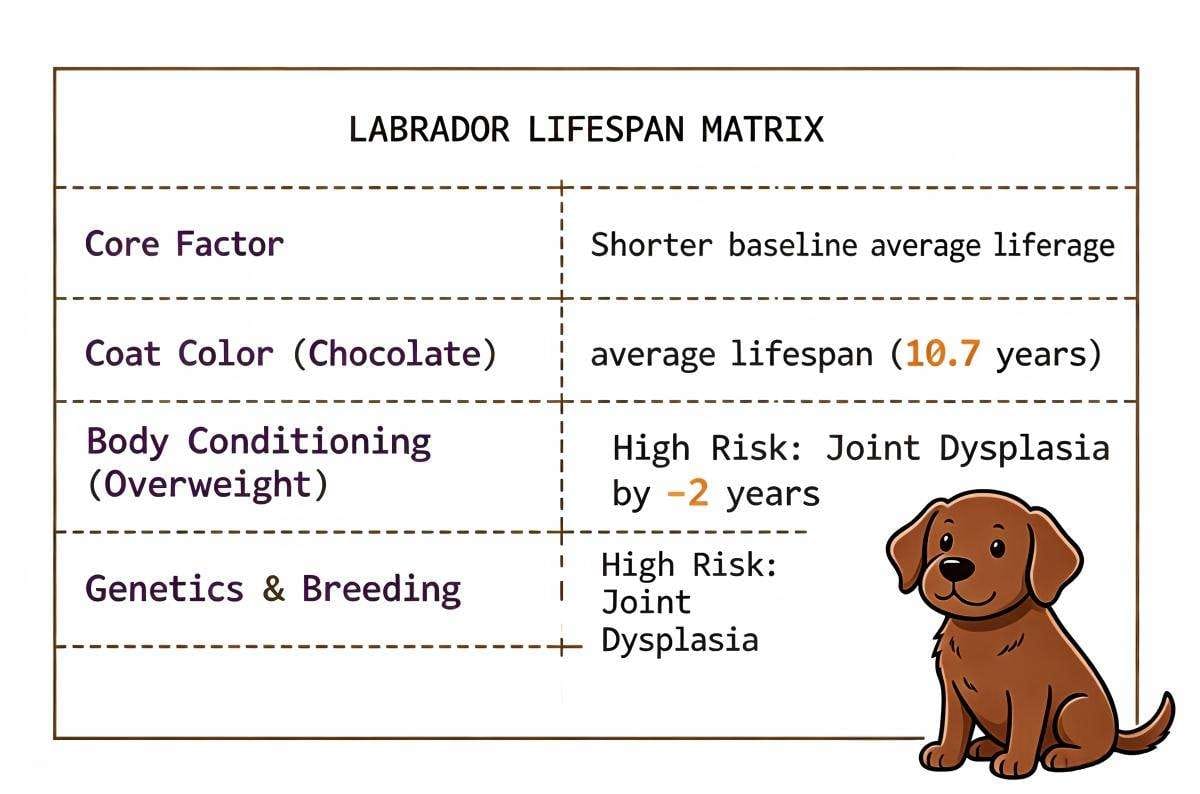
According to a landmark 2018 study published in the journal Canine Genetics and Epidemiology, researchers from the Royal Veterinary College’s (RVC) VetCompass programme, in collaboration with the University of Sydney, analyzed health data from a massive cohort of 33,320 Labradors receiving primary veterinary care in the UK. The peer-reviewed findings confirmed that while standard Yellow and Black Labs regularly live to a median of 12.1 years, Chocolate Labs have a median lifespan of just 10.7 years—meaning chocolate-colored individuals live roughly 1.4 years fewer than their non-chocolate littermates.
As your retriever transitions into their senior life, their biological needs change quietly. Many dedicated pet parents notice their old friend sleeping a bit longer or stepping a little more carefully and shrug it off as just "slowing down." The reality is often much more complex, driven by hidden inflammation and systemic stress.
While the breed’s genetic timeline presents challenges, understanding the distinction between mere survival and true healthspan is what determines the quality of those twilight years. This comprehensive, step-by-step guide is designed to help you decode the silent behavioral shifts in your aging Lab, helping you intercept discomfort long before it turns into a medical emergency.
FAQ: Why Do Chocolate Labs Have Shorter Lifespans?
When looking at how long Labs live, the genetic lottery of coat color plays an unexpected role in systemic health. The RVC VetCompass study found that the shorter lifespan of Chocolate Labs isn’t caused by a single fatal flaw, but rather a lifetime of cumulative physiological strain.
What Is the Link Between Lab Coat Color and Lifespan?
The chocolate coat color is a recessive trait. To produce chocolate puppies, both parents must carry the specific gene. When breeders selectively mate dogs primarily for color, it drastically narrows the genetic pool. This reduced genetic diversity creates an unintended biological consequence: Chocolate Labs suffer from a significantly higher incidence of recurrent ear infections (otitis externa), painful skin hot spots, and chronic allergies.
Over a timeline of 10 years, these repetitive, seemingly "minor" skin and ear health issues force the immune system into a state of chronic, low-grade systemic inflammation. This persistent inflammatory state quietly accelerates cellular aging and puts secondary stress on vital metabolic organs.
How Does Obesity Accelerate Aging in Senior Labs?
Regardless of color, these dogs are genetically predisposed to weight gain due to a common mutation in the POMC gene, which directly regulates appetite. Because their brains struggle to register fullness, Labs are prone to carrying extra weight.
A landmark 14-year lifetime study demonstrated that individuals kept at an ideal, lean body condition lived 1.8 to 2 years longer than their slightly overweight littermates. For a Chocolate Lab already battling a restricted genetic timeline, managing weight and chronic joint strain is the single most critical longevity intervention.
FAQ: What are the Silent Aging Signs in Labs?
Because these dogs are highly driven by food and human approval, they will frequently push through significant physical pain just to retrieve a ball or follow you upstairs. To protect them, you must look past their enthusiasm and spot these silent, systemic behavioral shifts.
1. Why Is My Dog Hesitating Before Jumping into the Car?
The Observation: Your pet used to launch directly into the back of the SUV or onto the couch without a second thought. Now, they approach the vehicle, stop, lower their head slightly, and pause for a split second before making the leap.
Why It Is Easily Missed: It takes less than a second. Owners often mistake this for momentary distraction or "politeness" rather than physical hesitation.
Underlying Health Issue: This micro-hesitation is a classic early indicator of bilateral Hip Dysplasia or progressive Osteoarthritis in the stifle (knee) joints. The pause is your dog mentally calculating the impending joint impact.
Actionable Care Advice: Stop forcing or allowing high-impact jumps. Introduce non-slip pet ramps for vehicles and use orthopedic, pressure-relieving beds on the lower levels of your home.
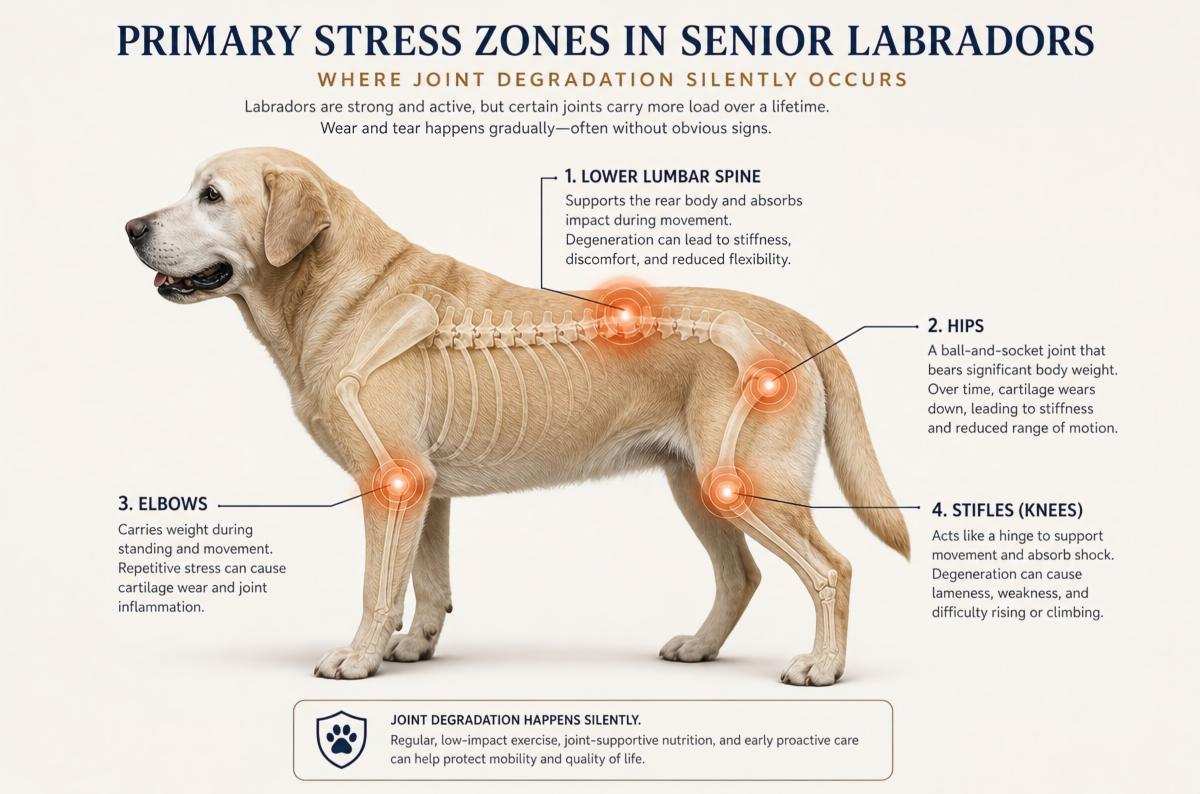
[Insert Image Suggestion: Joint Pressure Points Diagram]
Visual Description: A diagram of a senior Labrador highlighting primary stress zones—lower lumbar spine, hips, elbows, and stifles—illustrating where joint degradation silently occurs.
2. Why Does My Old Dog Shift Weight to Their Front Legs?
The Observation: When standing naturally at the food bowl or watching out the window, your retriever tucks their hind legs slightly forward under their belly, causing their front elbows to flare outward.
Why It Is Easily Missed: The dog is still standing and walking normal distances, so the subtle shift in baseline posture goes unnoticed during casual daily interactions.
Underlying Health Issue: This breed carries roughly 60% of their weight on their front legs naturally. When chronic pain develops in the hips or lower back, they shift even more weight forward to unload the painful hindquarters. This causes secondary muscle tension and pain in the neck and shoulders.
Actionable Care Advice: Check the musculature of your dog’s thighs. If the hindquarters look noticeably thinner (muscle atrophy) while the shoulders look bulkier, schedule a veterinary mobility assessment.
3. Why Is My Senior Lab Restless and Changing Positions at Night?
The Observation: Your companion used to curl up and sleep soundly for eight hours straight. Now, you hear them getting up, circling, shifting positions 5 to 10 times a night, or changing from the rug to the bare floor repeatedly.
Why It Is Easily Missed: Because the dog doesn’t cry out or whine, owners assume they are simply adjusting to ambient temperature or waking up due to normal age-related bladder urgency.
Underlying Health Issue: This is often driven by nocturnal joint throbbing. As body temperature drops and movement ceases during prolonged rest, joints stiffen up, causing deep discomfort that forces the dog to wake up and search for a position that alleviates the pressure.
Actionable Care Advice: Ensure their sleeping area is completely draft-free. Invest in memory foam orthopedic beds that support joint alignment and prevent them from bottoming out onto the hard floor.
4. Why Does My Dog Collapse and Sleep for Hours After a Walk?
The Observation: During your standard 20-minute neighborhood walk, your Lab keeps pace beautifully, tail wagging. However, upon returning home, they collapse directly onto their bed and sleep deeply for several hours, showing a temporary reluctance to get back up for water or toys.
Why It Is Easily Missed: Owners view this as a positive outcome, thinking, "We had a great walk, now he’s happily tired out."
Underlying Health Issue: There is a distinct line between healthy exercise fatigue and pain-induced exhaustion. A rapid collapse post-walk suggests that the dog used an immense amount of adrenaline to keep up with you and is now experiencing an immediate inflammatory rebound in their joints.
Actionable Care Advice: Switch from one long daily walk to two or three shorter, low-intensity sniff walks. Focus on mental stimulation over raw physical depletion.
5. Why Is My Dog Constantly Licking Their Wrists and Ankles?
The Observation: While resting in the evening, your pet begins repeatedly licking or chewing at their front wrists or rear ankles, often leaving the fur damp or slightly discolored.
Why It Is Easily Missed: It is easily dismissed as typical self-grooming, minor allergies, or a response to boredom.
Underlying Health Issue: Dogs lack the words to describe localized, dull pain. Instead, they apply localized counter-pressure and tongue friction to soothe aching joints. Chronic licking releases endorphins that temporarily mask joint pain, but it can quickly lead to painful lick granulomas or secondary skin infections.
Actionable Care Advice: Inspect the joint areas for heat, swelling, or sensitivity to light pressure. Discuss joint supplements, omega-3 fatty acid therapies, or prescription anti-inflammatories with your vet.
6. Why Is My Old Dog Pacing and Staring at Walls at Night?
The Observation: As dusk approaches, your otherwise calm pet begins pacing aimlessly through the hallways, panting without physical exertion, or standing in a room corner staring blankly at a wall or a door frame.
Why It Is Easily Missed: It is frequently attributed to temporary restlessness, needing to go outside to eliminate, or hearing distant noises outside.
Underlying Health Issue: This behavior points toward Canine Cognitive Dysfunction (CCD), essentially dementia in dogs. The disruption of internal circadian rhythms causes heightened confusion, anxiety, and disorientation during low-light hours.
Actionable Care Advice: Keep your home’s lighting consistent during evening hours to minimize confusing shadows. Establish a rigid, comforting bedtime routine and consult your veterinarian about specialized diets or neuro-protective supplements designed to support brain aging.
7. Why Does My Senior Dog’s Bark Sound Hoarse or Raspy?
The Observation: Your retriever’s bark sounds noticeably hoarser, raspy, or loses its deep resonance. Additionally, you notice they are panting more loudly or making a distinct "clicking" or harsh, rasping sound when breathing deeply after excitement.
Why It Is Easily Missed: Owners assume the dog simply strained their throat barking at a delivery worker or that the raspy breathing is an inevitable consequence of normal pulmonary aging.
Underlying Health Issue: This breed is highly prone to Laryngeal Paralysis, a progressive neurological condition where the cartilages of the larynx fail to open fully during inhalation. This reduces airflow, compromises their ability to cool themselves through panting, and can become life-threatening in hot weather.
Actionable Care Advice: Transition immediately from a traditional neck collar to a supportive body harness to alleviate any direct pressure on the trachea. Keep them strictly in air-conditioned environments during hot, humid days.
8. Why Is My Trained Dog Suddenly Ignoring Commands to Sit or Down?
The Observation: Your highly trained companion suddenly seems to "ignore" commands like "Down" or "Roll Over," or takes an unusually long time to slowly lower their body into a sit position when asked.
Why It Is Easily Missed: It is often misinterpreted as stubbornness, age-related stubborn behavior, or selective hearing loss.
Underlying Health Issue: The physical mechanics of transitioning from a stand to a tight sit or a full down require immense core strength, spinal flexibility, and stifle control. What looks like stubbornness is actually a conscious choice to avoid a physically painful body movement.
Actionable Care Advice: Modify your training expectations. Stop demanding rapid sits or downs; instead, reward stable, comfortable standing positions to preserve their dignity and comfort.
FAQ: How Do I Check My Senior Dog’s Health at Home?
Use this practical, non-invasive checklist to establish a weekly baseline of your pet’s health trends:
| Category | Assessment Criteria | Normal Baseline | Warning Indicator |
|---|---|---|---|
| Mobility | Rising from a smooth hardwood or tile floor. | Pushes up effortlessly in one fluid motion. | Uses front paws to pull up while hindquarters fishtail or slide out. |
| Hydration & Diet | Time spent standing over the water or food bowl. | Stands squarely on all four legs, eating comfortably. | Shifts weight back and forth continuously; front legs wide apart for balance. |
| Resting Respiration | Counting breath cycles during deep, non-dreaming sleep. | Under 25 breaths per minute; smooth, quiet chest movement. | Consistent spikes above 30 breaths per minute; rapid or shallow breathing. |
| Cognitive Awareness | Reaction to family members entering the main living space. | Immediate, purposeful orientation and structural engagement. | Delayed recognition; wandering aimlessly to the wrong side of the door. |
FAQ: How Can AI Help Track My Aging Dog’s Discomfort?
As deeply as we love our pets, human observation has its natural limits. We cannot watch our dogs while we are fast asleep, at the office, or when they are quietly masking their discomfort in another room. Because a retriever’s natural instinct is to present their happiest self to you, visible signs like a distinct limp or an audible whine only occur after their internal coping mechanisms are completely overwhelmed.
This is exactly why we built the KIYE Smart Collar—not as a simple tracker, but as an elegant, non-invasive AI-Powered Health Assistant designed specifically for the unique vulnerabilities of senior pets.
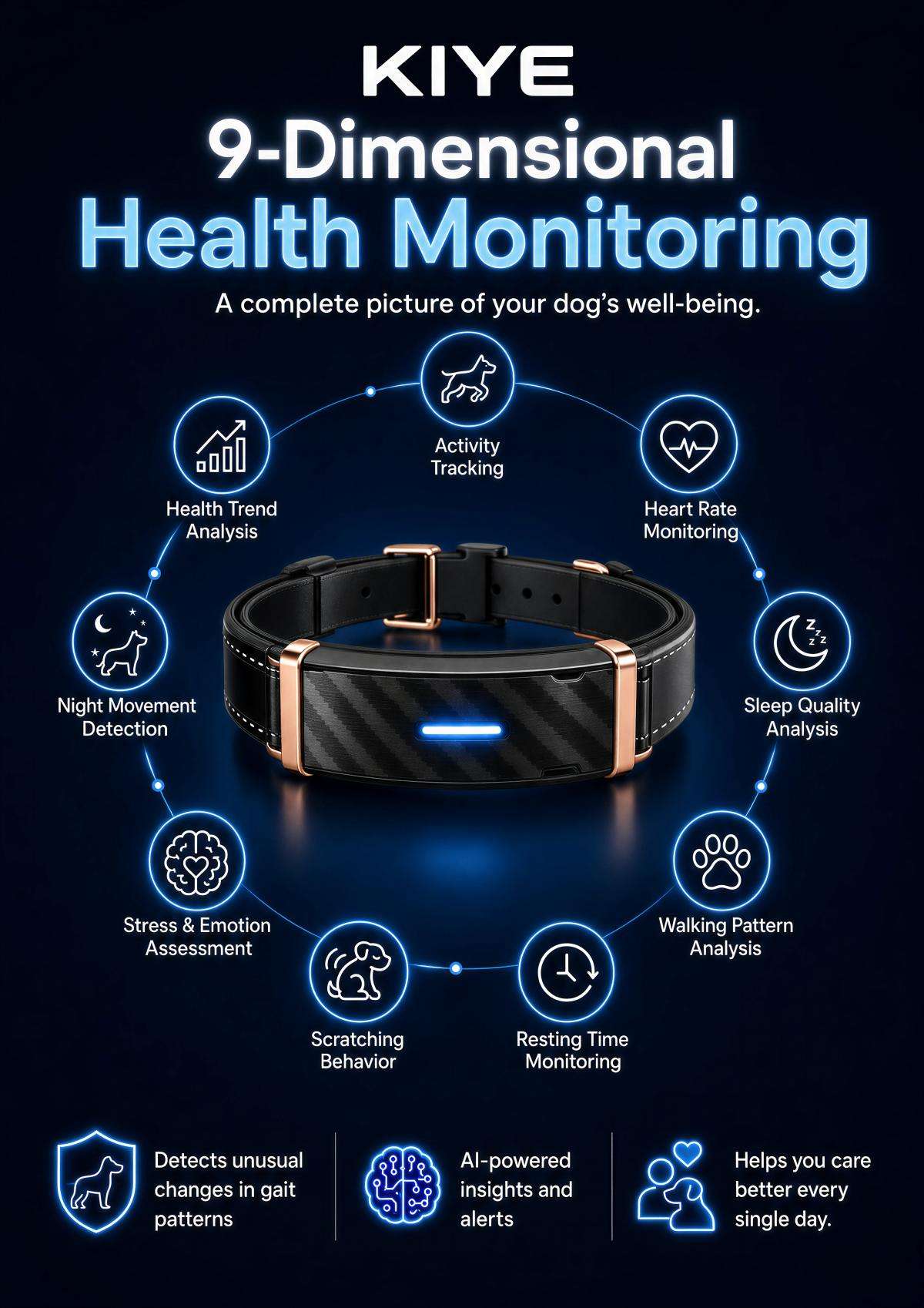
By utilizing medical-grade 24-hour motion and biometric sensors paired with a cloud-based AI interpretation engine, KIYE continuously tracks what your eyes cannot see:
Micro-Awakening Metrics: KIYE maps out sleep architecture down to the minute. If chronic inflammation or joint throbbing is causing a hidden 15% increase in micro-awakenings throughout the night, KIYE alerts you to the trend before it evolves into a visible daytime limp.
Joint Pressure Dynamics: The collar tracks the precise acceleration and angle changes when your dog rises, sits, and walks. It detects subtle shifts in weight distribution and micro-hesitations before jumps, providing objective data regarding joint degradation.
Resting Respiratory Rate (RRR) Patterns: A sustained increase in your Lab’s sleeping respiration rate is an early clinical indicator of systemic pain, metabolic stress, or underlying cardiovascular strain. KIYE builds an individual baseline for your dog, catching subtle upward trends that human eyes miss entirely.
Anxiety & Pacing Analysis: KIYE separates normal daytime movement from the distinct, repetitive wandering patterns associated with early-stage Canine Cognitive Dysfunction, giving you the clarity needed to make proactive adjustments to their routine.
Data Sources & Research References
To ensure our readers have access to top-tier veterinary science, our canine longevity guidelines are built directly upon peer-reviewed, large-scale studies.
The VetCompass Labrador Lifespan Study (2018): McGreevy, P.D., Wilson, B.J., Mansfield, C.S. et al. Labrador retrievers under primary veterinary care in the UK: demography, mortality and disorders. Canine Genetics and Epidemiology.
Read the full Open Access Research Paper
Review the Royal Veterinary College (RVC) Official Press Release
Conclusion
Understanding why certain Labs face a shorter lifespan isn’t a reason to despair; it is an empowerment tool. By learning to look closely at the subtle shifts in your retriever’s movement, posture, and nighttime habits, you can directly override genetic statistics and expand their true healthspan.
You don’t have to navigate these golden years in the dark. Your devoted companion has spent their whole life watching over you; let data and modern technology help you return the favor.
Turn hidden signs into clear, actionable care. Discover how the KIYE AI-Powered Health Assistant can help you decode your senior dog’s unique health needs today. Let’s make every golden moment count, together.