Is Pet Insurance Starting to Use Collar Data?
A quiet shift is happening at the edge of the pet industry: insurers are beginning to look at the data coming off smart collars. For distributors and clinics, that changes the sales conversation. A collar is no longer just a loss-prevention gadget — it is becoming a data source insurers want. Here is what is actually happening, what is still hype, and what a buyer should check before stocking a line.
Why Insurers Are Looking at Collar Data
Pet insurance has always priced on averages: breed, age, region. That works until it doesn’t — claims are lumpy, and prevention is cheaper than treatment. Wearable data offers a different model. If a device can show that a dog is active, resting normally, and not showing early behavior shifts, an insurer has a reason to believe that animal will cost less over time. In more than one market, this is already moving from pilot to product: insurers are testing usage-based models where consistent, healthy behavior patterns feed into pricing or rewards.
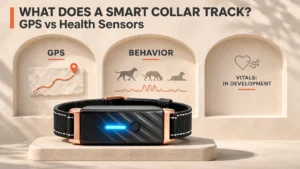
The mechanism is the same one car insurers use with telematics. Drive safely, pay less. For pets, the proxy is "live like a healthy animal" — and a collar is the cheapest, most continuous way to observe it. None of this requires clinical-grade vitals. The location, activity, and behavior layers that most shipping collars already capture are enough to build a behavior baseline an insurer can score.
The takeaway for buyers: A collar’s value to an insurer comes from continuous, everyday behavior data — not from a heartbeat reading. That is good news for distributors, because the shippable hardware already does it.
How Pet Insurance UBI Would Actually Work
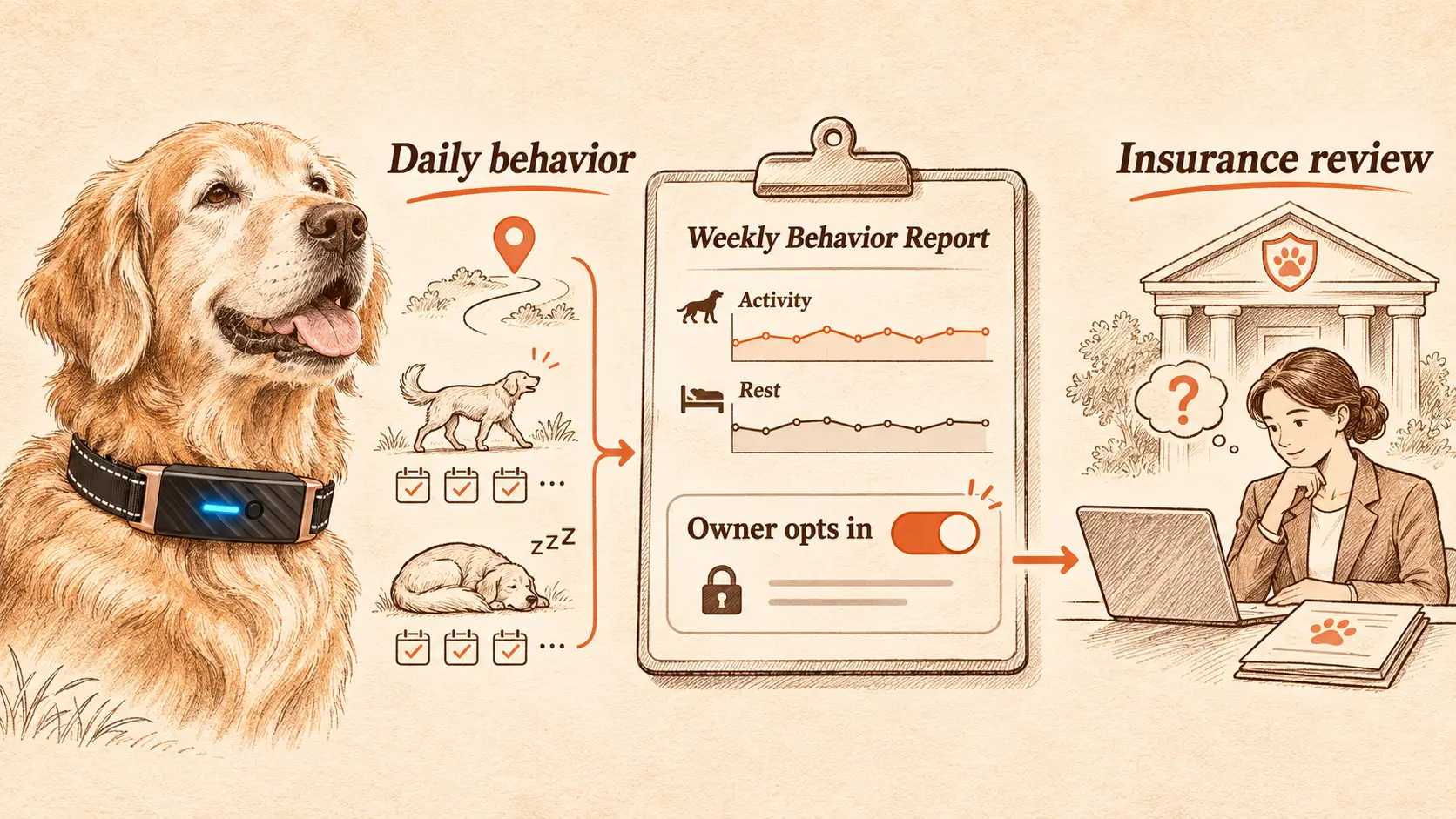
Usage-based insurance (UBI) for pets follows a simple loop. A collar collects daily activity and rest patterns. The owner shares that trend with an insurer — usually through an integration or a data export. The insurer scores the pattern and adjusts the policy: a lower premium, a wellness reward, or simply a better risk profile at renewal. Some programs also use the data to nudge owners toward preventive care, which lowers claims for everyone.
Two things decide whether a program is real or a press release. First, the data has to be portable — the owner (and their distributor’s platform) must be able to move it to the insurer, not trap it inside one app. Second, the model has to respect privacy: the owner shares, the insurer scores, and nothing is resold without consent. Programs that skip either step tend to stall when regulators or customers push back. A realistic scenario looks like this: an owner opts in, the collar’s weekly behavior summary is shared with the insurer through an API, and the insurer applies a modest wellness credit at renewal — no diagnosis, no surveillance, just a verified healthy routine.
What This Means for Distributors
For a distributor, the insurance trend is a new angle — but a careful one. On the upside, it gives retailers and clinics a fresh reason to recommend a collar: "this device may help your insurance profile," not just "don’t lose your dog." That reframes the collar from a panic purchase into a wellness investment, which lifts both conversion and reorder. On the downside, it invites overpromising. A distributor should never tell a customer "buy this and your premium drops" unless a specific insurer program backs that claim in their market.
The safer, more durable pitch is structural: stock a collar brand whose data is portable and exportable, so it is ready for whatever insurance or veterinary model emerges in your region. A distributor who carries a locked-data brand will watch those opportunities pass to a competitor whose hardware plays well with others. This is the same logic clinics already apply — as we cover in what a smart collar’s AI should actually do for vet clinics, the question is never "does it have AI," it is "can the output leave the app."
What a Distributor Should Check in a Collar Brand
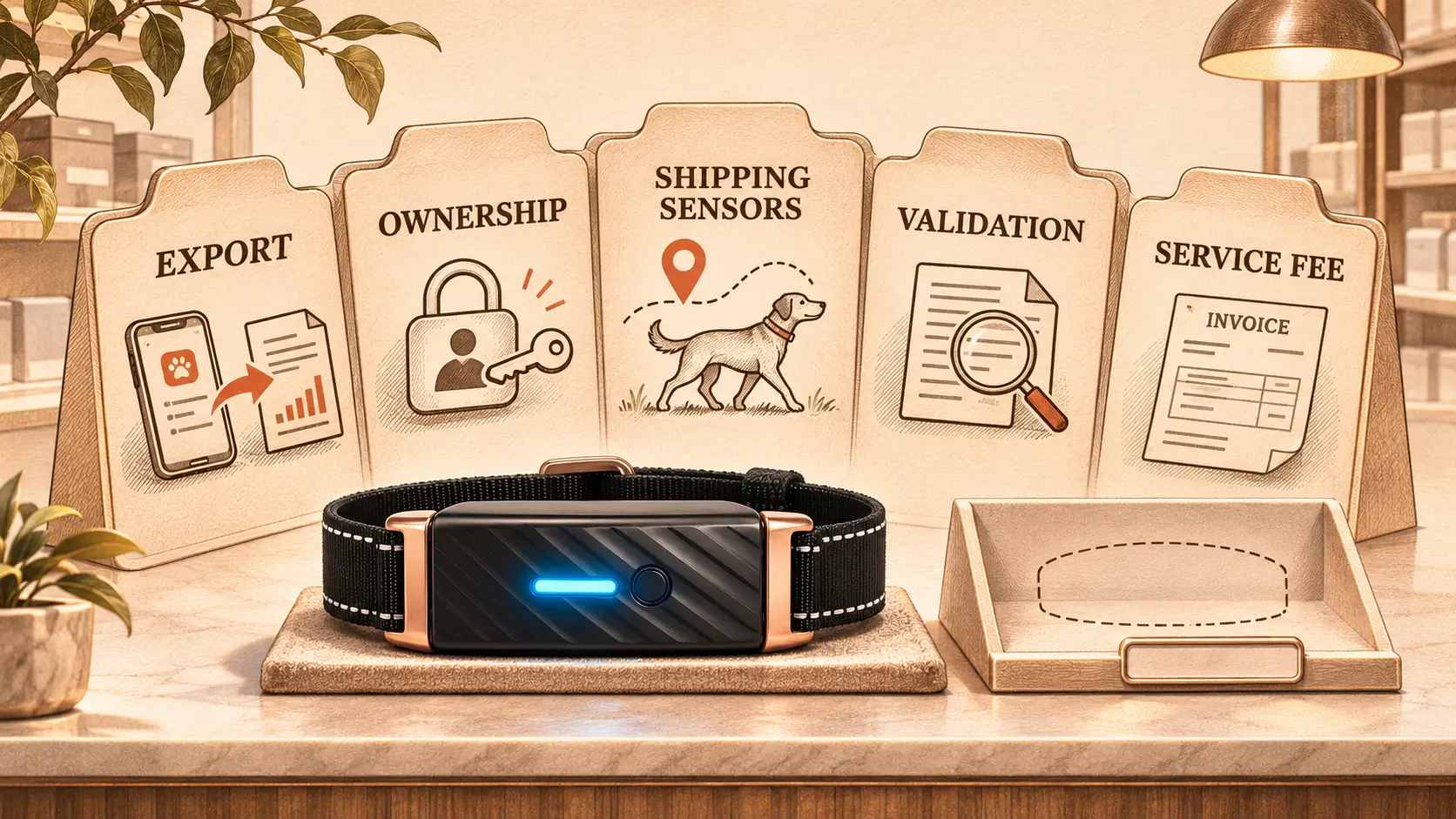
The insurance conversation is really a data-portability conversation. Before you commit shelf space, run any brand through these checks:
- Can the end owner export their animal’s data — API, CSV, or a vet- and insurer-readable report — or is it trapped in one app?
- Is the data owned by the owner, with sharing opt-in, or does the brand claim rights to resell it?
- Which sensors are on the shipping hardware — GPS and accelerometer today — versus what is only promised on a roadmap?
- Is any "health" claim backed by third-party validation, or is it marketing wrapped around behavior data?
- Is the continuous-service fee stated plainly as the standard cost of running GPS and AI reports, or buried in the pitch?
These are the same questions a clinic asks, and they are the questions an insurer will ask before integrating. A brand that answers them cleanly is a brand you can build a category around.
Where KIYE Stands on Data and Devices
KIYE’s position is built to fit this direction without overclaiming. The Gen1 KIYE Smart Collar (dog and cat) is built and shipping: GPS positioning plus automatic recognition of a dozen-plus daily behaviors — play, rest, eating, drinking, walking, running, and more — with a factory-embedded eSIM so the buyer never installs a SIM. It captures the continuous activity and rest signal that an insurance or wellness model actually scores. It does not measure heart rate or temperature; those sit on the roadmap through the Collar Plus (PPG + infrared) and the KIYE Smart Mattress (PVDF sensor pad for rest-time vitals), both in development.
On data, KIYE runs a platform where health data is hosted but a partner can build their own app front-end on the API — the data stays portable, not locked. That is the property an insurer integration needs, and it is the property a distributor can defend in the room. KIYE is not an insurer and does not run an insurance program; the point is that a portable-data collar is positioned to plug into models your regional partners already operate, rather than locking owners out of them.
Wellness trends, not a medical device. Smart collars surface trends and gentle flags for conversation with a vet or insurer; they do not diagnose. Any health concern should be confirmed with a veterinary professional.
The Cautions Distributors Should Voice
The insurance-collar story has real edges. Privacy is the first: owners are rightly wary of biometric data being resold or used to raise rates. A distributor should only carry brands that put data ownership in the owner’s hands and state it plainly. The second is hype: a brand that promises "your premium will fall" without a named insurer program behind it is setting up returns and reputational damage. The third is the service fee — continuous GPS and AI reports cost money to run, and the industry prices this as a standard subscription. Treat it as table stakes, state it early, and never imply the hardware is free to operate. A collar that is honest about all three will outlast one that isn’t.
The Bottom Line
Insurers using collar data is no longer science fiction, but it is also not yet universal. The distributors who benefit are the ones already carrying a portable-data, honestly-tiered collar brand — because when a regional insurer launches a program, that hardware is ready on day one. The collar that reports on its own, keeps its data portable, and stays within wellness boundaries is the one that will fit the next chapter of pet care. For a buyer, the question is no longer "does it track a heartbeat" but "can I move the data it already collects?"
If you distribute pet tech and want a collar line built on portable data, honest sensor tiering, and a real monitor–support loop, talk to us about partnership: become a KIYE partner.