
I noticed my energetic Labrador slow down a bit last year. It made me wonder when dogs really become seniors. Many owners face this question as their pets age.
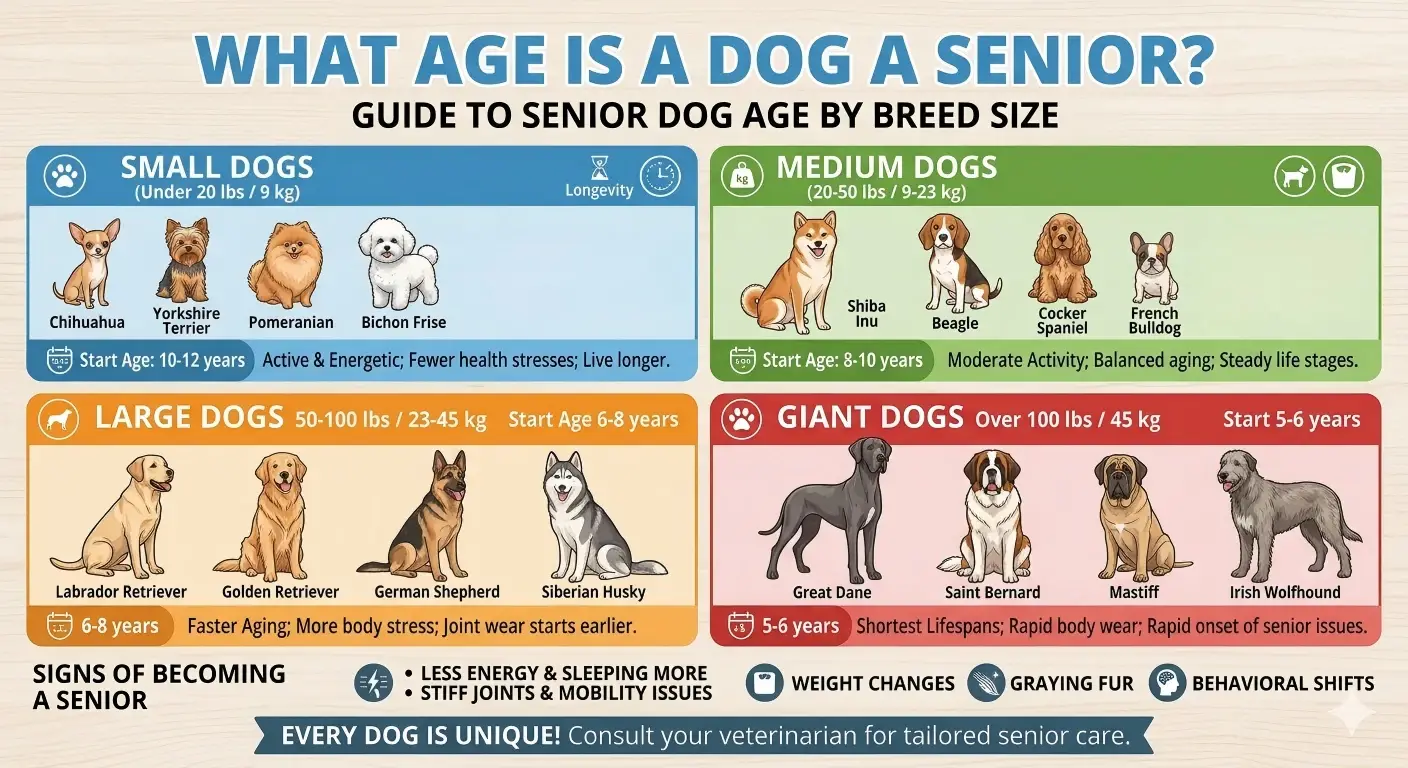
Dogs become seniors at different ages based on their size and breed. Small dogs often enter senior years around 10–12 years old. Larger dogs may reach this stage as early as 6–8 years, and giant breeds even sooner. There is no single number that fits every dog.
I have owned dogs of various sizes over the years. This taught me that age alone does not tell the full story. Body size plays the biggest role in how fast dogs age. Keep reading to learn how to determine your dog’s true life stage.
📊 Understanding Dog Aging by Size
Dog years do not match human years in a simple way. I learned this through experience and talks with vets. Smaller dogs face less stress on their hearts and joints, allowing them to stay young longer. Meanwhile, larger bodies work harder every day, leading to earlier aging.
Here is a simple table vets often use to track senior milestones:
| Dog Size | Weight Range | Senior Age Starts | Example Breeds |
|---|---|---|---|
| Small | Under 9 kg | 10–12 years | Teddy, Yorkie, Bichon |
| Medium | 10–25 kg | 8–10 years | Shiba, French Bulldog, Border Collie |
| Large | 26–45 kg | 6–8 years | Golden Retriever, Labrador, German Shepherd |
| Giant | Over 45 kg | 5–6 years | Great Dane, Saint Bernard |
Because giant breeds have shorter overall lifespans (often 7–10 years), their senior phase makes up a massive portion of their lives. A Great Dane at 6 years old is biologically much older than a Chihuahua of the same age.
🔍 The Traditional 7-Year Rule
Many owners feel sudden anxiety when their dog turns seven. I understand why. For a long time, vets and dog food companies used seven years as a simple cutoff for senior care. They applied this rule to all dogs to make marketing and checkups easy.
This one-size-fits-all approach created the common myth that every dog becomes a senior at seven. In reality, seven is still middle-aged for a small Yorkie, but it is firmly senior for a large Labrador. While this old standard still influences some veterinary clinic recommendations today, it is important to focus on your specific dog’s size.
⚠️ Signs That Your Dog Is Becoming a Senior
Age numbers aside, your dog will tell you when they are crossing into their golden years. I watch for these physical and behavioral clues in my own pets:
- Activity Levels: Senior dogs sleep more and play less. They might start skipping the explosive "zoomies" they loved as puppies.
- Mobility Issues: Stiff joints, hesitation before jumping onto the couch, or trouble climbing stairs are classic signs of aging.
- Weight Fluctuations: Some seniors gain weight because their metabolism slows down and they move less. Others lose weight due to dental issues or a lower appetite.
- Physical Changes: Gray fur typically appears around the muzzle and eyes, and their skin or coat may become noticeably drier.
- Behavioral Shifts: Cognitive changes matter too. Some aging dogs become more anxious or clingy, while others might seem occasionally confused or disoriented.
🏥 Tailoring Health Care for Senior Dogs
When your dog hits the senior baseline for their size, their care routine needs a proactive upgrade.
Vets generally recommend shifting to twice-yearly checkups for senior pets. Regular blood work is crucial at this stage to catch declining kidney or liver function early. If arthritis sets in, modern supplements and medications can ease the pain and maintain their quality of life.
Dietary needs change too. Senior formulas typically feature fewer calories to prevent obesity, alongside higher joint-support nutrients like glucosamine. Exercise remains essential, but it should adapt to their changing bodies—swap long, intense hikes for shorter, structured walks or low-impact swimming.
Finally, do not forget mental stimulation. Puzzle toys and gentle tracking games keep aging brains sharp.
💡 Conclusion
Every dog is an individual, and these size categories are guidelines rather than expiration dates. By understanding when your dog’s senior years truly begin, you can adjust their nutrition, vet care, and daily routines to ensure their golden years are as comfortable, happy, and vibrant as possible.