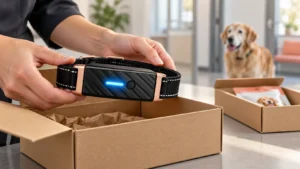
Distributors across Europe, North America, and Asia are adding connected pet products to their ranges faster than ever. But walking a trade floor and writing a purchase order are two different things. The question that separates a one-time buy from a standing order is rarely "does it track location?" It is whether the supplier behind the collar is built for wholesale, regulated markets, and repeat business.
This guide walks through the criteria that matter when you evaluate a smart pet collar brand for your distribution business — and the gaps that quietly erode margin after the first shipment.
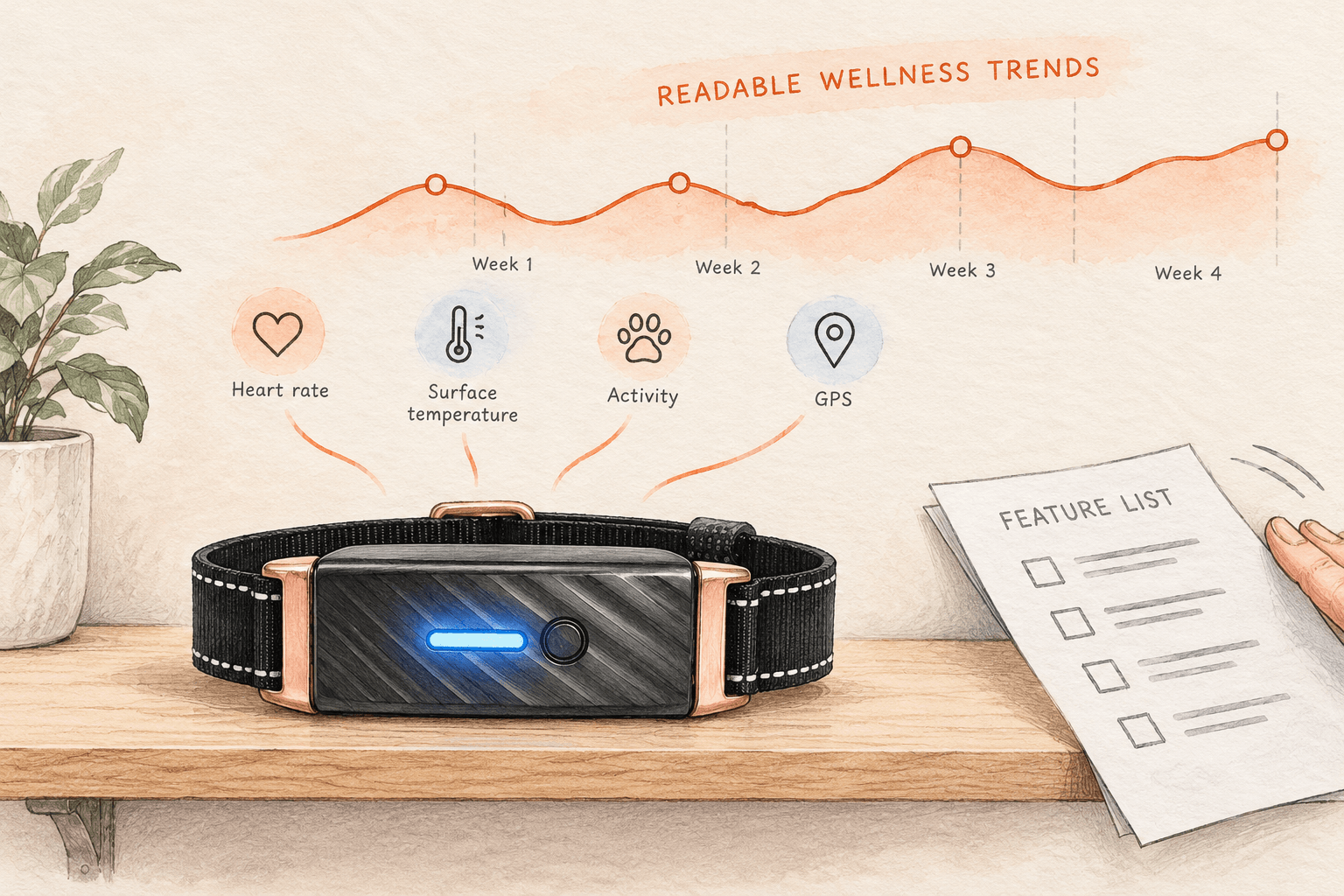
The signal that matters is not the feature list — it is whether the data forms a readable trend.
Start with the monitoring scope, not the marketing
A collar that only counts steps competes on price alone. For a distributor serving veterinarians, breeders, and premium pet retailers, the value sits in continuous wellness signals: heart rate, surface temperature, activity, and GPS location. The useful question is not how many metrics are printed on the box, but whether the data forms a readable trend for the owner and the clinic.
Look for suppliers who describe their product as wellness trends, not a medical device. That framing is deliberate. It keeps the collar in the consumer-wellness category, avoids medical-device regulation in most markets, and sets honest expectations with buyers. A supplier that overclaims diagnostic ability creates return risk and liability you do not want on your shelf.
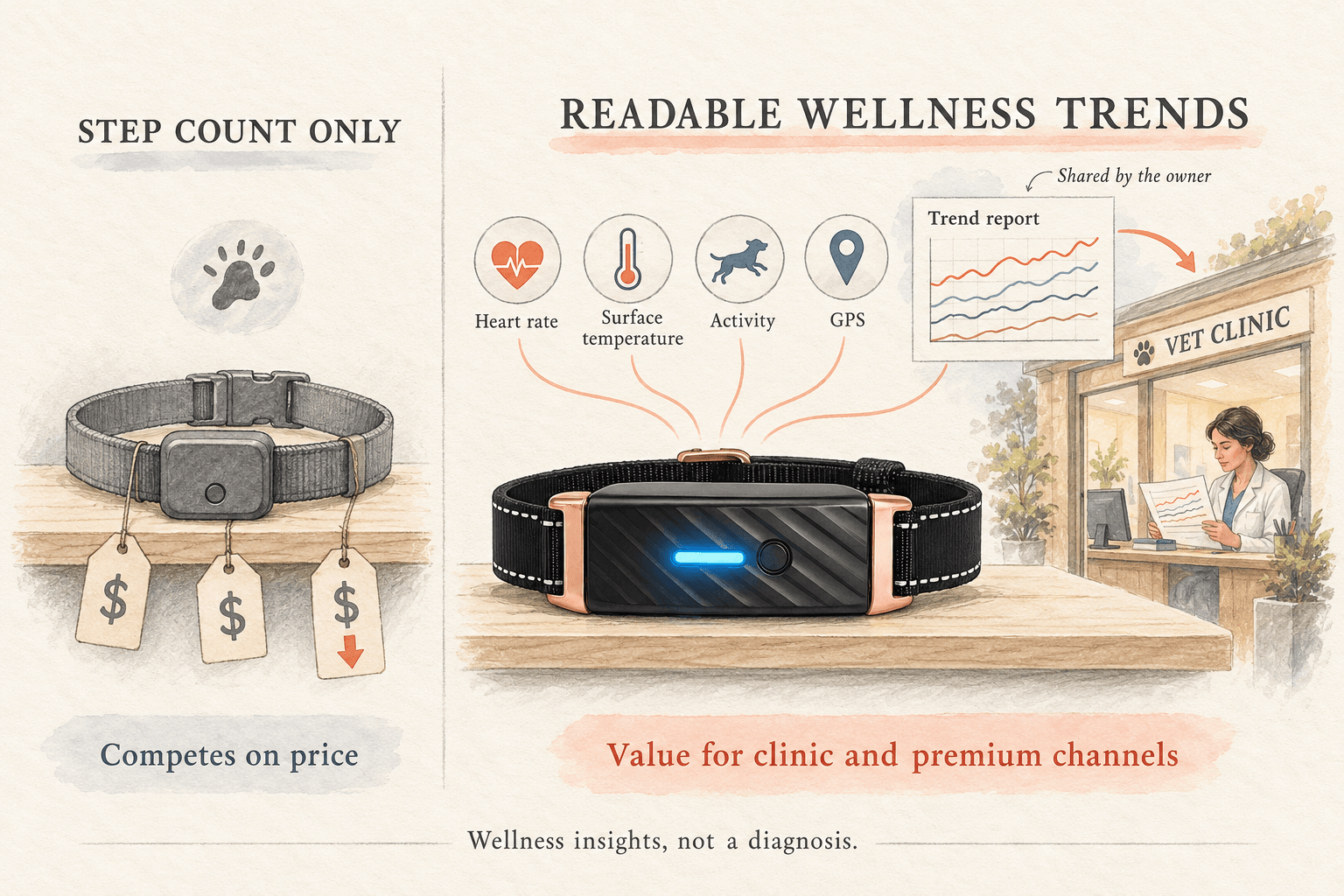
A step-count collar competes on price; a trend-forming collar earns shelf value in clinic and premium channels.
Data ownership is a sales point, not a footnote
Connected products collect behavior and location data. Who owns it, where it is stored, and whether the pet parent can export it are now qualifying questions for enterprise buyers and privacy-regulated regions.
The stronger position for a distributor is a supplier that treats data as the pet parent’s property and gives you a clean story: no forced account lock-in, transparent handling, and the option to surface trends back to a veterinary channel with consent. A closed, subscription-tied data silo may look convenient at first, but it suppresses repeat engagement and makes the product feel like rental rather than ownership — exactly the objection that slows reorders.
The differentiator worth asking about: does the collar data connect to anything actionable? A supplier that pairs monitoring with a complementary senior dog nutrition line, and can show how trends inform feeding adjustments, offers a closed loop most single-product brands cannot. That loop is what turns a gadget into a category you can build shelf space around.
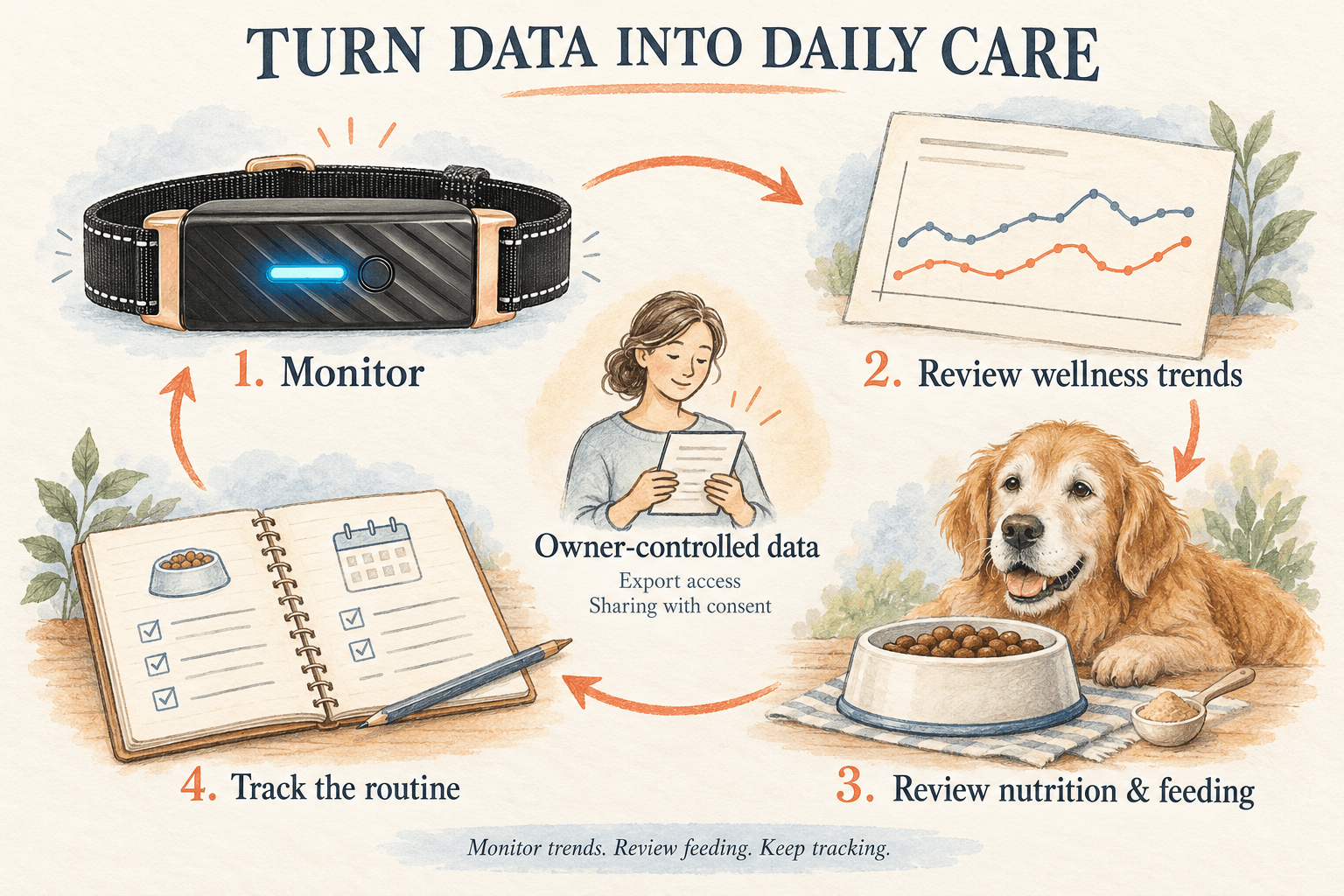
Data that leads somewhere actionable: collar trends inform nutrition adjustments — a loop single-product brands cannot match.
Certifications and batch traceability
If your customers are in the EU, UK, North America, Australia, or Japan, compliance is not optional. Ask for CE, FCC, and RoHS documentation as a baseline, and push for batch-level traceability and third-party testing on materials and electronics. A supplier that can produce a certificate pack per shipment reduces your customs friction and your downside if a batch is questioned.
Traceability also matters for recalls. The pet category has seen supplement and treat recalls in recent quarters; a hardware brand with lot-level records and a named contact for quality incidents is materially safer to stock than one that cannot tell you which units shipped where.
Wholesale terms that protect your margin
The collar is only half the commercial picture. Study the terms: minimum order quantity, lead time, payment terms, and whether the brand supports your market with localized packaging and language.
A point worth probing: the commercial model. Some connected brands bundle hardware with a mandatory monthly subscription that the end buyer must keep paying. That can depress reorder velocity and generate support tickets on your side. A model built around a one-time hardware purchase with optional services — plus a consumable nutrition line that drives natural repeat purchase — aligns the supplier’s incentive with your reorders.
Also clarify private-label and co-branding latitude. If you want to build a house range or run a co-branded promotion, confirm upfront which trademarks and configurations are flexible. Ambiguity here is expensive to fix after launch.
Channel support and after-sales
A supplier’s job does not end at the dock. Ask what your team receives: product training, shelf and digital assets, and a response window for technical issues. For veterinary and premium retail channels, the ability to explain the wellness-trend narrative credibly — and to hand the clinic a pet parent’s trend summary with consent — is a differentiator that lifts attachment rate.
After-sales reliability also predicts your return rate. A supplier with a defined warranty, a replacement flow, and a partner contact you can actually reach will protect your brand reputation in a category where a single bad unit travels fast on social media.
The takeaway for distributors
Choosing a smart pet collar supplier is less about the longest feature list and more about the business behind it: defensible monitoring, clean data ownership, certifiable quality, margin-protecting terms, and real channel support. Distributors who screen on these five axes convert a trade-show demo into a standing order instead of a one-off.
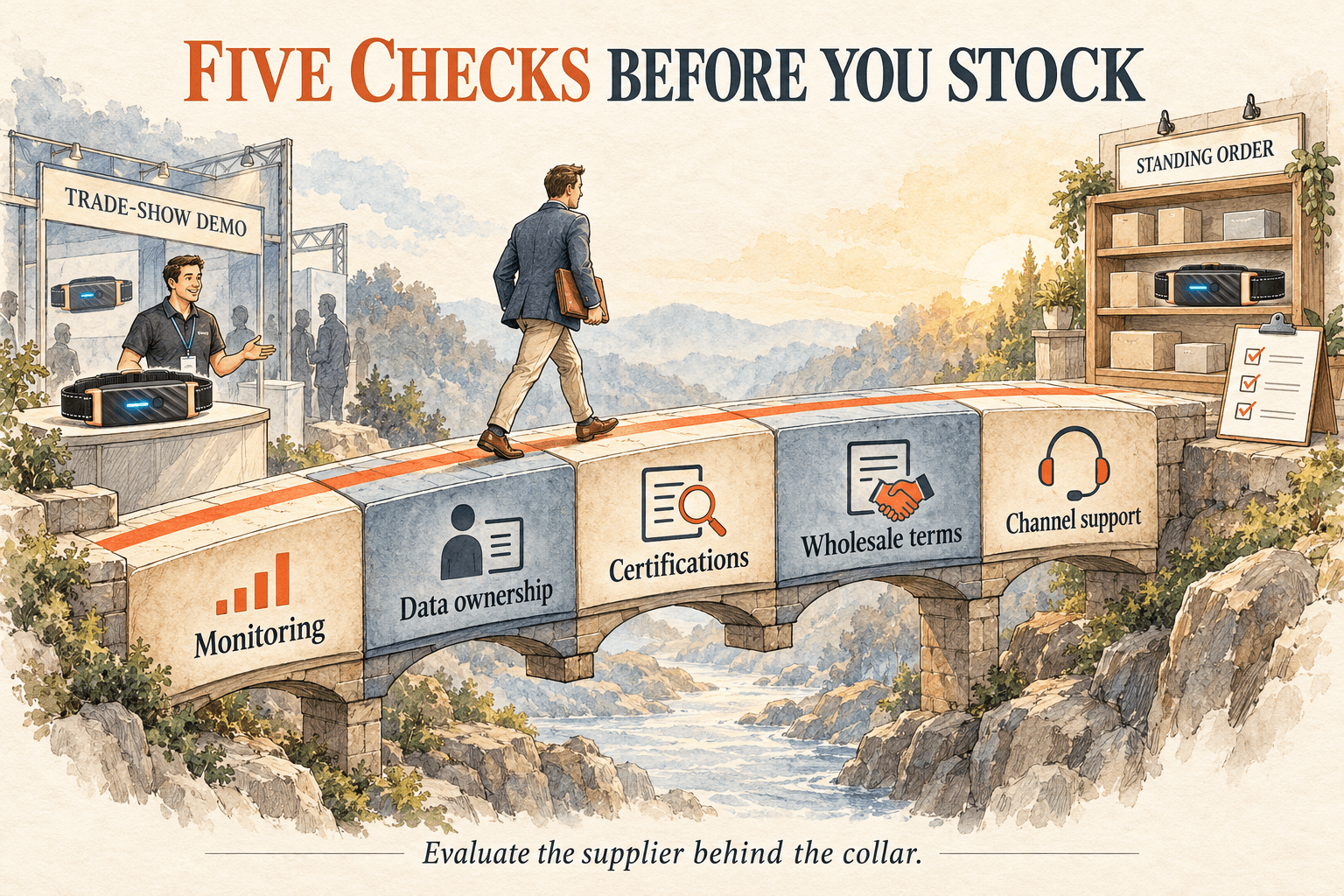
Screen on the five business axes, and a trade-show demo becomes a standing order.
KIYE builds Senior Pet Health Solutions around exactly this model — a smart health collar that surfaces daily wellness trends (heart rate, surface temperature, activity, GPS), paired with a senior dog nutrition line so the data leads somewhere actionable. We work with distributors, veterinary clinics, and selected retail channels across North America, Europe, the UK, Australia, Canada, and Japan.
If you are evaluating a connected pet range for your market, request our distributor pack: specifications, certification files, wholesale terms, and shelf-ready assets.