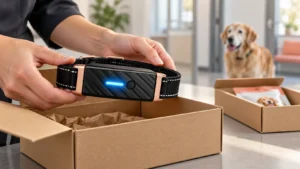
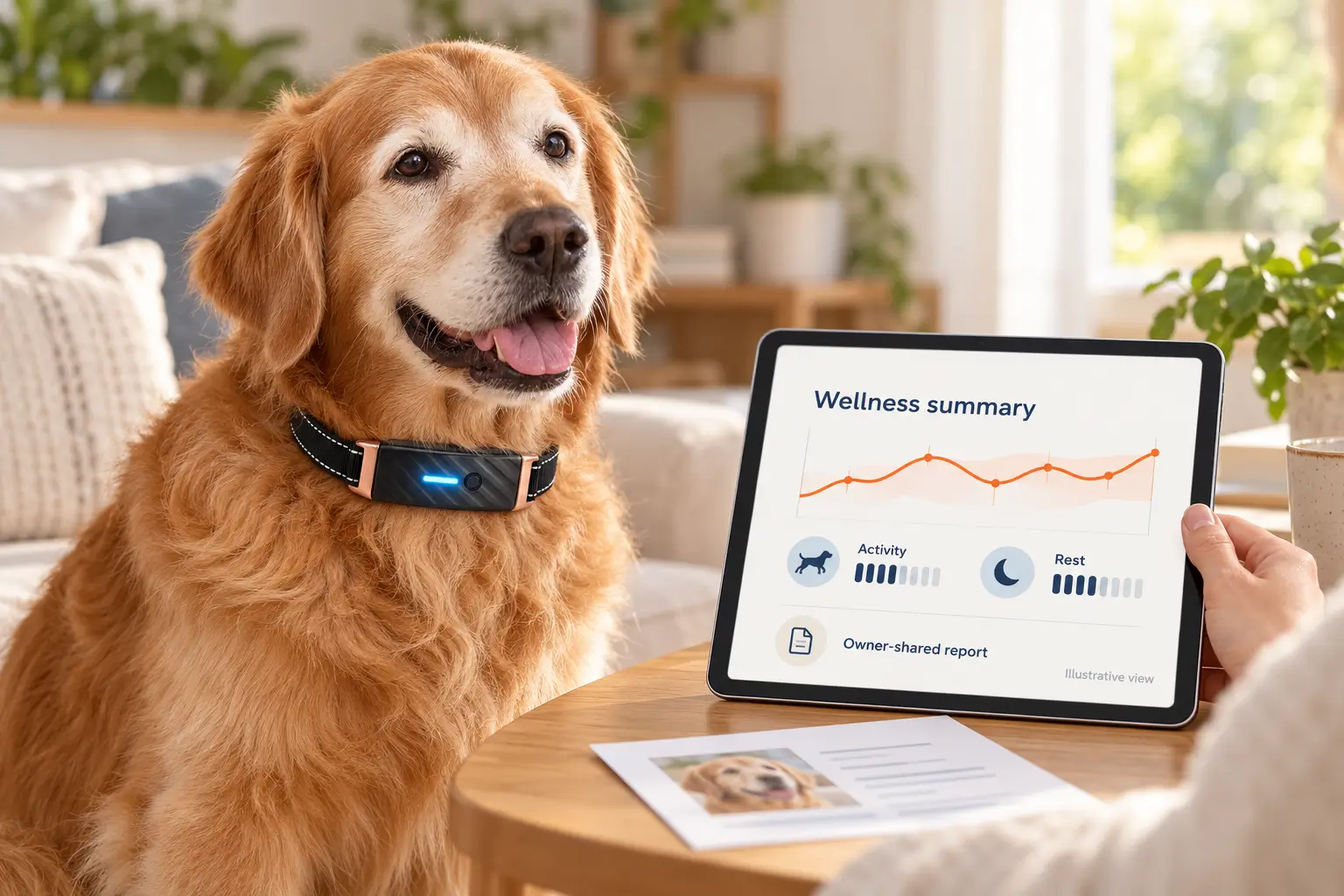
A sealed smart health collar turning daily trends into clinic-ready data.
Most smart collars can collect data. But what a veterinary clinic can actually act on is almost never the raw stream — it is the part that can be read, compared, and shared. For distributors and retailers, that difference is the line between a product that earns a reorder and one that gets returned. This piece breaks down the four gates that turn pet health data from a spec sheet into something a clinic will use.
The clinics are ready before the hardware is
One 2026 veterinary-industry survey placed clinic AI adoption above 80%, up sharply from just a few years earlier. We cite a single study here, not an industry consensus — but the direction is consistent across veterinary trade reporting: practices have already adopted the software side of modern care. What they still lack is a clean, structured feed of real-world data from the animal itself.
That gap is the opening. The bottleneck for senior-pet care is no longer "will the clinic use technology" — it is "will the device hand the clinic data in a form it can use." A distributor who stocks a collar that answers that question has a sharper pitch than one who leads with step counts.
Bottom line for buyers: ask the brand what happens after the data is collected. The answer tells you more than any sensor list.
Raw data is not usable data
A stream of numbers is not care. For a vet to act on pet health data, four conditions have to hold:
- Continuity. A single in-clinic reading is a snapshot. Long-term trends — resting heart rate, surface temperature, daily activity — only become meaningful when they accumulate across weeks. One exam cannot establish a baseline for a senior dog; only continuous capture can.
- Exportability. Data trapped inside a proprietary app is a dead end. Clinics need a file or an interface they can open, not a screenshot.
- Shareability. The pet owner, not the clinic, holds the collar. If the owner cannot push the record to their vet, the data never reaches the person who can act on it.
- Honest framing. Wellness trends are not a diagnosis. The most useful positioning tells the clinic exactly what the data is — and what it is not — so it supports the consultation instead of confusing it.
What "portable" means for a distributor
"Data portability" sounds like an engineering detail. For a B2B buyer, it is a commercial advantage with three concrete payoffs:
- Lower returns. When an end customer can show their vet something tangible, the product proves its worth at home — and stays out of the return pile.
- Vet-channel pull. Clinics recommend what they can work with. A collar that speaks the clinic’s language becomes a product the practice will quietly endorse.
- Stickiness without lock-in. Portability earns loyalty the honest way — by respecting the owner’s data — rather than by trapping them in a subscription they resent. (We have written separately on why locking pets into a subscription is a weak long-term play.)
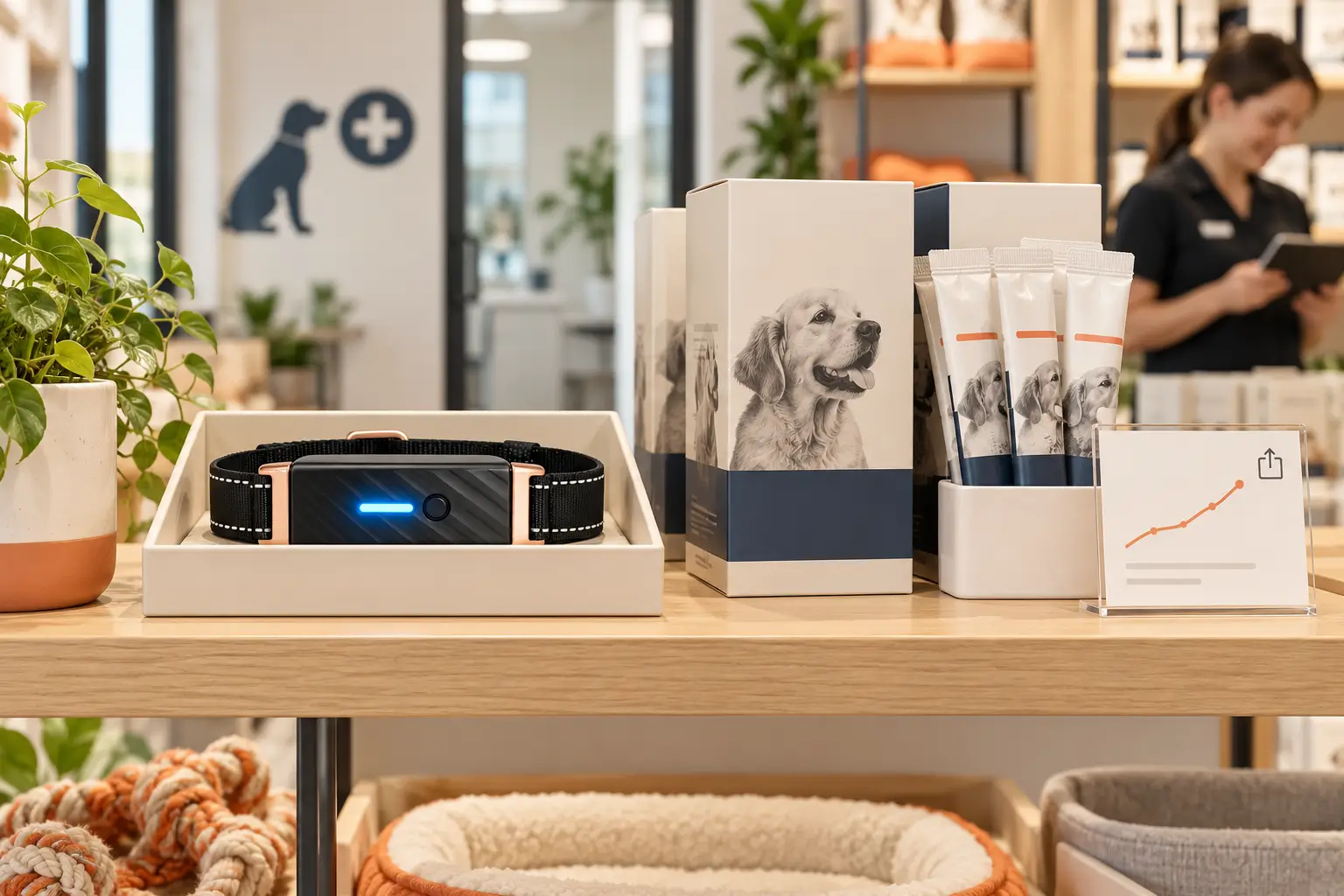
A distributor-ready senior-pet health range: collar plus nutrition, stocked with confidence.
The KIYE approach: four measurable trends, built to export
KIYE’s Smart Health Collar is designed around the usability gates above, not around a longer feature list. It tracks four wellness trends — heart rate, surface temperature, activity, and GPS location — for both dogs and cats. The point is not to overwhelm the owner with medical claims; it is to give them a steady, shareable picture their vet can read.
Two design choices matter to distributors specifically:
- The data is built to be exported and shared, so the owner — and, with their consent, the clinic — can actually use it. Data ownership stays with the customer.
- We frame every reading as wellness trends, not a medical device. That keeps the claim honest and the regulatory path cleaner across the markets distributors actually sell into.
Sensor architecture and algorithms are deliberately held back from public specification — they are part of our protected development work, not a marketing lever. What we publish is what a clinic and a distributor can verify: the trends tracked, the export path, and the ownership model.
A 5-point checklist before you stock a "data" collar
Use this when evaluating any smart-collar brand for your shelf:
- Can the owner export the data, or is it stuck in the app?
- Is capture continuous, or only on-demand?
- Is the output in a format a clinic recognizes, not a branded dashboard?
- Who owns the data — the customer, or the brand?
- Does the model lock the pet into a mandatory subscription, or respect the owner’s choice?
Brands that answer all five cleanly are rare. That rarity is the margin a distributor can build a category on.
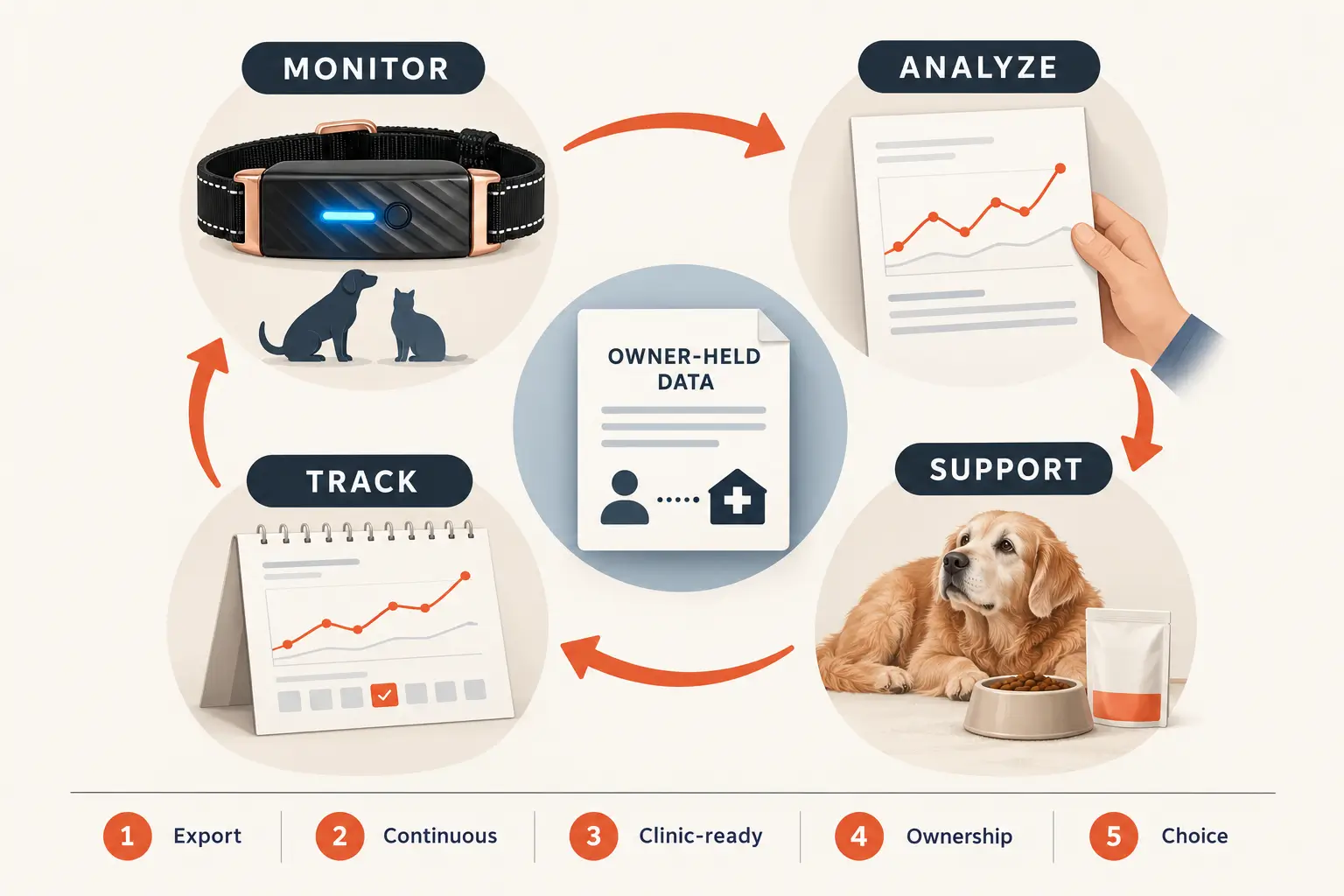
The closed loop distributors can actually explain to a clinic: monitor, analyze, support, track.
Summary
The senior-pet market does not need another device that collects data. It needs devices whose data a clinic can actually use — continuous, exportable, shareable, and honestly framed. For distributors, that usability is the real differentiator, and the one most brands still skip.
Evaluating a smart-collar line for your market?
We prepare a technical datasheet, a sample owner-facing health report, and a distribution brief on request. Reach the KIYE team to receive the materials and discuss territory and pilot options.
KIYE Pet — Senior Pet Health Solutions. Every heartbeat deserves to be felt.