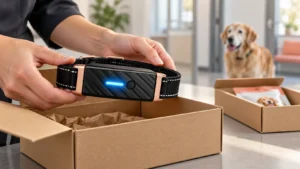
Most distributors size their first senior-pet order by habit, not by margin logic. They bulk-buy the supplement and dribble the collar. For a closed-loop range of monitoring, platform, and nutrition, that ordering habit leaves both margin and shelf velocity on the table — because the collar, not the jar, is the anchor.
The collar carries the category’s margin weight
The pet wearable category is not a sideshow. It is projected to grow from USD 3.56 billion in 2026 to USD 7.23 billion in 2031, a 15.2% compound annual rate, and smart collars already account for about 64% of that revenue (Sidewalk Dog, 2026). Inside the wearable segment, the collar is the revenue anchor — the highest-value, most defensible SKU a distributor carries.
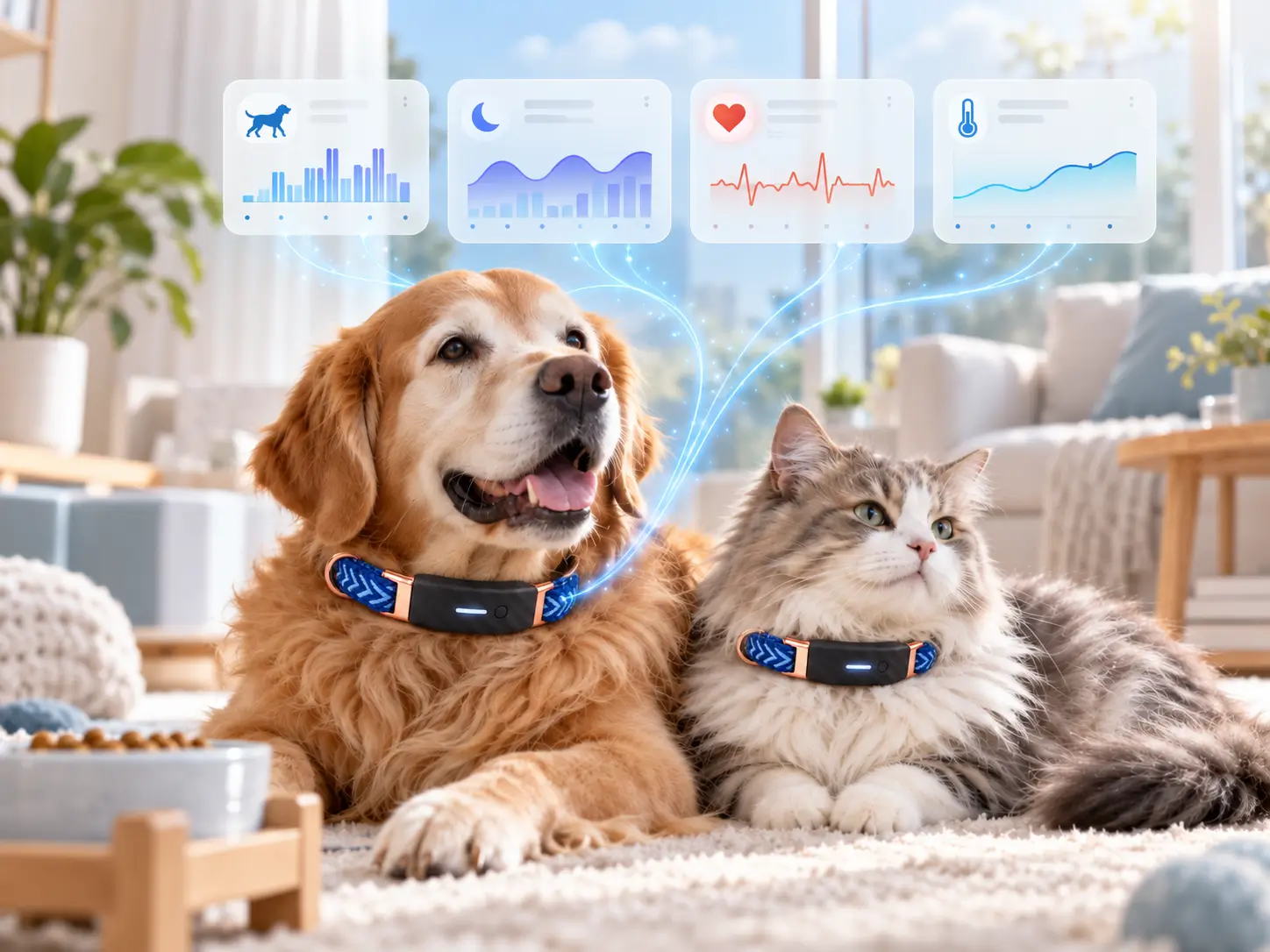
For a senior-pet buyer, that matters because the collar is also the data entry point. Continuous monitoring of activity, rest, and wellness trends turns a one-time hardware sale into the reason the rest of the system is useful to a retailer’s customers. A collar that fits both dogs and cats, like the Smart Health Collar, lets one monitoring SKU serve two species while the nutrition leg stays focused on senior dogs.
One supplier relationship, not three separate MOQs
The structural advantage of a closed loop is not just the product story. It is the procurement math. A monitor from one vendor, a supplement from another, and a platform from a third means three minimum order quantities, three import lanes, and three regulatory files — and in a market like Japan a single novel ingredient can cost six figures and up to two years to clear (IndexBox, 2026).
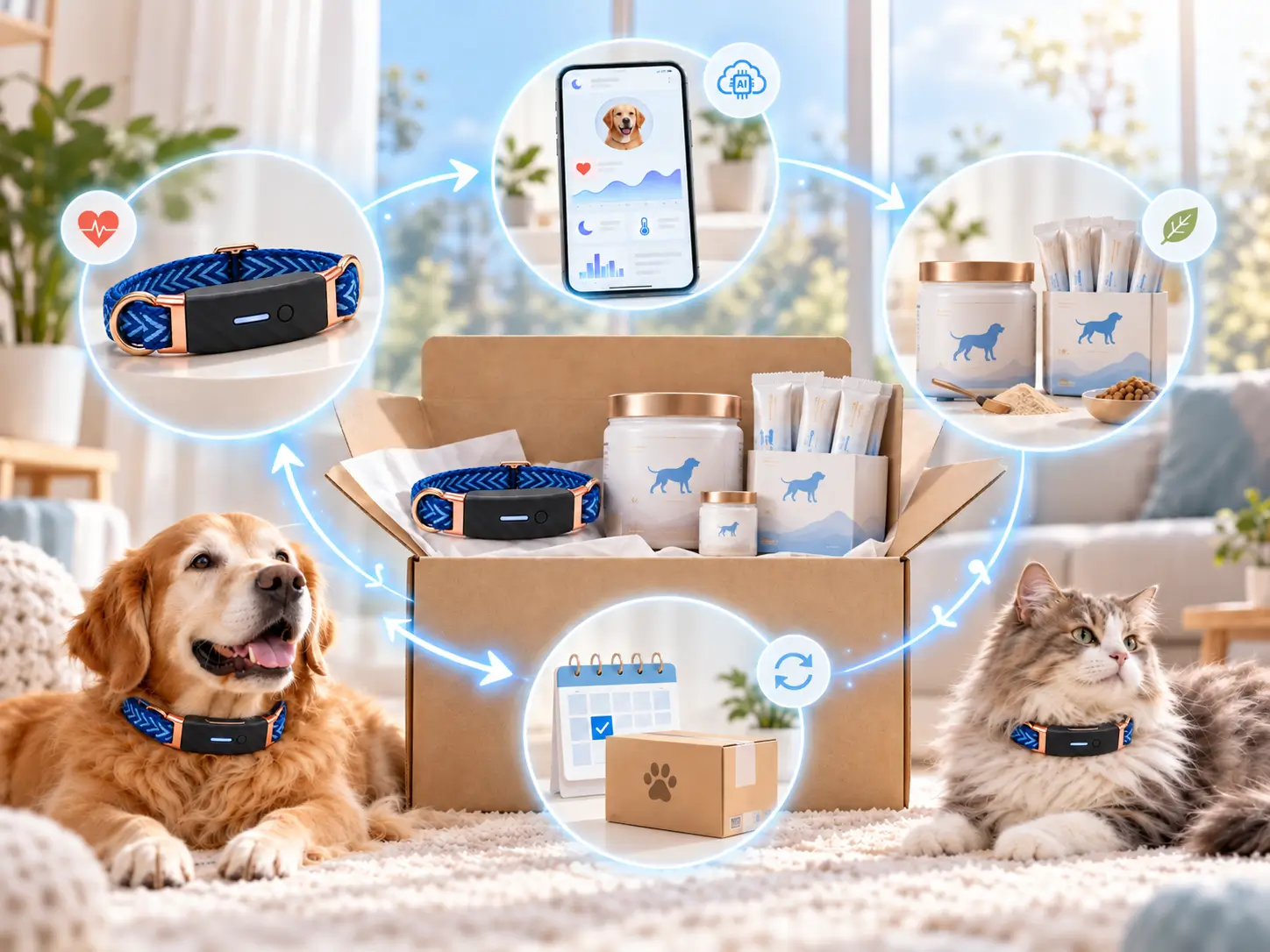
A pre-integrated offer collapses that into one supplier relationship. The wearable monitoring, the AI platform that turns the data into structured health reports, and daily senior dog nutrition arrive under one commercial agreement, one replenishment plan, and one set of compliance paperwork. For a buyer, that is fewer touchpoints and a tighter working-capital footprint — the part most pet health collar supplier pitches leave out because they only sell the hardware.
| Role in range | What it is | Margin logic | MOQ posture |
|---|---|---|---|
| Anchor | Smart collar (dogs + cats) | Highest per-unit value; data entry point | Size to build a monitored base |
| Glue | AI health platform | Near-zero marginal cost; retains the user | Bundle, do not stock separately |
| Attach | Senior dog nutrition (AM/PM) | Pairs with data; daily format | Size to the same supplier’s cadence |
Weight the first order to the anchor, not the category habit
The default buyer reflex — heavy on consumables, light on hardware — spreads working capital across the wrong SKU. A closed-loop senior range rewards the reverse: allocate the first order’s MOQ and cash to the collar that establishes the monitored base, then carry nutrition as the attach that makes the data actionable. That sequencing is what turns a senior-pet line into a durable senior pet care distribution plan rather than a one-season assortment.
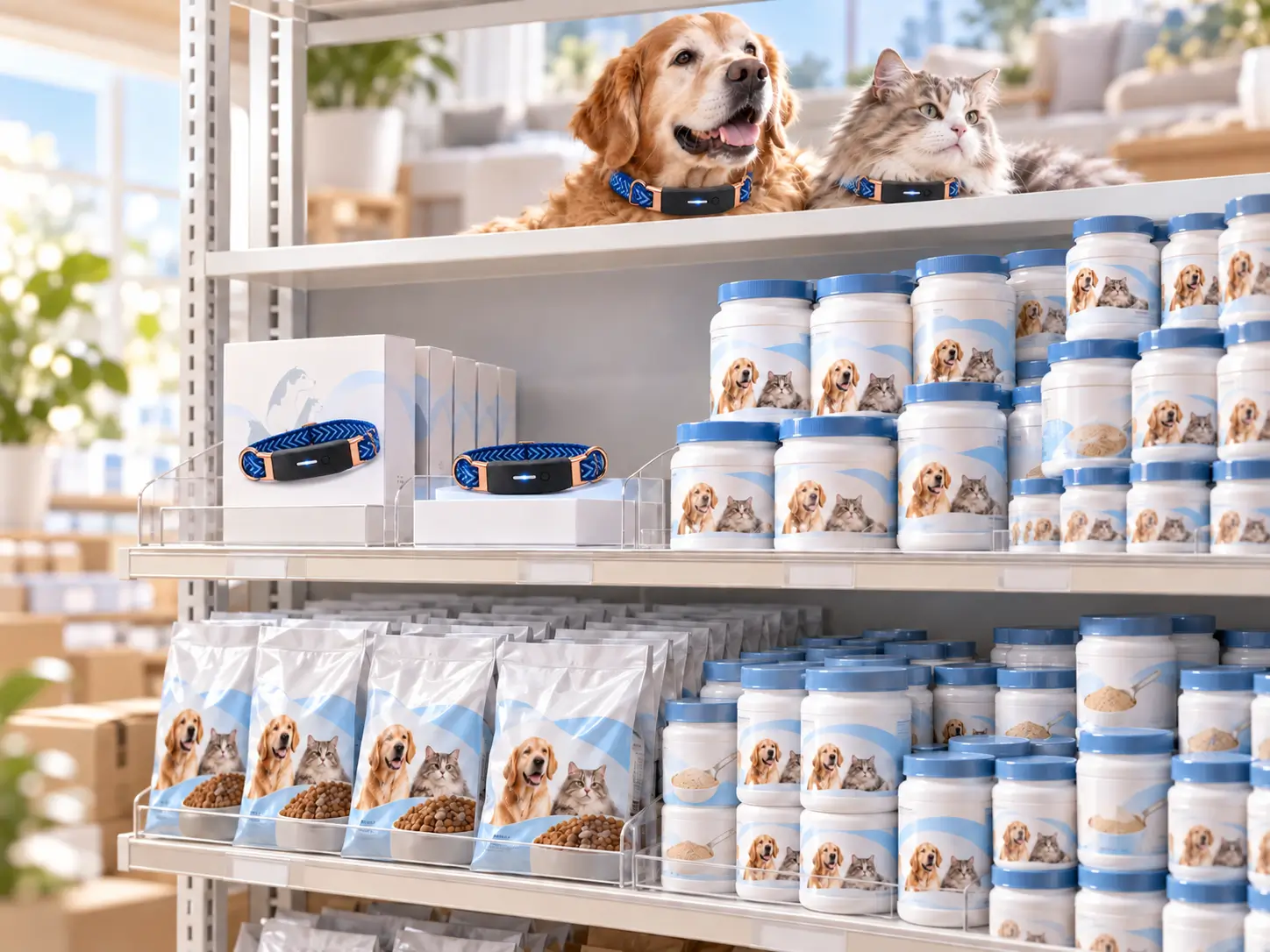
Size nutrition as an attach, not a bulk bet
Senior dog nutrition in an AM/PM format is a daily companion to the monitoring data, not a standalone jar on the shelf. Carrying it from the same supplier as the collar means it rides the same import lane and the same compliance file instead of opening a new one (IndexBox, 2026; Mordor Intelligence, 2026). That keeps the assortment tight in markets where every added SKU is another line to clear — and keeps the nutrition within its current scope, senior dogs only.
Demand context helps size the bet: about 49% of pet owners are supplement prospects, and cognitive health interest runs roughly twice the market average (Petfood Industry, 2026, Nextin Research). The opportunity is real, but the ordering discipline is to attach it to the monitored base rather than to pre-buy it in volume before the collar is on shelves.
What to ask a supplier before you set MOQ
For any senior pet products wholesale plan, the MOQ is only as good as the supplier terms behind it. Before committing shelf, ask for four things: sample specifications you can validate, FBA-ready packaging that shortens the landing window, market-by-market replenishment terms, and a partner model that treats logistics as part of the deal. KIYE ships to 20+ markets with FBA-ready packaging, fast global logistics, and replenishment planning built into the partnership — so the entry math for a senior-pet range starts from one supplier relationship rather than a committee of them. See how the partner model is structured before you set the first minimum.
That is the practical read for senior pet care distribution in 2026: the demand is already there — the U.S. pet industry reached about USD 158 billion in actual 2025 spend and is forecast at USD 165 billion for 2026 (APPA, 2026 State of the Industry), and 52% of U.S. dog-owning and 50% of cat-owning households had a pet aged 7 or older in 2025 (Packaged Facts, 2026 US Pet Market Outlook) — and it is aging on schedule. The buyers who win are the ones who set MOQ and working capital around the anchor first, then attach the rest.
Set your first senior-pet MOQ around the anchor
Every closed-loop range rewards a different ordering discipline. Talk to us about sample specs, FBA-ready packaging, and market-by-market replenishment before you commit shelf space. Reach the team at info@kiyepet.com.
Sources
- Sidewalk Dog, 2026 (pet wearable market size and smart-collar revenue share)
- IndexBox, Japan Pet Care Ingredients Market, 2026
- Mordor Intelligence, Japan Pet Nutraceuticals Market, 2026
- Petfood Industry, 2026 (Nextin Research: supplement prospects, cognitive health interest)
- Packaged Facts, 2026 US Pet Market Outlook
- APPA, 2026 State of the Industry