
Most dogs look normal right before a serious emergency happens. Many parents miss the early signs because the changes seem small and harmless.
The fastest killers in dogs include bloat, poisoning, heatstroke, and heart failure. These conditions can damage organs and stop oxygen flow within minutes or hours if owners do not react quickly.
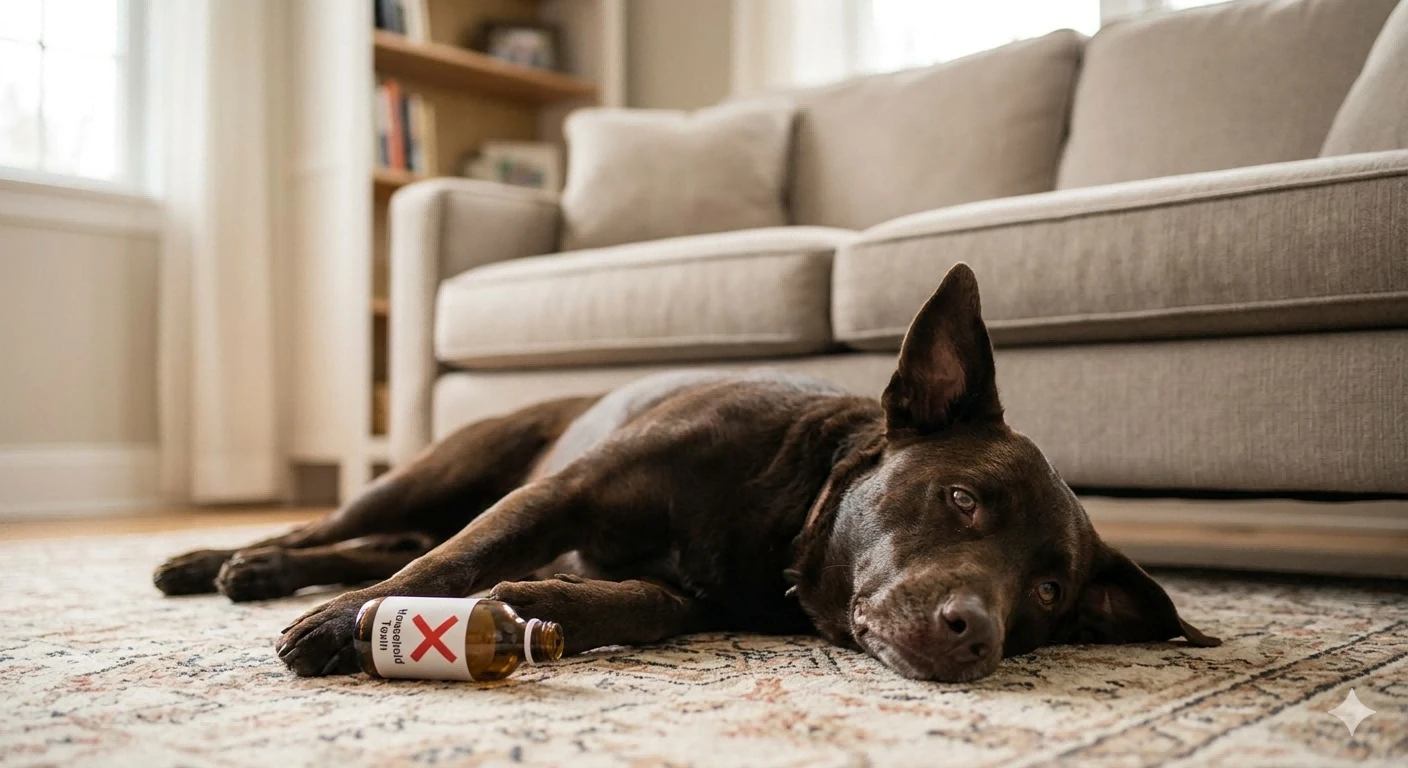
I have seen many owners believe their dog was “just tired” right before a true emergency started. Most deadly conditions do not begin with collapse. They begin with small behavior changes that feel easy to ignore.
1. Why is bloat so deadly in dogs?
Many dogs with bloat still walk around the house normally at first. Owners often lose critical time because the symptoms do not look dangerous enough.
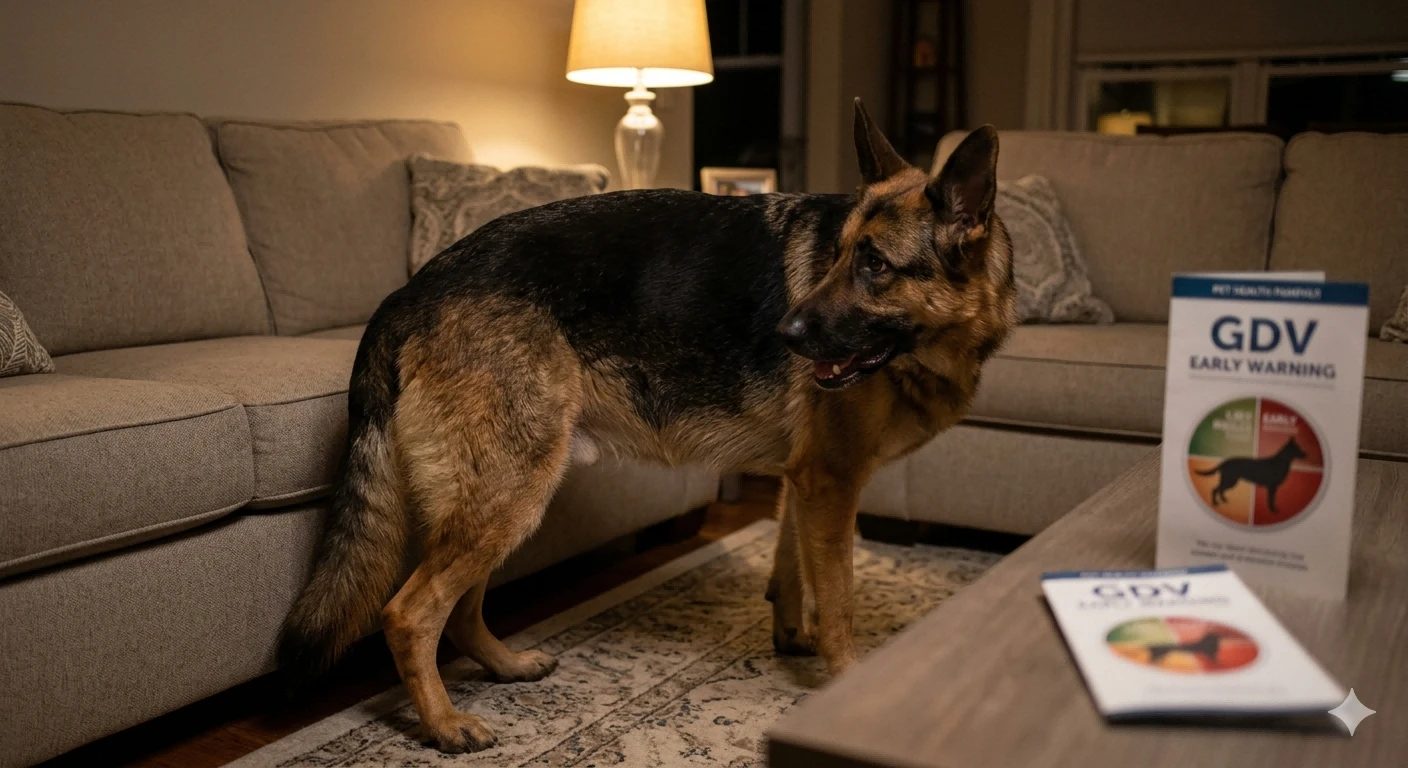
Bloat, also called GDV, becomes deadly because the stomach twists and traps gas inside. Blood flow drops fast, organs lose oxygen, and the dog can go into shock within hours without emergency surgery.
1.1 What happens inside the body during GDV?
I always tell owners that GDV is one of the few emergencies that can turn fatal before sunrise. A healthy dog can look uncomfortable at midnight and collapse before morning. That is why veterinarians fear this condition so much.
The stomach first fills with gas. Then it rotates and twists. Once this happens, blood cannot move normally through the abdomen. Pressure rises quickly inside the body. The spleen can twist too. The heart struggles because less blood returns to it.
Many owners expect dramatic screaming or crying. Most dogs never do that. Instead, I usually see restless behavior. The dog keeps moving because laying down feels wrong. They stand up, sit down, and walk in circles over and over again.
One sign matters more than almost anything else: dry heaving without vomit.
The dog tries to throw up but nothing comes out. Many owners think the dog simply ate too fast. Meanwhile, the stomach may already be twisting inside the body.
Large deep-chested breeds face the highest risk:
- Great Danes
- German Shepherds
- Standard Poodles
- Weimaraners
- Dobermans
According to veterinary emergency data, GDV still carries a high mortality risk even after surgery. Early treatment changes survival chances dramatically.
| Early Sign | What I Usually See | Why It Matters |
|---|---|---|
| Dry heaving | Dog repeatedly retches with nothing coming out | Strong warning sign of stomach twist |
| Pacing | Dog cannot settle in one place | Rising abdominal pressure |
| Swollen belly | Abdomen looks tight or enlarged | Dangerous gas buildup |
| Looking at stomach | Dog keeps turning toward abdomen | Internal pain and pressure |
| Sudden weakness | Dog starts wobbling or collapsing | Shock may already be starting |
2. What poisons kill dogs the fastest?
Many dangerous toxins already exist inside normal kitchens, garages, and bedrooms. Dogs often swallow them before owners even notice.
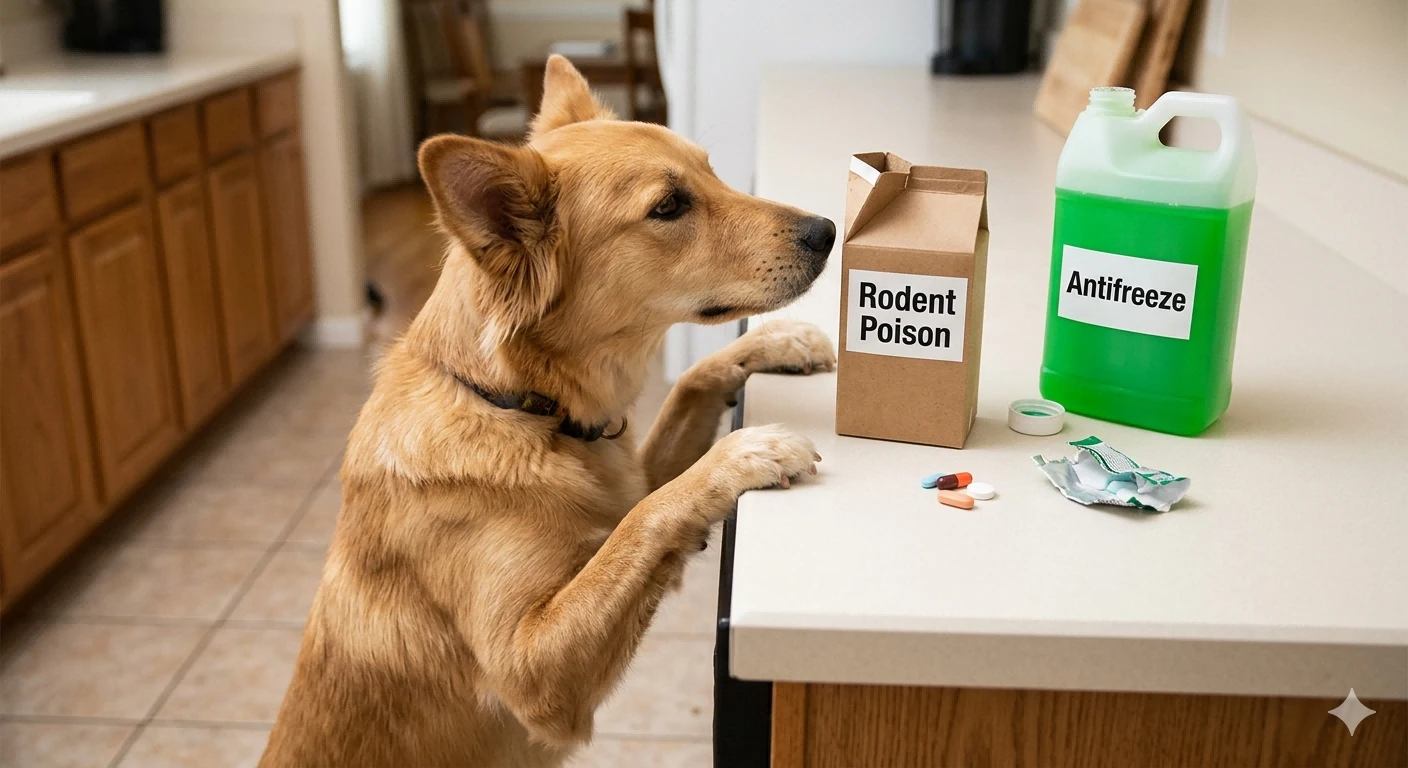
Some poisons can kill dogs within hours by attacking the liver, kidneys, nervous system, or blood sugar system. Xylitol, antifreeze, rodent poison, and certain medications are among the most dangerous household toxins.
2.1 What poisoning looks like during the first hour
I think poisoning scares owners because the symptoms can feel random at first. A dog may suddenly act “off” without obvious pain. That makes people second guess themselves.
One dog may suddenly become extremely thirsty. Another may walk sideways like it is dizzy. Some dogs hide under furniture. Some become unusually clingy and refuse to leave their owner’s side.
Xylitol is one of the most dangerous examples. Many sugar-free gums and candies contain it. After ingestion, insulin levels can spike very fast. Blood sugar crashes soon after. The dog may suddenly become weak, shaky, or unconscious.
Antifreeze poisoning is equally dangerous. Dogs sometimes like the sweet taste. Early signs often look like drunken behavior:
- wobbling
- glassy eyes
- vomiting
- confusion
Many owners think the dog simply ate something strange. Kidney failure may already be starting inside the body.
Rodent poison creates another problem. Symptoms may not appear immediately. Internal bleeding can develop slowly over days. Owners may only notice pale gums or unusual tiredness until the condition becomes severe.
| Toxin | Early Symptom | Dangerous Result |
|---|---|---|
| Xylitol | Weakness and shaking | Low blood sugar and liver failure |
| Antifreeze | Drunk-like walking | Kidney failure |
| Rodent poison | Pale gums and lethargy | Internal bleeding |
| Chocolate | Fast heart rate | Seizures and cardiac stress |
| Human medication | Vomiting and confusion | Organ failure or collapse |
2.2 Why poisoning gets missed at home
Most owners never actually see the poisoning happen. The dog swallows something quietly. The evidence disappears before anyone notices.
I have seen dogs steal gum from purses, lick spilled medication from the floor, and chew through garage containers in minutes. Curious dogs move fast.
That is why behavior changes matter so much. Sudden pacing, confusion, heavy panting, or strange eye movements should never feel “normal,” especially if they appear suddenly.
3. How can owners notice emergencies earlier?
Most deadly emergencies do not start with collapse. They start with strange behavior that appears suddenly and feels “off” compared to the dog’s normal routine.
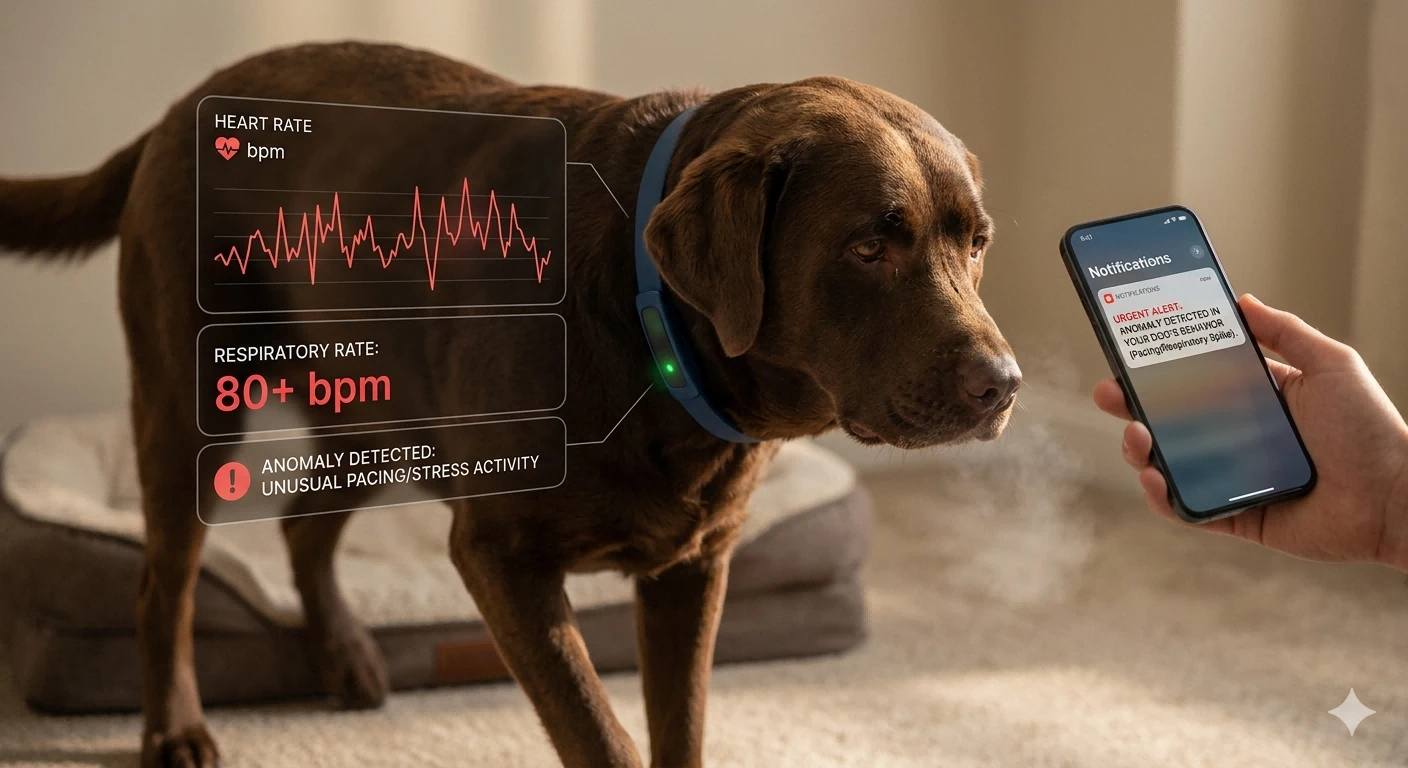
Smart collars help detect sudden abnormal behavior in real time. Fast alerts for unusual breathing, pacing, stress activity, or nighttime movement can help owners react earlier during life-threatening emergencies.
3.1 Why real-time alerts matter during emergencies
I think the biggest danger in canine emergencies is delay.
A dog with GDV may spend thirty minutes pacing around the living room before collapsing. A poisoned dog may suddenly wake up panting heavily at two in the morning while the owner is asleep upstairs.
Those first minutes matter.
Most owners do not notice the emergency immediately because the symptoms look confusing at first. The dog keeps walking around. It still responds to its name. It may even wag its tail.
But the body is already entering crisis.
This is where real-time anomaly alerts become important.
Your dog can’t tell you when something is wrong. But KIYE Collar Pro can.
For example:
- sharp spikes in resting respiratory rate
- nonstop pacing after meals
- repeated nighttime waking
- unusual stress movement during sleep
- sudden high activity followed by inactivity
If these abnormalities appear suddenly, the system sends an alert directly to the owner’s phone.
That extra warning window matters because many emergency conditions move extremely fast:
- GDV can progress into shock within hours
- Heatstroke can damage organs rapidly
- Poisoning can trigger seizures or collapse unexpectedly
The goal is simple:
help owners recognize danger before the dog reaches critical collapse.
| Emergency Situation | Real-time Alert Example | Why It Matters |
|---|---|---|
| GDV / Bloat | Repeated pacing and elevated breathing after meals | Helps owners seek emergency surgery faster |
| Poisoning | Sudden stress activity and abnormal nighttime movement | Detects unusual behavior before collapse |
| Heatstroke | Rapid respiratory spikes during rest | Warns owners before organ damage worsens |
| Cardiac distress | Sudden abnormal recovery after activity | May reveal dangerous physiological stress |
3.2 Earlier action saves lives
I believe most owners do not ignore emergencies on purpose. They simply do not recognize the early signs quickly enough.
A smart collar cannot diagnose disease. It cannot replace an emergency veterinarian.
But it can reduce the most dangerous gap in canine emergencies:
the time between the first abnormal behavior and the moment the owner realizes something is seriously wrong.
Sometimes that extra thirty minutes can save a dog’s life.
4. Conclusion
Dogs rarely show emergencies in dramatic ways at first. The difference between panic and early action often starts with noticing the first small abnormal behavior before it becomes a medical crisis.