It’s 2:00 AM. The house is pitch black, and everyone is asleep—except for one sound. Click, click, click. Your dog’s nails are tapping against the hardwood floor. They walk to the kitchen, stare at the wall, head to the living room, and circle back.
As a dog owner, your first instinct might be to sigh and think, "Do you seriously need to go out right now?" But when nighttime pacing becomes a habit, it’s rarely just about a midnight bathroom break. It’s often a silent cry for help.

1. The Midnight "Click-Clack": Why Now?
Dogs don’t usually pace just to burn off midnight energy. They move because resting has become uncomfortable.
Why Comfort Disappears When the Lights Go Out
During the day, your dog is distracted by life: the delivery guy, the smell of dinner, or just following you from room to room. Pain and anxiety are easily masked by daytime stimulation.
But at night, the world goes quiet. The distractions vanish, and whatever is bothering your dog inside their body or mind suddenly gets turned up to a volume they can’t ignore.
](https://kiyepet.com/wp-content/uploads/2026/05/distressed-adult-dog-pacing-in-a-circular-loop-fro.jpg)
- For Senior Dogs: Lying in one position for hours makes arthritic joints stiff and painful. They get up and pace because movement is the only way to lubricate those aching joints.
- For Anxious Dogs: The darkness and silence can trigger disorientation. You might notice them walking in a specific, repetitive loop (e.g., bedroom to front door, over and over).
2. When Pacing Becomes a Medical Emergency
While chronic issues like arthritis build up over time, sudden, frantic pacing can be a sign of a life-threatening crisis.

The Red Flag: Bloat (GDV)
If your dog ate a large meal a few hours ago and is now pacing restlessly, look closer. Are they also panting heavily in a cool room? Are they retching or dry-heaving without throwing anything up?
This isn’t an upset stomach; it could be GDV (Gastric Dilatation-Volvulus), commonly known as bloat. Their stomach is literally twisting inside them, cutting off blood supply. In this scenario, pacing is a desperate attempt to find a position that relieves the agonizing pressure. This is a "drive-to-the-ER-right-now" emergency.
| The Cause | What It Looks Like | Urgency Level |
|---|---|---|
| Arthritis / Joint Pain | Slow pacing, stiff legs, frequent repositioning | Schedule a Vet Visit |
| Dementia (CCD) | Aimless wandering, staring at walls, getting stuck in corners | Manageable (Consult Vet) |
| Heart Disease | Pacing accompanied by heavy, open-mouthed breathing/coughing | Urgent Vet Visit |
| Bloat (GDV) | Frantic pacing, dry-heaving, swollen abdomen, whining | IMMEDIATE EMERGENCY |
3. Catching the Hidden Signs Before the Panic Sets In
The scariest part about nighttime health crises is that dogs are masters at hiding pain. By the time they are frantically pacing at 3 AM, the internal crisis has likely been brewing for hours while you were fast asleep.

You can’t stay awake all night watching your dog’s respiratory rate, but you can let technology do the night shift for you.
This is where a smart tool like the KIYE Collar Pro changes the game. It doesn’t replace a vet, but it acts as an early-warning system while you sleep. By continuously tracking subtle physiological metrics, it spots anomalies before they turn into full-blown panics:
- The Post-Dinner Monitor: It flags abnormal restlessness or a spike in activity right after mealtime (a crucial window for bloat risk).
- The Sleep Quality Score: It tracks how many times your senior dog wakes up and paces, helping you measure if their arthritis medication is actually working.
- The Respiratory Sentinel: An unexplained jump in nighttime breathing rates can tip you off to early-stage heart or respiratory distress before your dog even starts coughing.
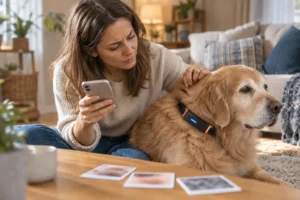
Instead of waking up to a medical emergency that’s already out of hand, you get real-time data on your phone, giving you the most valuable asset in pet care: time.
Summary
Never ignore a dog that can’t settle at night. Whether it’s a senior dog asking for joint support or a sudden emergency, that midnight pacing is the only way they can say, "Hey, something is wrong."