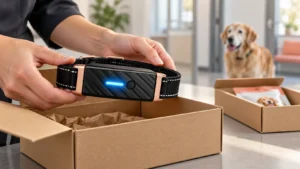
A smart-collar maker just listed a health-monitoring collar with round-the-clock remote vet access on a major North American pet retailer. It is a small event with a large signal: the category is no longer selling a device. It is selling a care path.
For distributors and buyers, that changes the question. The old question was “which sensor is cheapest.” The new one is “which brand actually helps the owner act on what the collar sees.” This piece breaks down what the shift means for your assortment, and what to look for before you commit shelf space.
From hardware to a care path
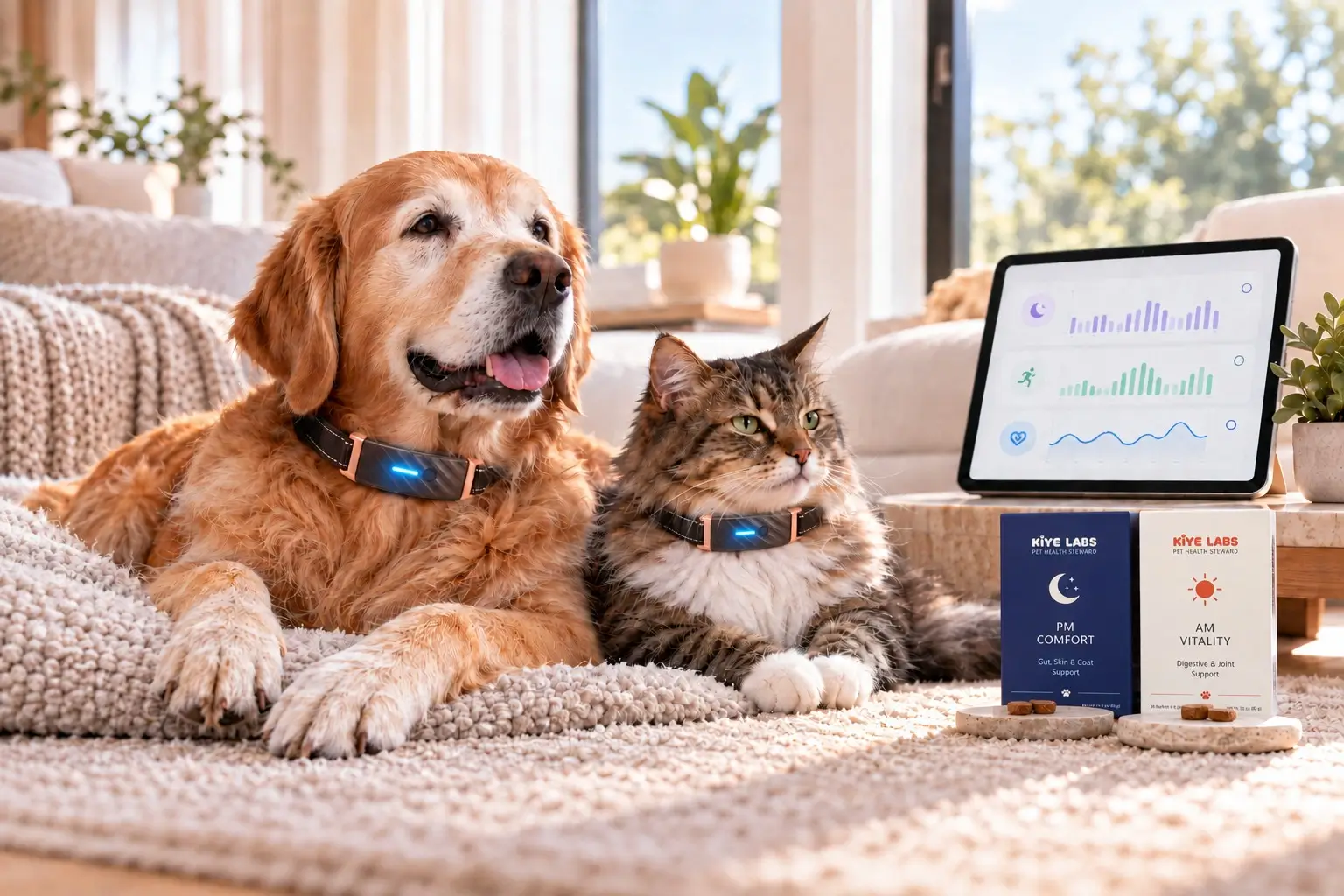
The collar that launched this month does three things at once: it tracks daily signals, it connects the owner to a vet at any hour, and it ties both to a recurring plan. None of that is new technology. What is new is that a hardware label is now packaging all three as one offer on a mainstream retail shelf.
That matters because most owners do not struggle to collect data. They struggle with what to do next. A collar that flags a restless night is useful. A collar that also points to the next step — a check, a small change, a conversation with a vet — is the part that keeps the product in the home instead of in a drawer.
For a buyer, the lesson is straightforward: evaluate a smart-collar brand by the path it builds after the alert, not by the sensor spec sheet alone. The sensor is table stakes. The path is the margin.
Why the senior-pet backdrop raises the bar
The demand pulling this category forward is not a fad. Pet populations in the key Western markets are aging, and older animals generate more of the “something seems off” moments that monitoring exists to catch. That shift turns a nice-to-have gadget into a practical tool for households managing a senior dog or cat.
For a distributor, aging demand is the rare case where the shopper’s need and the retailer’s margin line up. The owner wants reassurance; the category rewards the brand that delivers it consistently. The risk is stocking a label that promises the feeling but does not build the follow-through.
What a “complete” range looks like
A stockable senior-pet health range in 2027 is less about one hero device and more about coverage across the moments that worry owners:
- Monitor. Continuous signals — rest, activity, and calm trends — across dogs and cats. One collar that fits both species simplifies your SKU plan and widens the buyer base.
- Read. The data has to mean something. A plain chart is not enough; owners need a trend they can act on and show a vet during a visit.
- Support. When a signal shifts, what happens? The market is experimenting with telehealth add-ons. The open question for buyers is whether that support is built into the product or bolted on as an afterthought.
- Continue. Senior pets change slowly. The value shows up over months, not the first week. A range that supports the long tail — including nutrition — is harder for the owner to drop.
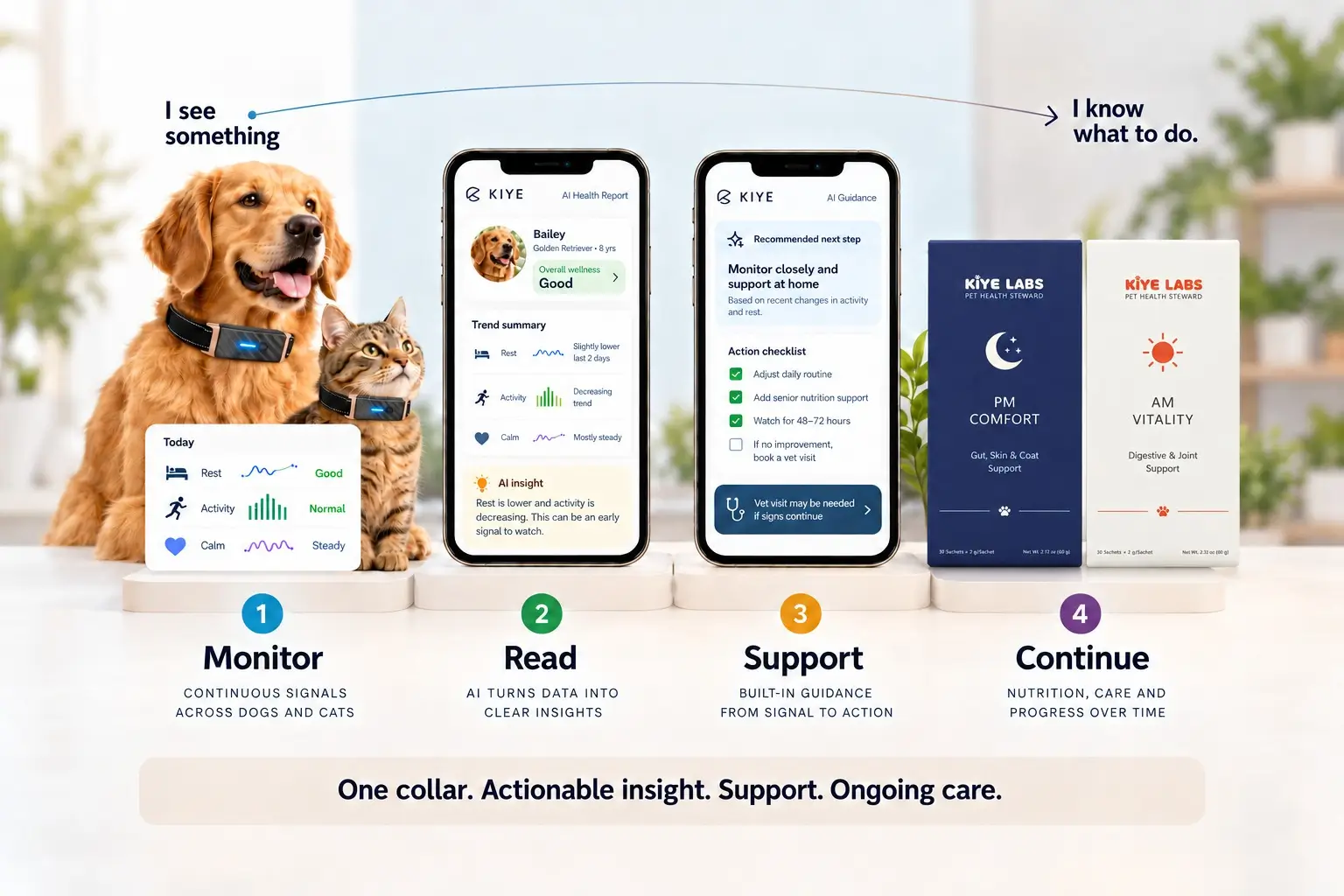
This is where the category is splitting. Some brands stop at the sensor. Others wrap the sensor in a service. The brands that hold shelf space are the ones that close the distance between observation and action — and that distance is exactly what a distributor should price into the buying decision.
The nutrition link most ranges miss
Here is the part many hardware-first launches underplay. A collar can show that a senior dog is moving less or resting more. But the follow-through often needs more than a single vet call — it needs a daily, measurable change the owner actually controls.
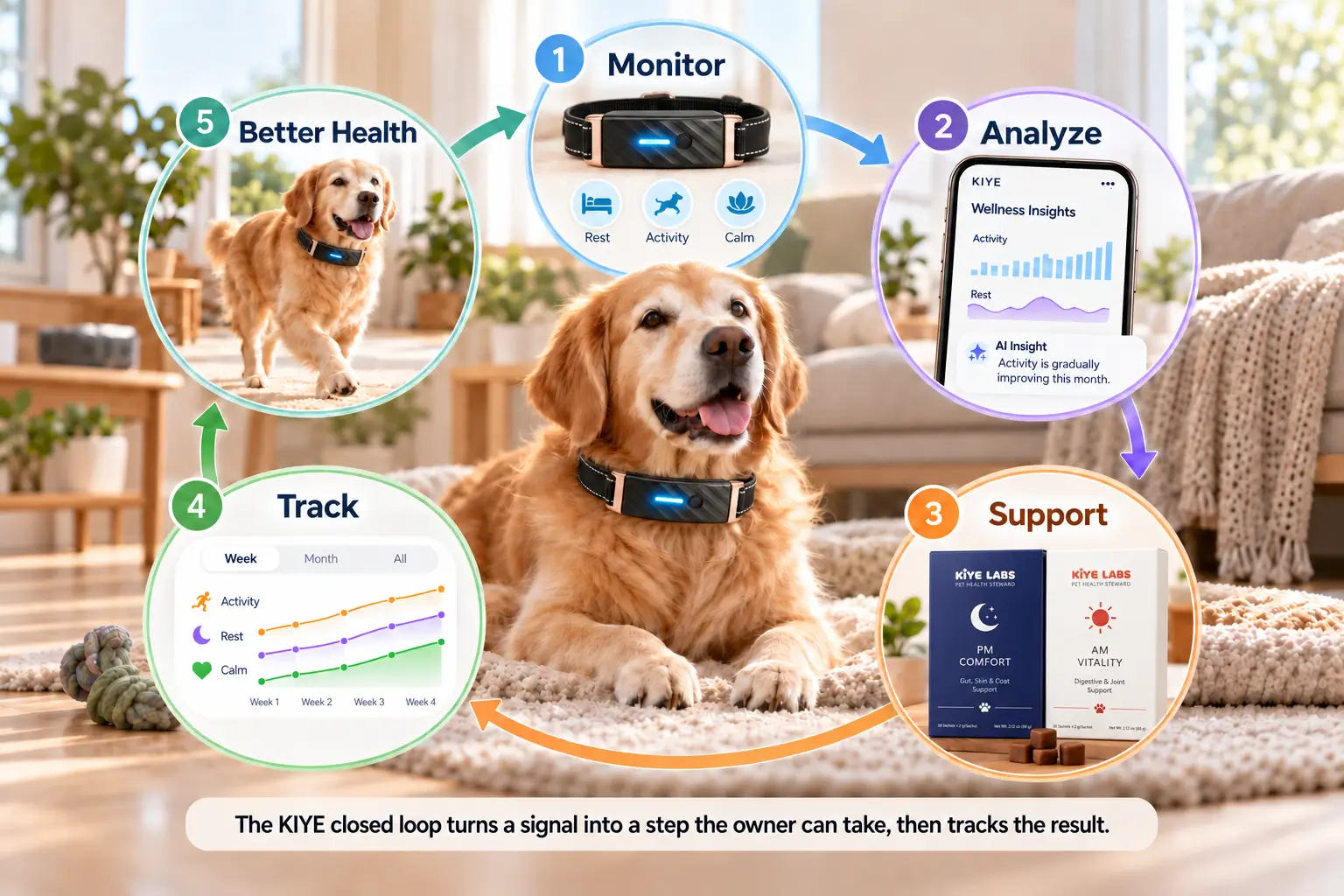
That is the gap a closed loop fills. At KIYE Pet, the Smart Health Collar and the AI Health Platform feed into Senior Pet Nutrition built for older dogs — AM and PM soft chews dosed by weight band (<14 kg, 14–25 kg, >25 kg, one per day). The collar shows the trend; the nutrition gives the owner a daily lever; the platform tracks whether the pattern shifts over time.
Note the boundary we hold on purpose: the collar reports wellness and behavioral trends. It does not diagnose. Any alert is a reason to talk to a vet, not a verdict. That line protects the owner, the retailer, and the brand’s credibility.
What to check before you stock
If a smart-collar brand walks into your buying meeting this quarter, the signal above suggests a short checklist:
- Does it cover both dogs and cats? A single SKU for both species lowers your holding cost and doubles the addressable shelf.
- Is the “next step” real or decorative? Telehealth sounds good. Ask who answers, when, and what it costs the end owner after the first month.
- Can it connect to a nutrition line? A brand that can show a before-and-after trend across collar and supplement earns the repeat purchase on its own merits.
- Is the claim language clean? Avoid labels that promise diagnosis or cure. Wellness trends and vet escalation are the defensible, durable position.
Why this is a category opportunity, not a threat
A competitor moving upmarket does not shrink the pie. It grows it. When a major retailer gives shelf space to a care-bundled collar, it teaches the shopper that a collar is health equipment, not a toy. That education lifts the whole category — including the brands that built the loop properly rather than renting it.
For a distributor, the opening is to stock the brand that completes the path rather than the one that only starts it. The first sale is the collar. The second sale, and the one after, is the care the owner now expects and will shop for by name.
Bottom line
The smart-collar category is consolidating around care continuity. Hardware alone is table stakes. The brands worth shelf space in 2027 are the ones that turn a signal into a step the owner can actually take — across monitoring, reading, support, and the long tail of senior nutrition.
Explore the KIYE Pet closed loop — Smart Health Collar, AI Health Platform, and Senior Pet Nutrition — built for distributors serving the senior-pet market.