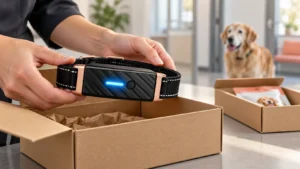
Veterinary clinics have moved from experimenting with AI to running on it. In 2026, 83.7% of veterinary professionals reported using AI, more than double the 39.2% recorded in 2024. For distributors, that number changes what a smart collar is worth on the shelf: it is no longer a standalone tracker, but the upstream data device that a clinic’s AI workflow now depends on.
The buyer’s customer has changed. A distributor does not sell only to pet owners; the local veterinary practice is part of the channel, and that practice is now the place where pet health data gets interpreted. A collar that produces data a clinic can actually use is no longer a nice-to-have SKU. It is the product the clinic’s own AI adoption is quietly creating demand for.
The clinic crossed from AI-curious to AI-native
The shift is not marginal. The 2026 Veterinary AI Study from Digitail and the American Animal Hospital Association surveyed 1,730 veterinary professionals across the United States and Canada and found AI use had more than doubled in two years, from 39.2% in 2024 to 83.7% in 2026 (Digitail & AAHA Veterinary AI Study, 2026). Among those already using AI, 88.3% engage with it daily or weekly.
This is the same clinic base distributors already sell into. When a buyer’s customer, the local practice, is AI-native, the products that plug into that workflow gain a shelf advantage the products that do not cannot match.
The bottleneck is the data, not the model
Adoption has outpaced infrastructure. The same study found that 65.2% of practices added AI without meaningfully changing their workflows, and that only 11% of clinics deliver tailored next-step recommendations for each patient (Digitail & AAHA Veterinary AI Study, 2026). Most still run on generic, rule-based reminders: 61.1% send the same automated nudge regardless of the individual animal’s history.
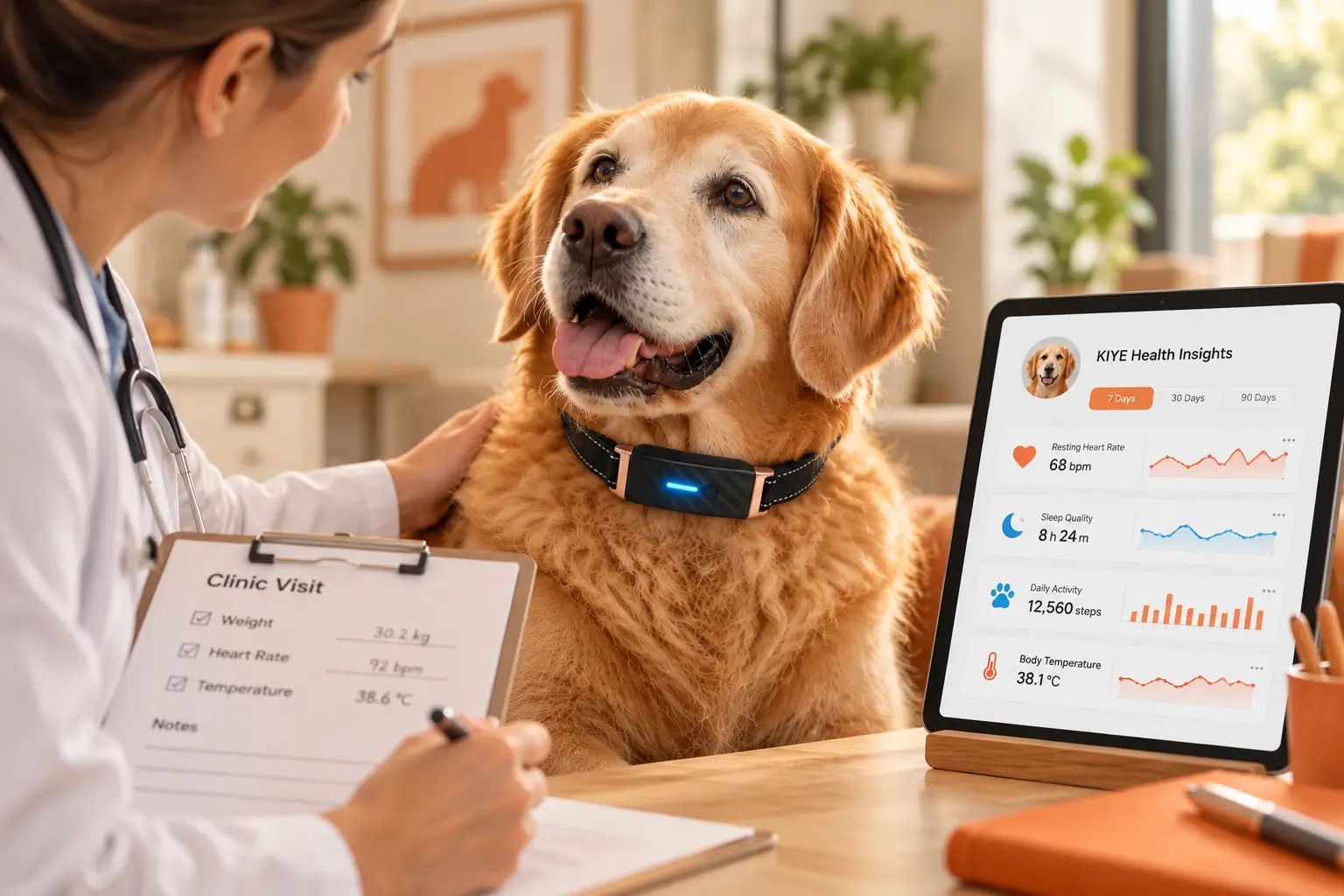
The gap is continuous data. A clinic sees a pet a few times a year. The information that would let its AI produce a real per-patient plan, resting trends, activity changes, sleep patterns, is collected everywhere except the clinic. That is exactly the layer a smart collar sits in.
Structure also pays. The same study tied AI maturity to return: the most AI-mature practices reported six times the business outcomes of the least mature, while the share reporting no measurable impact fell as maturity rose (Digitail & AAHA Veterinary AI Study, 2026). The lesson for a distributor is direct. Clinics that invest in data infrastructure pull ahead, and the products that feed that infrastructure ride the same curve.
| Layer | Rule-based clinic | Continuous-data system |
|---|---|---|
| Reminders | 61.1% send generic nudges | Tailored to each pet’s trend |
| Next-step plan | 11% tailored per patient | Standard output from 24/7 data |
| Data input | Visit-only snapshots | Continuous wellness stream |
Why the smart collar is the upstream device
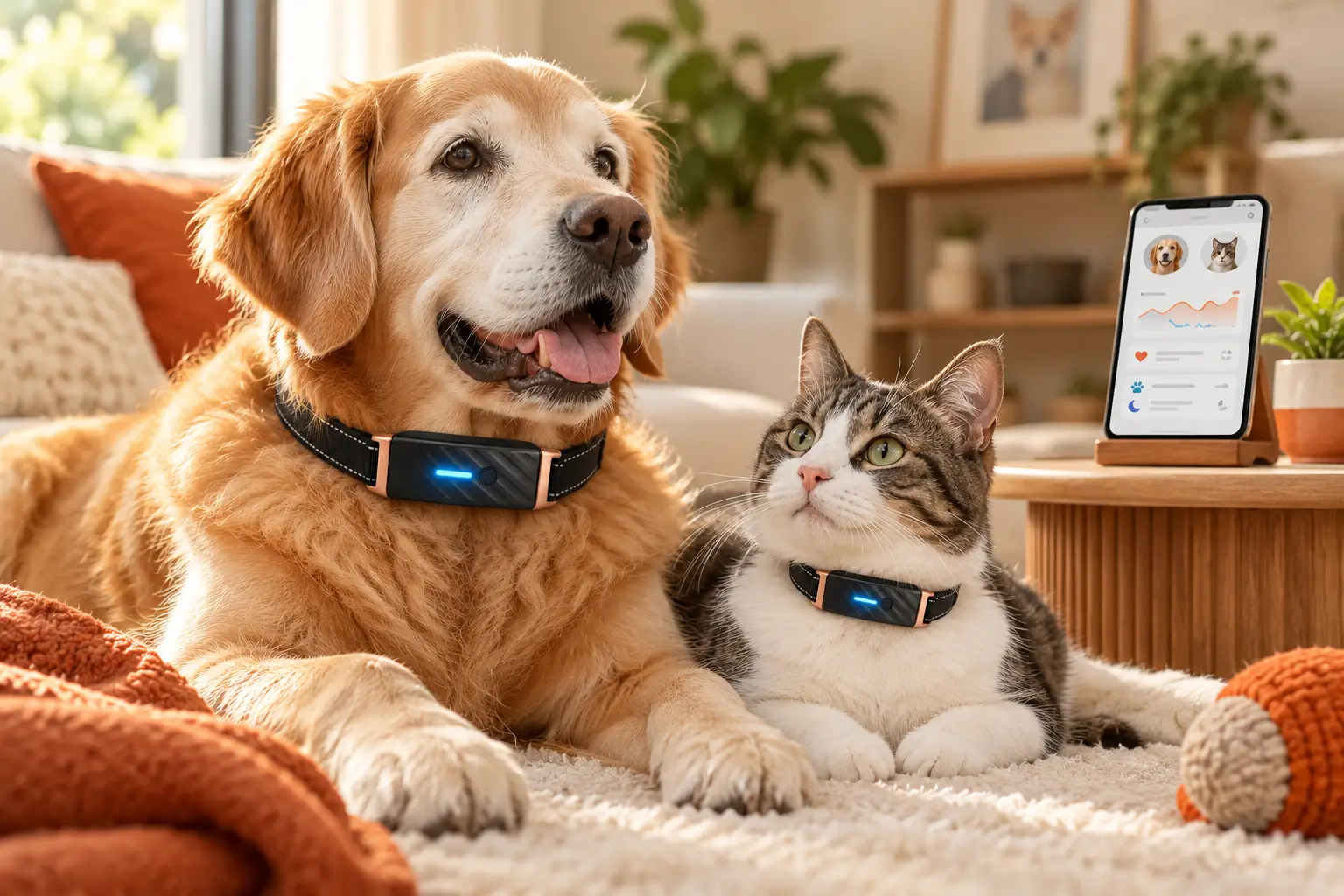
A health collar is not competing with the clinic’s software. It is feeding it. Continuous monitoring produces the structured wellness trends, activity, rest, and related health signals, that a practice’s AI tools currently lack (Sidewalk Dog, 2026). The KIYE Smart Health Collar is built for this role: it captures four core health dimensions around the clock and works for both dogs and cats, then hands the stream to an AI platform that turns it into a readable health report.
Because the collar is built for both dogs and cats, the data layer is not a dog-only story. A multi-pet household still produces one continuous stream per animal that a clinic can read alongside the species it already treats (Sidewalk Dog, 2026). The hardware is the constant; the report is what changes hands at the clinic door.
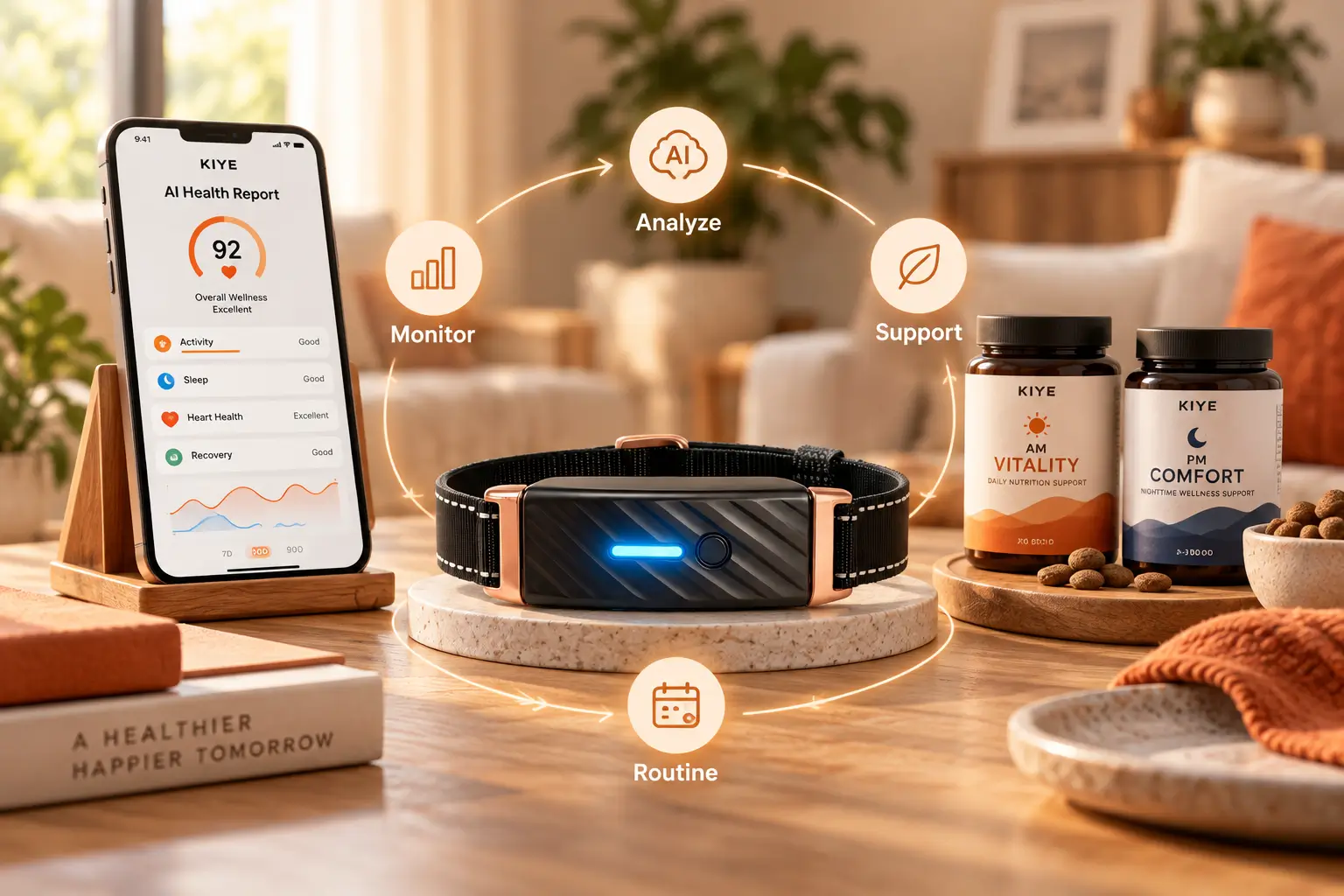
The closed loop is what makes the data actionable rather than ornamental. Monitor, analyze, support, continuous tracking, better health, the KIYE health ecosystem connects the collar’s stream to the senior dog nutrition line timed to the animal’s daily needs, so the insight a clinic surfaces turns into a product the owner actually buys and rebuys.
The collar that only tracks is a dead end
A standalone tracker with no data layer will be sidelined by the clinic channel. The collar that wins distribution is the one whose output a practice’s AI workflow can ingest, because the clinic, not the app store, is becoming the place that validates and recommends the device.
What this means for the distributor shelf
Stock the system, not the gadget. For any team planning senior pet care distribution, the takeaway is to weigh one capability above the rest: does the collar produce clinic-ready structured reports, or just another app notification? The first feeds the channel that is already AI-native. The second competes for attention it will lose.
The practical test is export. Can the collar’s wellness trends leave the app and enter a clinic’s system, or do they die inside a consumer dashboard? Only the first version belongs on a distributor’s shelf in 2026, because the clinic, not the owner’s phone, is where the recommendation now gets made.
A buyer evaluating a pet health collar supplier should ask the category’s rarely answered question. The senior dog nutrition line is designed as the support layer of that loop, with AM and PM formats built around the daily changes a collar surfaces. That is why KIYE positions itself as a system supplier rather than a single-SKU brand: the margin and the reorder live in the loop, not in one device.
The five-year window is already open
Looking ahead, 79.8% of veterinary professionals expect AI to be part of most clinic workflows within five years (Digitail & AAHA Veterinary AI Study, 2026). The global pet wearable market backs the device side of that shift: from about $3.56 billion in 2026 to an estimated $7.23 billion by 2031, with smart collars holding roughly 64% of revenue (Sidewalk Dog, 2026). Distributors who lock in a data-capable collar range before the clinic channel standardizes will own the referral flow when it does.
The device category is growing because the data category is growing. A distributor who reads the two together, rather than separately, is reading the same trend the clinic is living through. The window is not a forecast; the adoption numbers are already in.
For senior pet care distribution, the lesson is practical. The clinic is no longer a one-off diagnostic event; it is becoming a continuous-data channel, and the collar is the device that supplies it. Buyers who treat senior pet products wholesale as a bundle of unrelated SKUs will miss the connection the AI-native clinic is quietly creating. The teams building a senior pet care distribution plan around a data-capable collar will be the ones the clinic sends owners to.
Sources
- Digitail & AAHA, 2026 Veterinary AI Study (1,730 respondents, US & Canada; fielded Jul 27 to Aug 12, 2026; released Oct 1, 2026).
- Animal Health News, “Veterinary AI adoption climbs to 84% as study links strategic use to stronger practice outcomes,” October 7, 2026.
- Sidewalk Dog, pet wearable market sizing and AI-COLLAR accuracy data, 2026.
The clinic channel is rewriting the collar spec
Distributors stocking a health collar in 2026 should weigh one capability above the rest: does the device feed the clinic’s AI workflow, or sit outside it? Review the KIYE system specs, request samples, and discuss channel fit with our team at info@kiyepet.com.